



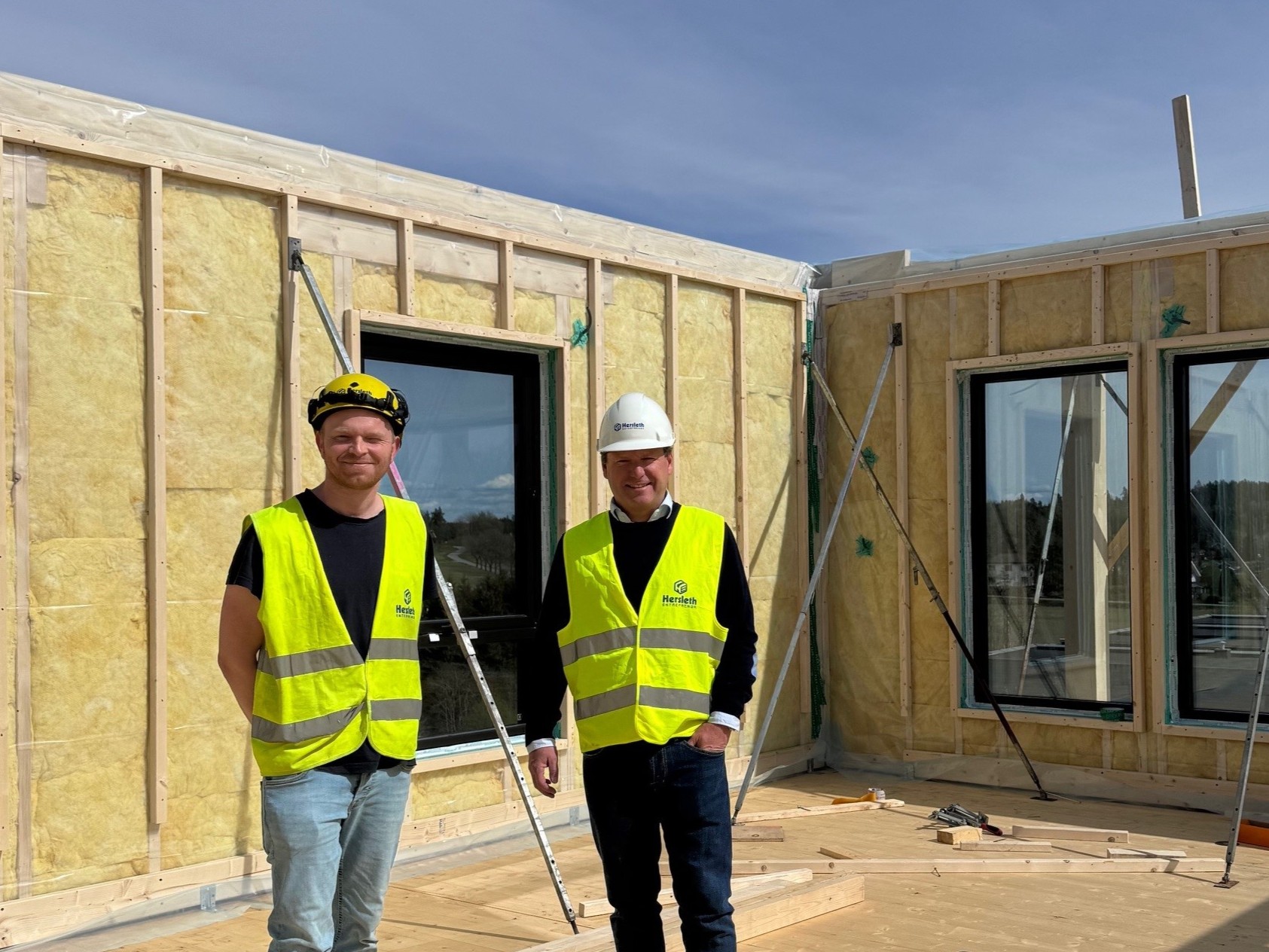
New member Hersleth AS focuses on innovative construction method
– For more than 30 years, we have helped to create good homes, attractive commercial premises and new and important buildings within culture, health and knowledge in Østfold, Follo and Oslo. Since 2007, we have been focusing on element production, and in recent years also solid wood. This is sustainable and efficient, and contributes to shorter construction times,” says Reinert Hersleth, CEO of Hersleth AS.
Kortere byggetid, økt kontroll på produksjonen og klimagevinst
Hersleth Entreprenør har drevet prefabrikasjon av ytterveggselementer i tre til både større og mindre bygg i egne lokaler på Årvoll i Rygge siden 2016. Ved å produsere elementene i tørre, lyse og rolige omgivelser sikrer entreprenøren full kontroll under produksjonen. Tre til fem tømrere er sysselsatt ved anlegget, og produserer årlig mellom 5-8000 m2 veggelementer til både bolig, butikklokaler, idrettshaller og næringsbygg.
– Oppsummert har vi erfart at denne byggemetoden gir svært mange gevinster i form at den er mer industriell, den sikrer en optimal kombinasjon av tre, stål og betong, gir enklere og mer forutsigbar byggeplasslogistikk, og ikke minst et bedre CO2-regnskap i form av lavere klimagassutslipp, sier Hersleth.
At byggene i tillegg blir demonterbare skaper også fleksibilitet for fremtiden.
Tidlig involvering av ulike fagområder en viktig suksessfaktor
Entreprenøren har erfart at det gir store gevinster i prosjektene når premissene for byggemetoden ligger til grunn fra start. Prosjektene organiseres som tradisjonelle prosjektorganisasjoner, der de ulike fagområdene bidrar med kompetanse og prosjektering i de ulike prosjektfasene, både i skisse-, forprosjekt og detaljprosjektering/utførelse.
Det legges også til rette for at arkitekt prosjekterer overordnet bygningsstruktur og geometri allerede i skisse- og forprosjektet. Deretter kvalitetssikrer og bidrar de ulike fagene med premisser og styrende løsninger underveis i prosjektet. Dette inkluderer alt fra føringer på spennvidder i konstruksjoner, høyder og detaljsnitt, materialbruk og detaljløsninger. Brann og lyd baseres på trygge og gode prinsipper. På denne måten tilpasses og optimaliseres metoden kontinuerlig både innad i prosjektet, samtidig som entreprenøren tar med seg verdifull erfaring til nye prosjekter.
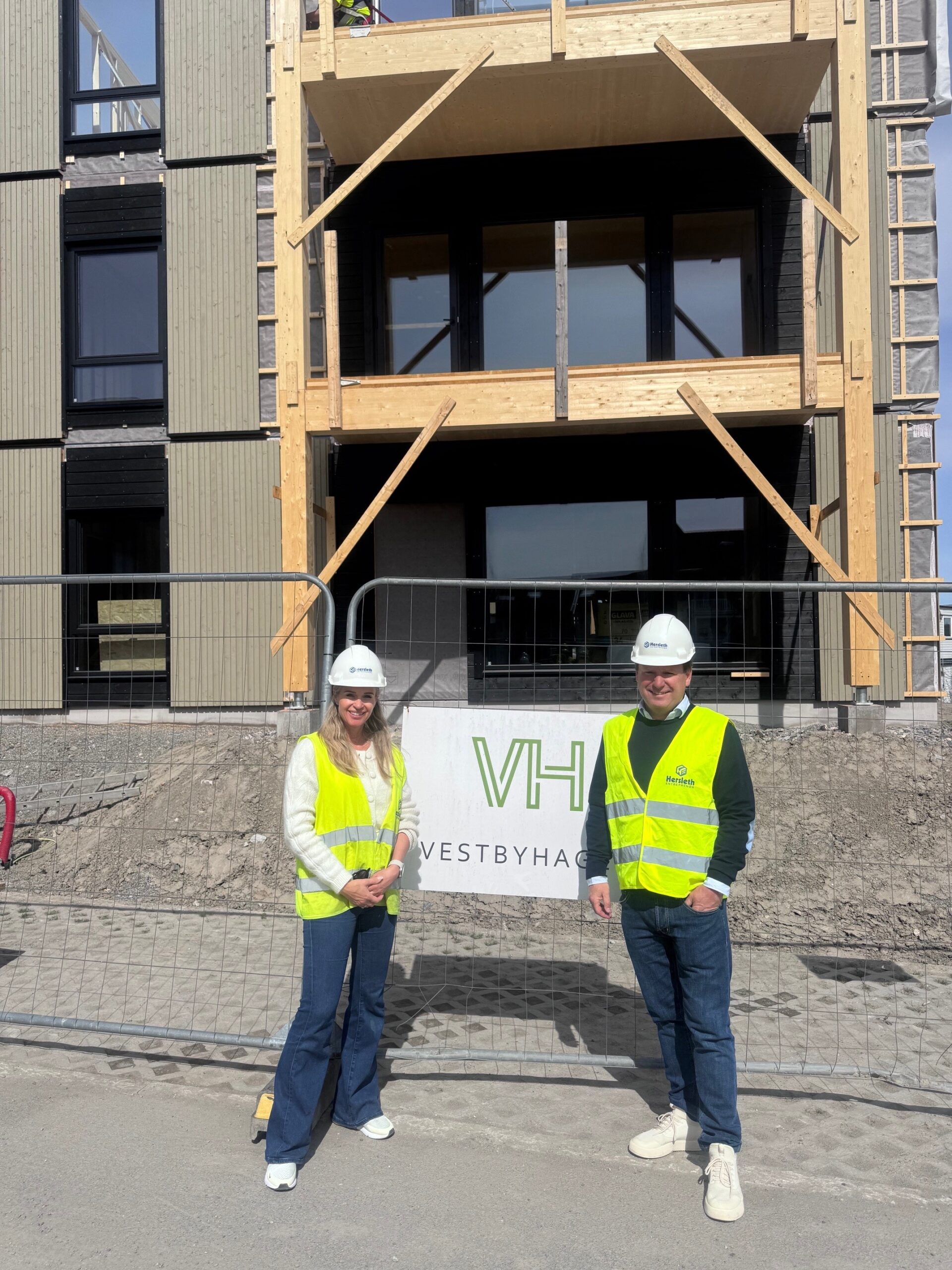
Large neighborhood with 180 apartments
In Vestby outside Oslo, Hersleth Entreprenører is building 64 apartments in 5 buildings on 3 and 4 floors. The project is called Vestbyhagen and is located in central Vestby. All the buildings are being constructed using locally sourced, self-produced external wall elements in combination with solid wood.
The first two buildings, C and D, were completed in the summer of 2024, while building A was handed over in the first quarter of 2025. Buildings B and E are under construction and will be completed during 2025.
When the entire neighborhood is completed in five to six years, a total of 180 units will be built in the area.
Welcome to the cluster
Cluster leader Berit Sanness welcomes Hersleth AS as a member of Norwegian Wood Cluster.
– “It’s exciting to have Hersleth in the cluster. Contractors and real estate developers play a key role in the construction industry, and it’s particularly exciting to have a company like Hersleth, which is committed to developing new, climate-friendly construction methods. One of Norwegian Wood Cluster’s strategic focus areas is to contribute to better resource utilization and sustainability throughout the value chain.
Formally, it is the board of Norwegian Wood Cluster SA that processes applications for membership in the cluster. Hersleth AS was admitted as a member on May 21, 2025.
Om Hersleth AS
Hersleth AS er et familieeid konsernselskap for Hersleth Entreprenør AS og Hersleth Eiendom AS.
Hersleth Entreprenør har nedslagsfelt i Follo, Østfold og Oslo Syd. Selskapet tar oppdrag innen nybygg, ombygging og rehabilitering i privat og offentlig sektor, og omsatte for over en halv milliard kroner i 2024. Prosjektene spenner fra tradisjonelle boligprosjekter til næringslokaler og monumentale bygninger, som for eksempel kirkebygg, kulturbygg, politistasjoner, tinghus, hoteller og andre kulturbærende prosjekter. Selskapet har ca. 80 ansatte fordelt på 40 fagarbeidere og 40 funksjonærer. Hersleth Eiendom er involvert i utviklingen av over 3000 boliger som skal utvikles og bygges de neste 30 årene, inkludert prosjektet på Vestbyhagen.
Les mer på www.hersleth.no
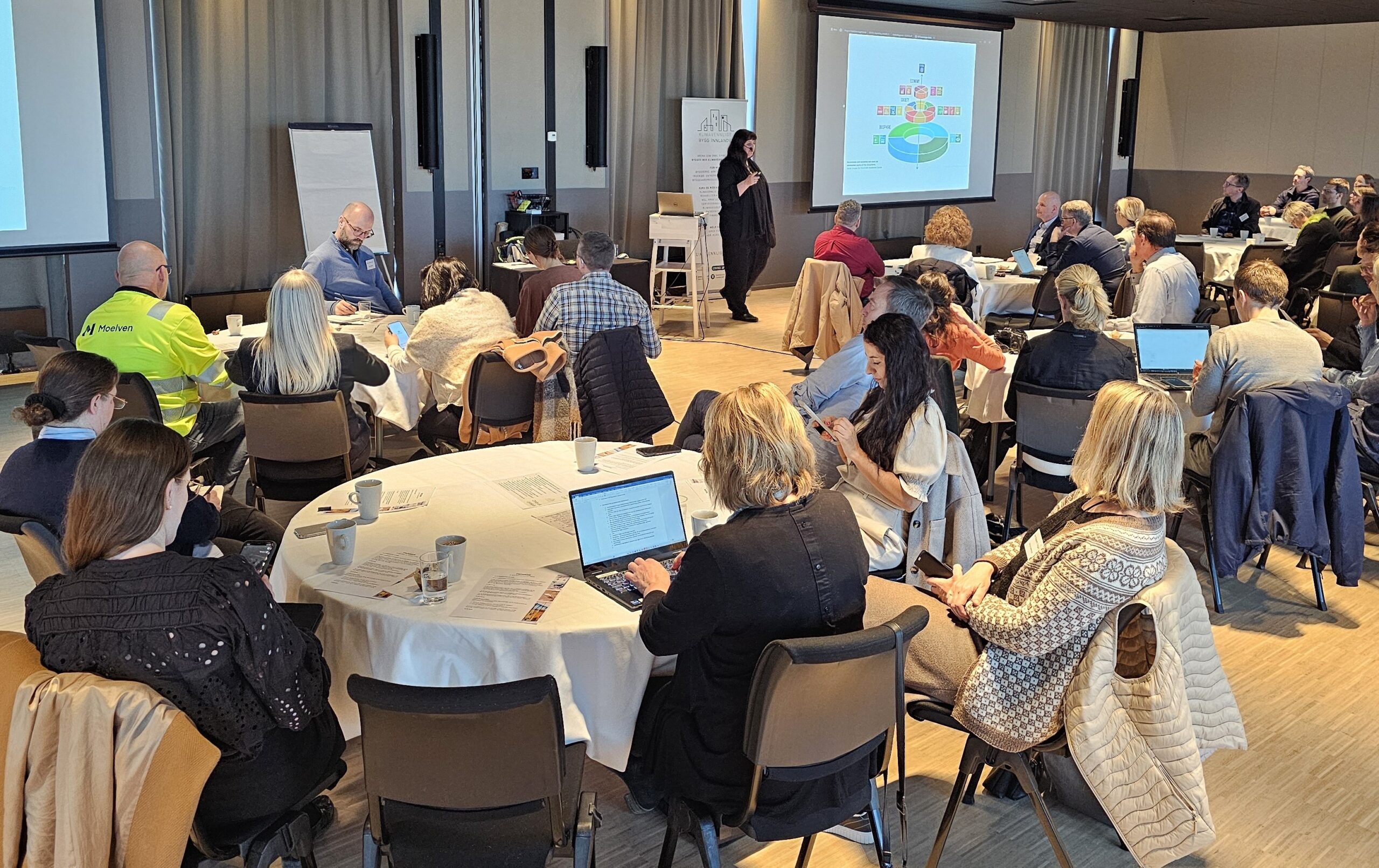
Local commitment to reuse in the construction industry
If we are to change today’s building practices, we need to meet and share knowledge and experience at all levels of the industry. That’s why it was gratifying that among the 60 attendees were builders, building materials manufacturers, architects, contractors and recyclers.
Traffic light method for reuse in renovation projects
When Betonmast Trøndelag was commissioned to refurbish and build Trondheim Cathedral School in 2022, there was a clear desire from the client, Trøndelag County Council, to look at existing buildings as a source of reused materials. Sondre Synnevåg of Betonmast presented the project, which had a collaborative development phase and included a reuse survey to see which materials could be suitable for reuse and how easily they can be dismantled.
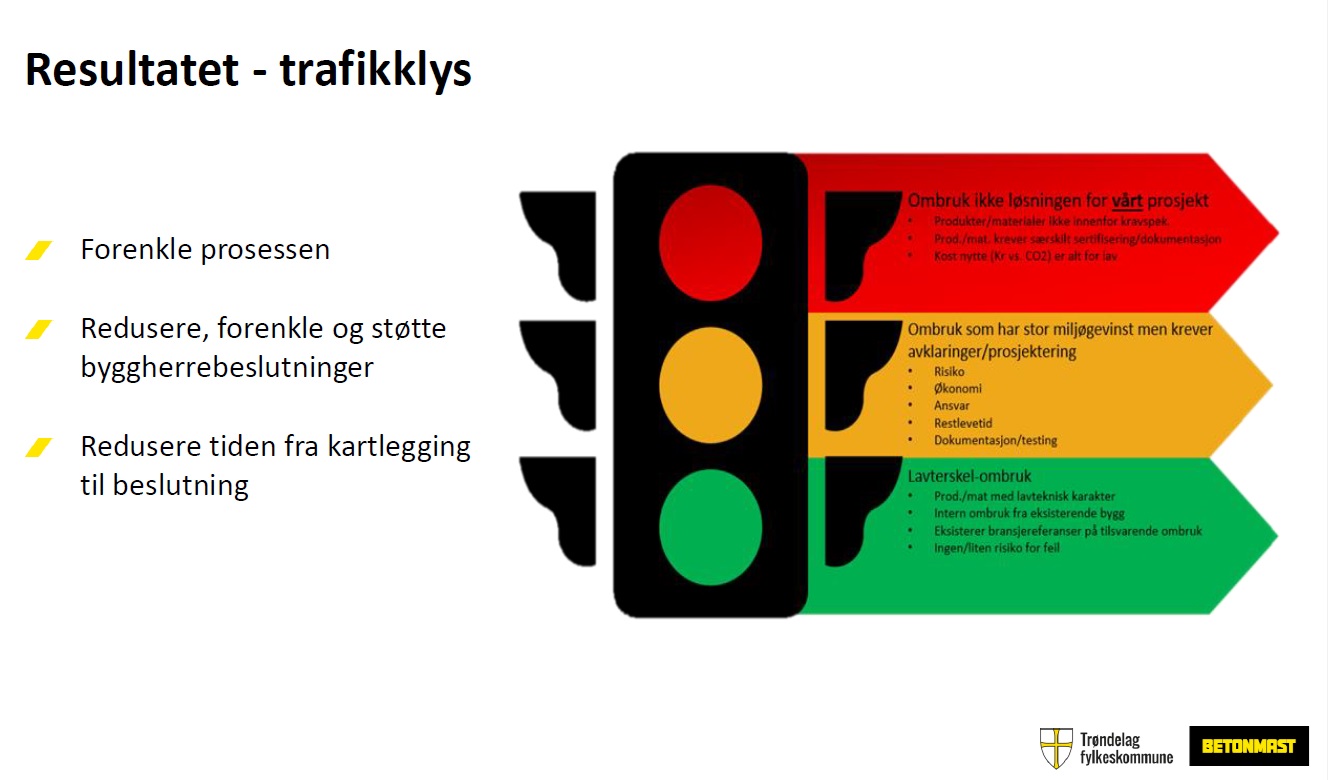
All materials that were defined as “suitable for reuse” were put into a decision matrix to clarify whether reuse would be profitable. The “traffic light model” was established, where Green = low threshold for reuse, Yellow = unsure of the dismantling or reuse potential, Red = not suitable for our project. Whatever fell into the Red category, it was up to the developer to decide whether it should be demolished/thrown away, or sold elsewhere – in which case the income was transferred to the project.
The rehabilitation of Trondheim Cathedral School has shown that it is possible to make the reuse of materials a profitable part of a construction project. The recommendation from the contractor is not to be afraid of tackling the issue, but to make sure you have all the decisions ready before you start demolishing and building. Heather Mason from the county council added that the project had applied for funding from Enova and Klimasats, not large sums of money, but enough to provide scope to try new things and at the same time relieve the contractor of risk.
Do you want to learn more about the traffic light method and the Trondheim Cathedral School project?
-
Watch recording of of the webinar “Contract forms for reuse” (Circular Resource Center 27.11.2023)
-
Read more about the about the construction project at Betonmast Trønelag
Reuse of interiors and bricks
Today, interiors account for a large proportion of greenhouse gas emissions over the lifetime of a building, because the interior is usually replaced every time the building has new users or tenants. But does it have to be this way?
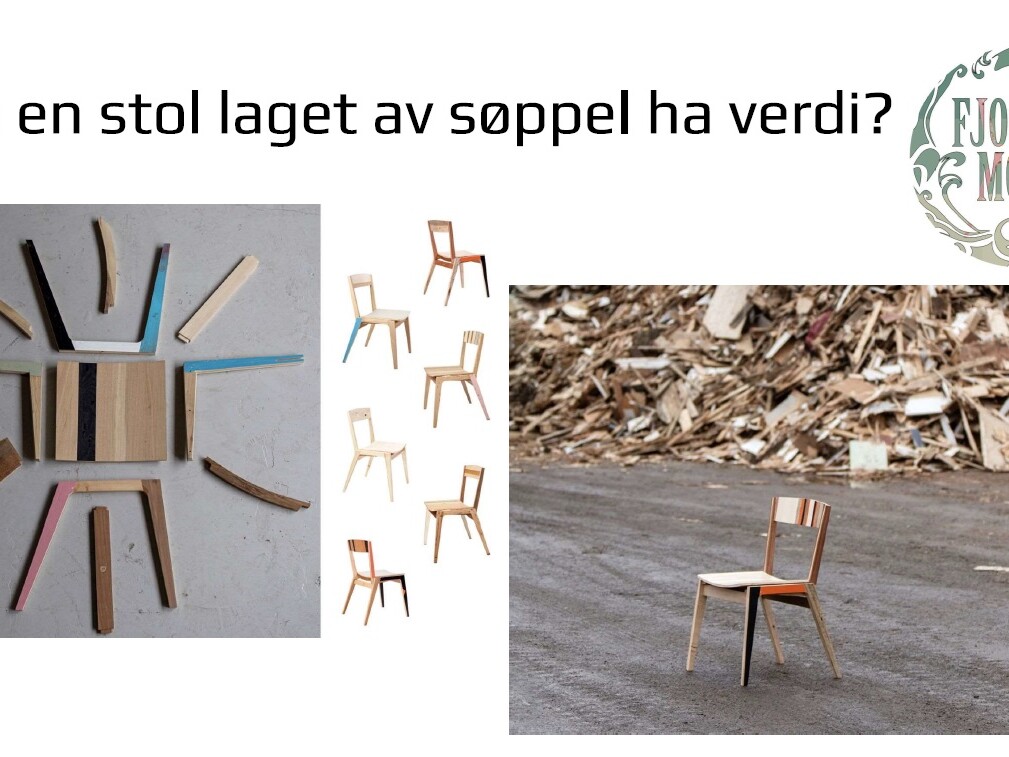
Kirsti Svennung is head of No.17 – a sustainability network for interior architects, and she talked about how we Norwegians suffer from “renovation sickness”. “140,000 tons of office furniture are thrown away every year. And that’s not counting walls and floors. What are we losing by letting “renovation sickness” go? We know that 80% of the footprint is in the design phase. Svennung was concerned that aesthetics requires a new language, we need to ask other questions, including how we view durability. Should we accept that a “good chair” lasts for 7-10 years, is that good enough?
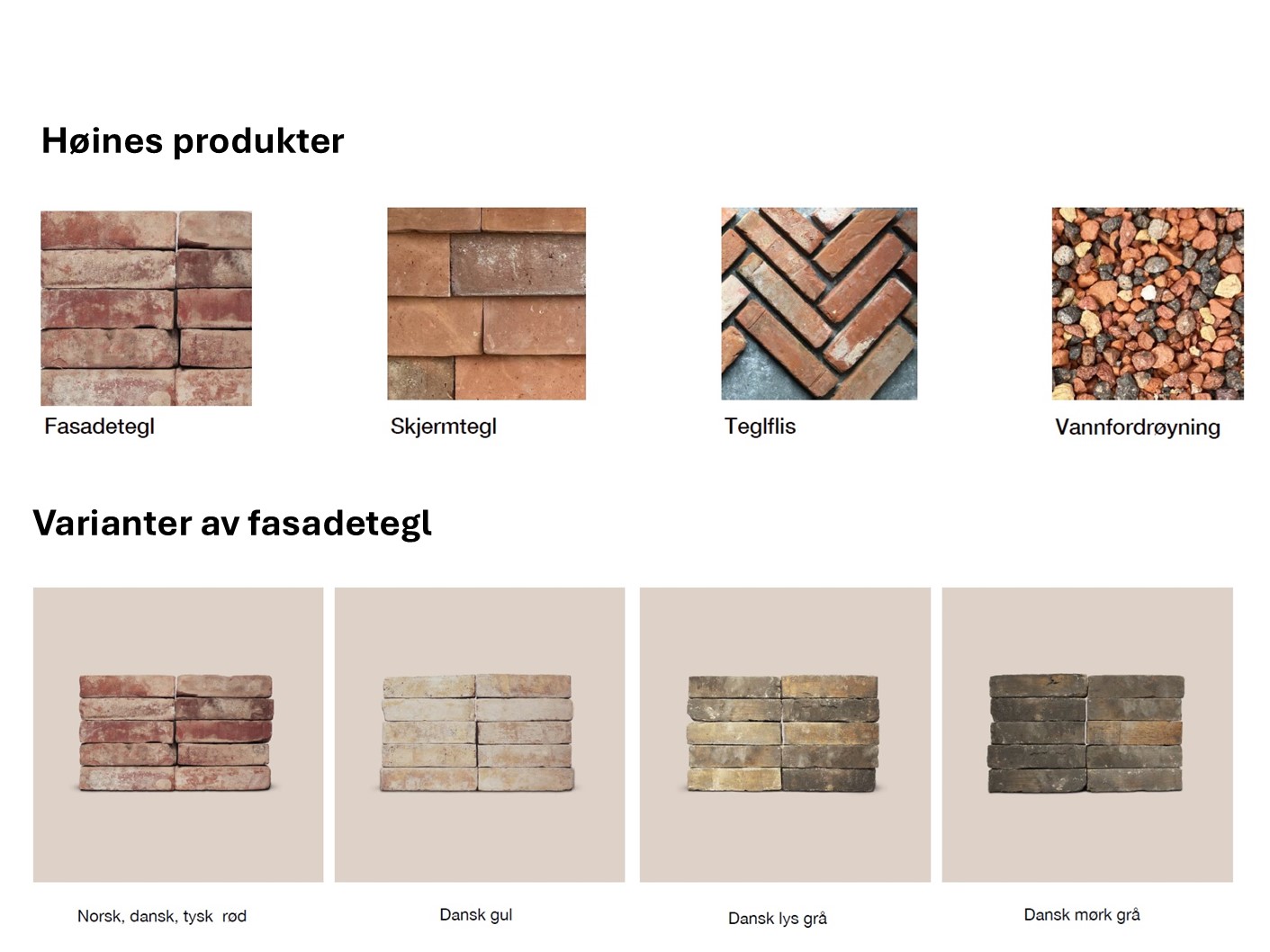
Product longevity is also important to Høine, which specializes in reusing bricks. Every year, around 50,000 tons of bricks are thrown away in Norway, while at the same time 40,000 tons of new bricks are built. The production of new bricks requires large amounts of energy; the bricks are fired at 110 degrees for three days. Brick is robust and durable, so why not use it several times?
Oskar Bringager, Marketing Manager at Høine, explained how the company has worked on a number of challenges since its inception in 2019, from CE marking to cleaning methods and logistics. They are now also working on introducing lime as a mortar in new brick buildings, to make it easier to dismantle the brick at the next crossroads.
You can read more about Høine’s work and construction projects HERE.
Logistics and market for reused materials
Today, Norway is one of Europe’s least circular countries, with a modest reuse of 2.5% of resources. In the EU and the government, the goal for the construction industry is that 70% of the waste should be reused, and thus one must expect constantly new rules and restrictions.
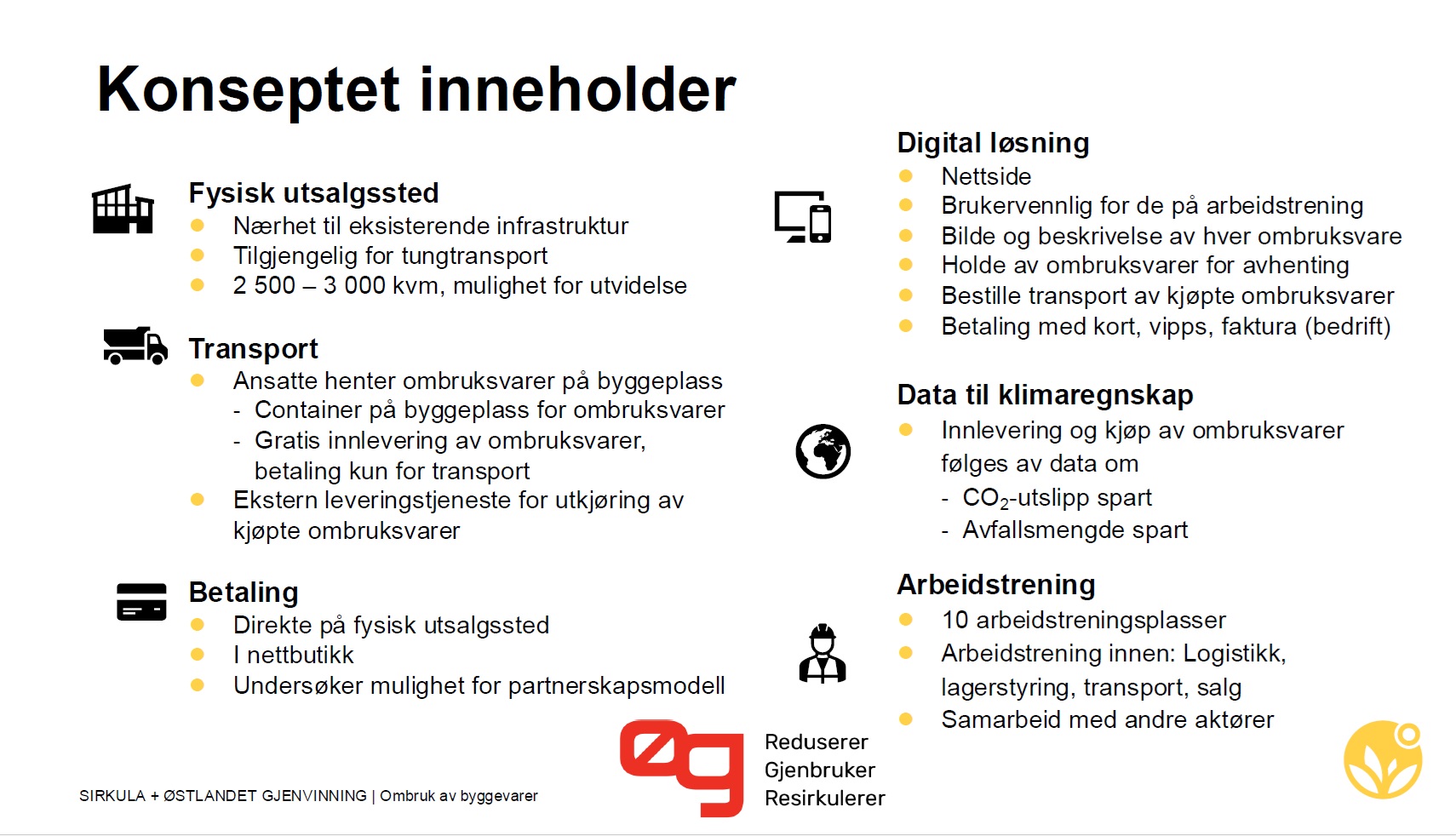
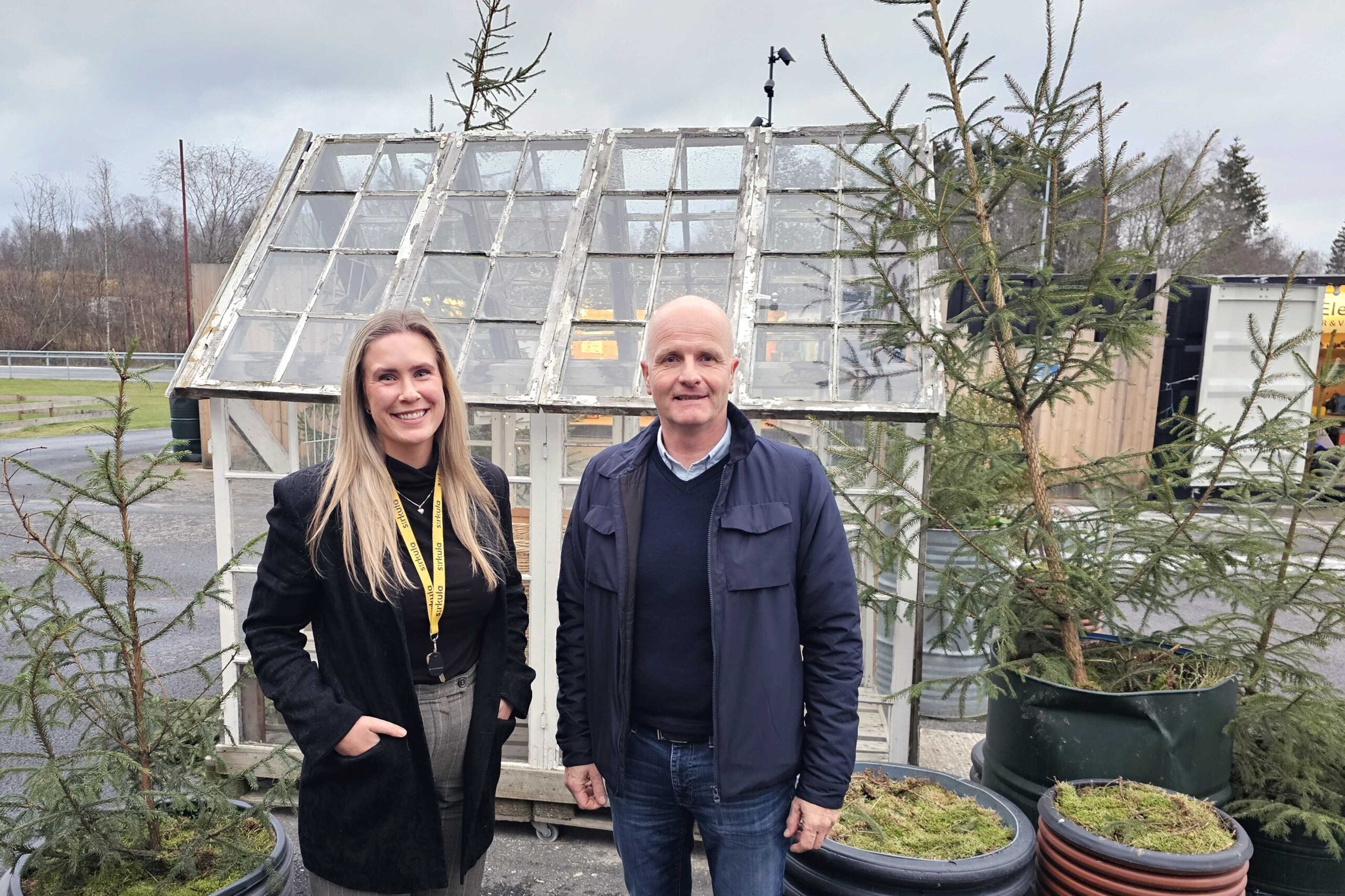
The recycling companies Sirkula and Østlandet Gjenvinning (ØG) want the building materials they currently receive as waste to be reused to a much greater extent. That’s why they have developed a pilot project for a reuse center in Inland Norway, and are now working on ownership and financing.
The plan is to start with a reuse center near Hamar, but at the same time establish a digital platform that makes it possible to trade reused goods without intermediate storage. The reuse center will support the professional players; contractors, real estate companies and builders. The short-term goal is to reuse as much as possible, but within three years the aim is for the business to be profitable.
The project was presented by Ingrid Staveland Reppe from Sirkula and Jon Inge Kjørum from ØG, who encourage the entire industry to work together on the establishment of a reuse center, which they believe will be crucial to meet future rules and requirements for reuse.
You can read more about the reuse center HERE
Possible local measures for increased reuse
The session was rounded off with a “World Cafe”, led by Christopher Mc Cormick from Klimavennlige bygg Innlandet. The aim was to involve the bright minds in attendance in solving the challenges of the future around reuse, and here you can see some of the input:
Experience sharing and pilot projects:
– Arrange an experience gathering with reuse projects from Inland Norway
– Start pilot project(s) with documentation of climate benefits and learning
Construction site and supplier collaboration:
– Test local solution for material accounting on construction sites
– Enter into an agreement with local packaging manufacturers on a circular test scheme
Value chain and tool support:
– Influence builders to introduce reuse requirements in procurement
– Develop local LCA module that includes reuse, in collaboration with educational environment
Responsibility and interaction:
– Gather stakeholders in a joint meeting to clarify roles in reuse projects
– Create a checklist/template for roles and responsibilities through project phases
Communication and attitude change:
– Develop a visual campaign: “Reuse is quality”
– Involve pupils and students in the development of new expressions and solutions based on reuse
Logistics and infrastructure:
– Establish test of physical intermediate storage in the Hamar region
– Pre-project for digital logistics platform (availability and timing of materials)
The reuse center in Innlandet:
– Working group with public and private stakeholders
– Preliminary study with mapping of location, players, operation and financing
The next professional gathering for the Construction Industry of the Future in Inland Norway will be held on Thursday, October 30 in Hamar.
Information is shared through newsletters and the website www.klimavennligebygg.no.
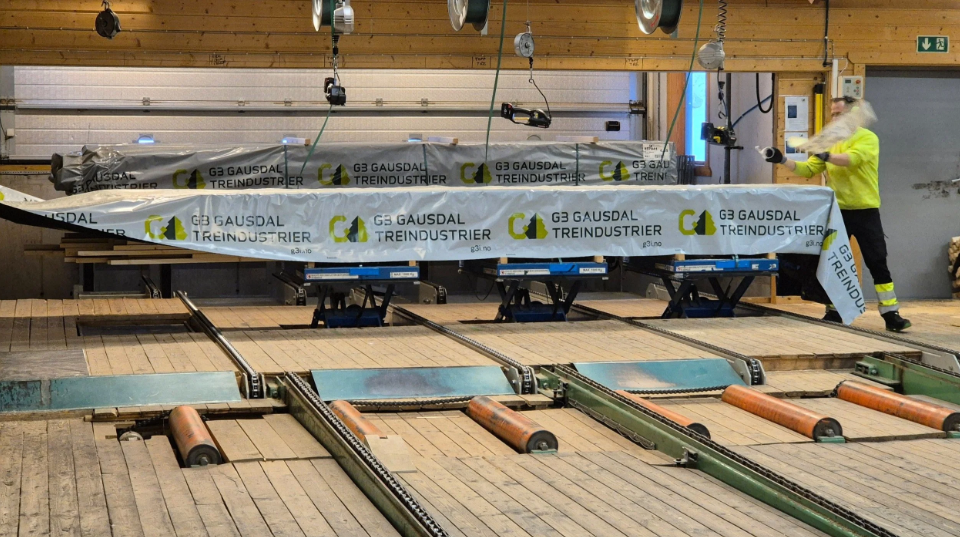
Will test circular lumber foil
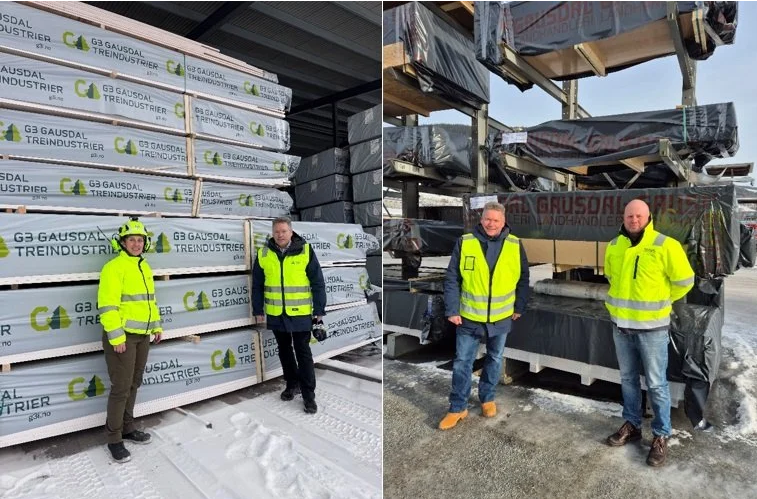
Timber and building products need to be protected through packaging to retain their quality. However, to become more sustainable, companies need to solve their packaging needs in a way that reduces greenhouse gas emissions.
The aim of the new project, named “Circular lumber foil”, is precisely to develop and test on an industrial scale a closed loop of lumber foil to contribute to reduced resource consumption and increased circularity of plastics in the wood and construction industries. In addition, the project aims to help reduce the use of plastic in the timber and construction industries.
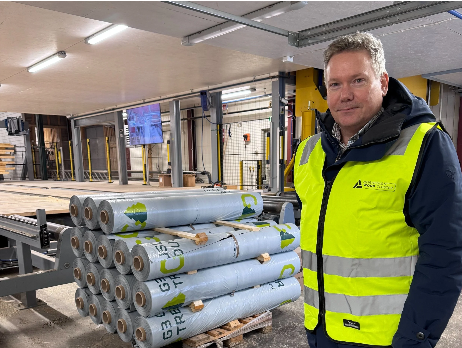
– “Through the new project, we hope to lay the foundation for a circular value chain for plastic packaging for the wood and construction industries. The experience gained from the project will also be used to identify new, specific pilots for circular solutions related to wood in buildings, which have the potential for upscaling,” says project manager Håvard Sørlie of Norwegian Wood Cluster. He explains that the project recently held a kick-off meeting.
– There was great commitment and relevant expertise among the participants in the project group, so it was a motivating meeting,” says Sørlie.
Not so easy in practice
Lumber wrap is usually made from a material that is suitable for material recycling. However, a significant proportion of the packaging plastic collected from the construction industry disappears from the cycle and is lost as a raw material for new lumber foil.
Collected plastic is often sent for energy recovery. Other volumes that are sorted may be contaminated or mixed with different plastic materials from construction sites. This prevents collected plastic waste from being recycled into raw materials of good enough quality to be used in film production.
Testing in a closed circular circuit
The idea for the “Circular lumber foil” project emerged in a cluster-to-cluster project on packaging and construction that the Norwegian Wood Cluster carried out in collaboration with the Circular Packaging Cluster 2021-2024.
– To take a closer look at the challenge, we have recruited seven companies that represent the players in the closed circular loop. They will actively participate in the project together with the cluster and test a concrete circular solution. The project will, among other things, collect plastic at the construction site, produce recycled plastic and test it in use,” says project manager Håvard Sørlie in Norwegian Wood Cluster.
– The pilot test will be carried out in a real environment and will ensure that the results of the project reveal both consequences and opportunities related to environmental impact and costs. In addition, the project will reveal the actual plastic consumption and recycling rate of this type of plastic packaging in Norway,” says Sørlie.
Want to share
The purpose of the project is to develop recycled plastic of satisfactory quality and provide a basis for national upscaling of the solution.
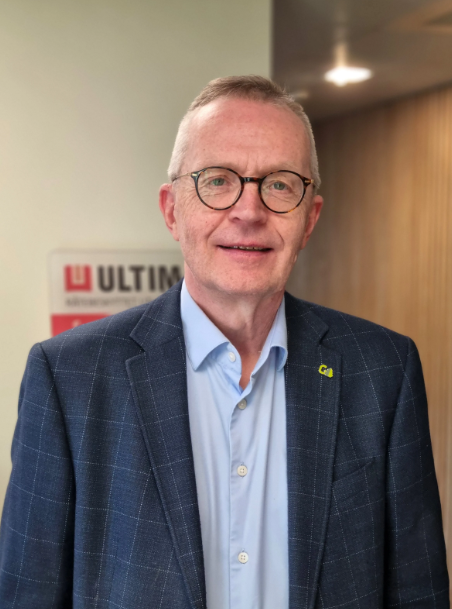
– We are pleased that this project has started. Packaging is necessary to preserve the quality of the timber, but today’s use of plastic film causes greenhouse gas emissions that we would very much like to reduce. By sharing the results along the way through the Norwegian Wood Cluster, we hope that a successful solution can actually be rolled out on a large scale,” says Jørn Nørstelien, CEO of Gausdal Treindustrier.
Important project
– “Gausdal Landhandleri is very positive about this project. “We want to reduce the climate footprint resulting from packaging use. The hope is that through the project we will both develop a recycled plastic of satisfactory quality and at the same time get tips on how our own packaging use can be reduced,” says Logistics Manager Paul Erik Hattestad at Gausdal Landhandleri.
Project “Circular lumber foil”
These actively participate in the “Circular lumber foil” project, which is owned by the Norwegian Wood Cluster: Gausdal Treindustrier SA, Gausdal Landhandleri AS, Blåne AS, Østlandet Gjenvinning AS, Litra Containerservice AS, Norfolier GreenTec AS and Haagensen Plast AS. In addition, Norwaste performs assignments for the project. Faggruppe Bærekraft is the reference group for the “Circular lumber foil” project.
The project is supported by Innovation Norway and lasts 2025-2026.
The first reuse center for building materials in Inland Norway
With developments in EU regulations, Norwegian regulations and green financing, it’s clear that the reuse of building materials will become the new norm within a few years.
The preparatory work has been going on for two years, with market and product flow surveys, as well as study trips to facilities for the reuse of building materials in the Nordic region. Clear goals have now been set for the project and a business model developed. The goal is to “establish a physical and digital regional platform for the reuse of building materials, with a critical mass of both goods and users”.
Starting in the Mjø area
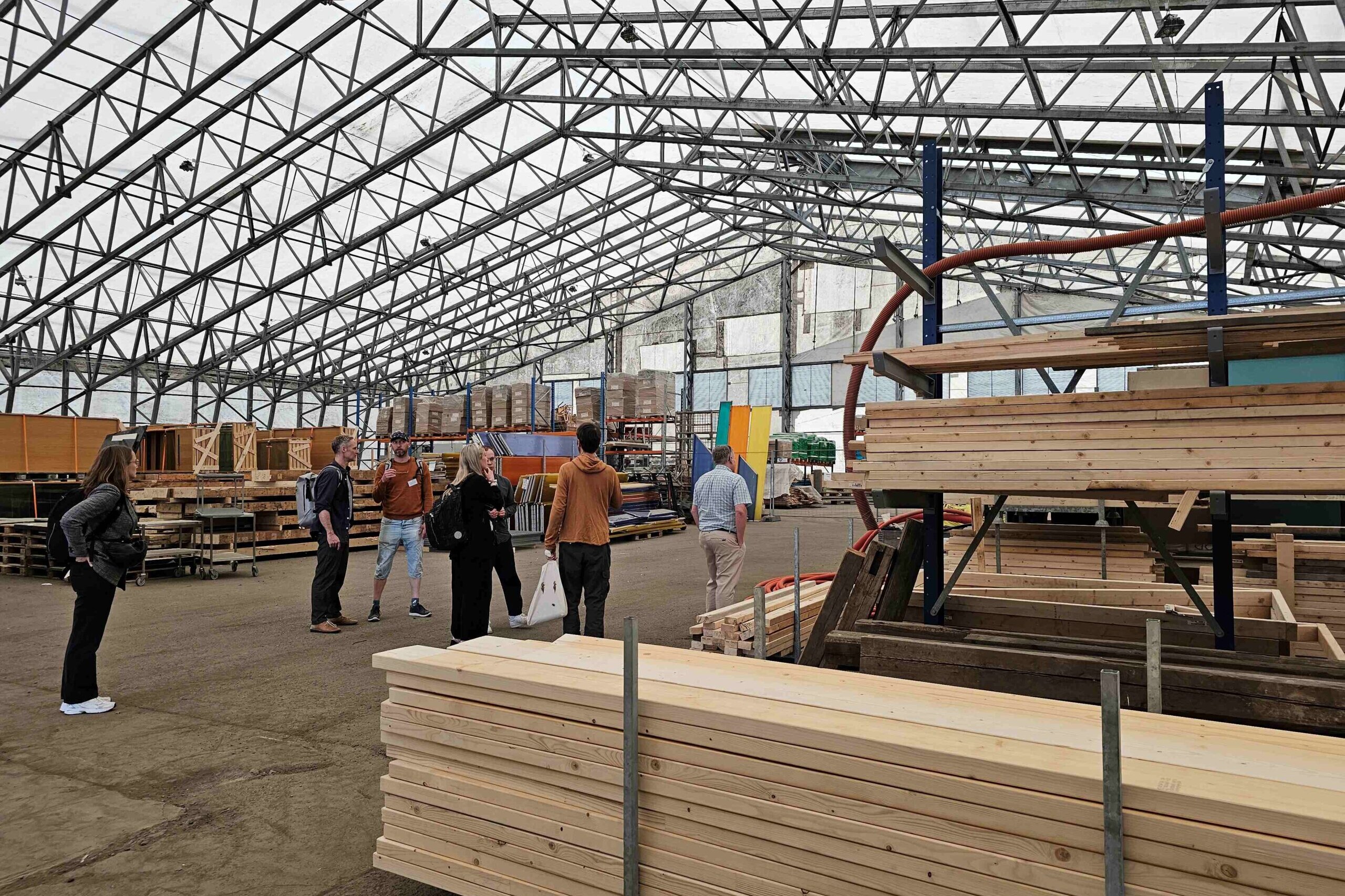
As the plans stand, the company will start with an area of around 2,500-3,000 m2. The agreement to lease the site will be signed as soon as the financing is in place. “We’re planning to start in the Mjø area to verify that this is viable. But we’re thinking of eventually setting up a network of centers in Inland Norway and perhaps also outside our own region,” says Jon Inge Kjørum, Marketing and Sustainability Manager at Østlandet Gjenvinning.
Every year, Sirkula and ØG receive around 150,000 tons of waste containing construction fractions, such as wood. In addition, the new center will handle construction products from the construction industry, such as surplus and returned goods.
Aimed at business customers
The initiative is aimed at the professional construction market, and project manager Ingrid Staveland Reppe says that they have held meetings with builders and contractors to understand what it takes to succeed.
On the one hand, the construction industry will be suppliers of reusable goods – what we currently refer to as waste from construction sites. There is a motivation here to save time and money, among other things by not having to pay for a waste fraction. In addition, it would be desirable to have figures for the greenhouse gas accounts that show that less has gone to waste and more to reuse.
When buying reusable goods, the business customer is keen not to lose time or money. “This means that we must have the right goods available at the right time and time-efficient administration and transport. In addition, we must provide quality guarantees for the products and data for the greenhouse gas accounts that show savings, both when submitting and purchasing reusable goods,” says Reppe.
What will the solution look like
The product range will initially be materials for non-load-bearing structures. A great deal of testing and documentation is required for load-bearing structures, and furniture and fixtures are sold through the company Reinventar.
Today, the construction industry pays to get rid of waste, while it will be free to deliver to the reuse center, where you only pay for the transport. – We envision a reuse container at the construction site that is set aside for materials for reuse. The transportation will be handled by an external company, and here we also see some future opportunities with return freight from those who supply building materials,” says Kjørum.
The plan is for the reuse center to become an AS with a general manager and 1-2 employees. However, the acquisition of land, a warehouse, hiring and digital solutions are on hold until the financing is ready.
More people need to join to succeed
Now the project needs more partners to succeed. “We need supporters for the first three-year period, after which the goal is for this to take care of itself,” says Kjørum.
The total cost is stipulated at SEK 6 million over three years. The project needs external funding, and there are many people who want to be involved as partners, but so far it is difficult to get them to commit financially.
Both Kjørum and Reppe foresee this becoming an important business area in just a few years’ time. “I think a lot will happen within a five-year period, and that in the near future we can expect most construction projects to demand a proportion of reused materials,” says Kjørum.
Landheim into the cluster
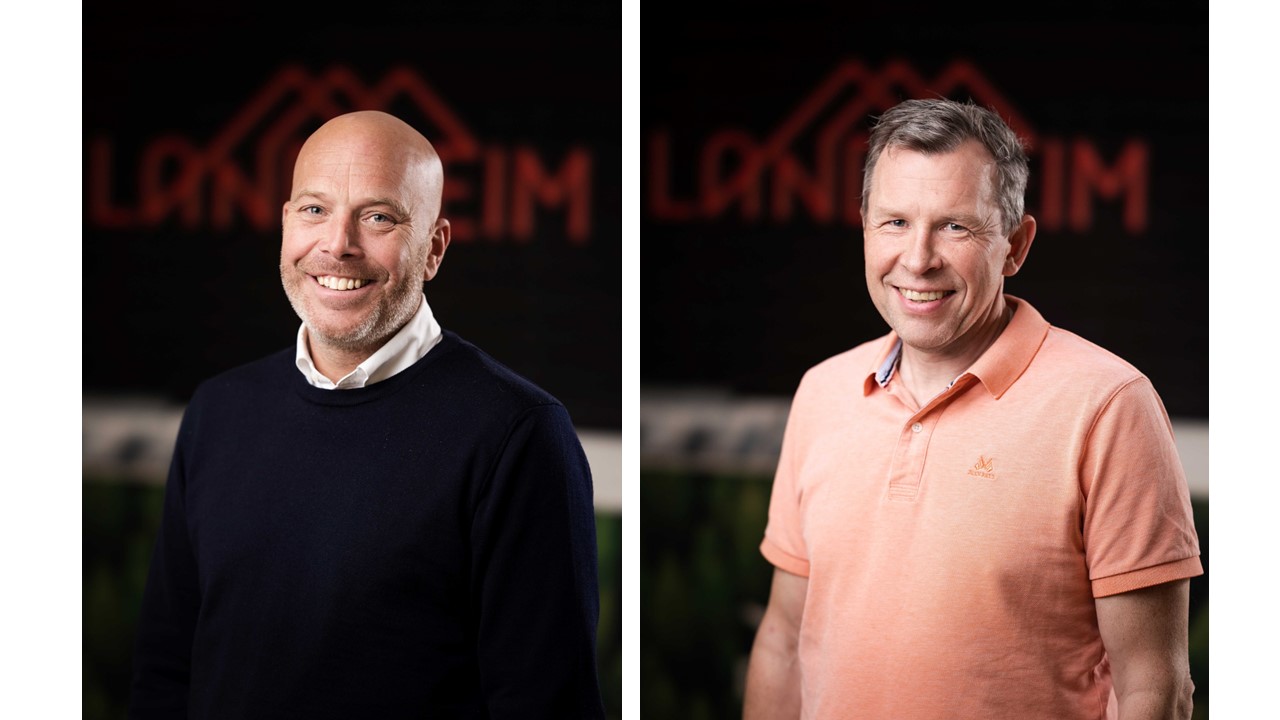
Landheim AS, which is located in Østre Toten, has been manufacturing and supplying roofing since 1992, and over the years has acquired broad expertise in nail plate-based roof structures, precut and elements. The company currently has around 50 employees.
Landheim AS, which is located in Østre Toten, has been manufacturing and supplying roofing since 1992, and over the years has acquired broad expertise in nail plate-based roof structures, precut and elements. The company currently has around 50 employees.
When it comes to building components, Landheim delivers everything from picking standard lengths to very complex orders with girders and columns, milling for ventilation, notches for hidden supports, customized linings and fittings. The company tailors elements and can deliver completely finished structures with windproofing and pre-primed panels in all colors according to the customer’s wishes.
Company with ambitions
– “We are in a phase where Landheim will be developed further. The way the Norwegian Wood Cluster works and the professional groups that exist in the cluster make it interesting for us to become part of the cluster. We hope to gain useful impulses from the meeting places offered by the cluster, which we can bring back to Landheim, while at the same time contributing to the cluster ourselves,” says CEO Yngve Hansebakken of Landheim. Yngve Hansebakken in Landheim.
– Landheim focuses on high competence, efficiency and implementation capacity. “We are a partner in the ‘SirkTRE’ project, where we hope to test a useful pilot over the next few months. Through our participation in the Norwegian Wood Cluster, we hope for new connections and ideas for innovation with a focus on business benefits,” says Espen Nystuen Pettersen, principal owner and responsible for Landheim’s sales and development work.

Strengthening the cluster
Cluster leader Berit Sanness welcomes Landheim AS as a member of Norwegian Wood Cluster.
– We want more members who use wood in constructions and are therefore very pleased that Landheim is joining the Norwegian Wood Cluster,” says Berit Sanness.
– One of the cluster’s strategic focus areas for the future is to increase the level of expertise, adaptability and innovation in the value chain. Landheim’s focus on competence and efficiency fits like a glove with this initiative,” says the cluster leader.
Formally, it is the board of Norwegian Wood Cluster SA that processes applications for membership of the cluster. Landheim AS was admitted as a member on November 18, 2024.
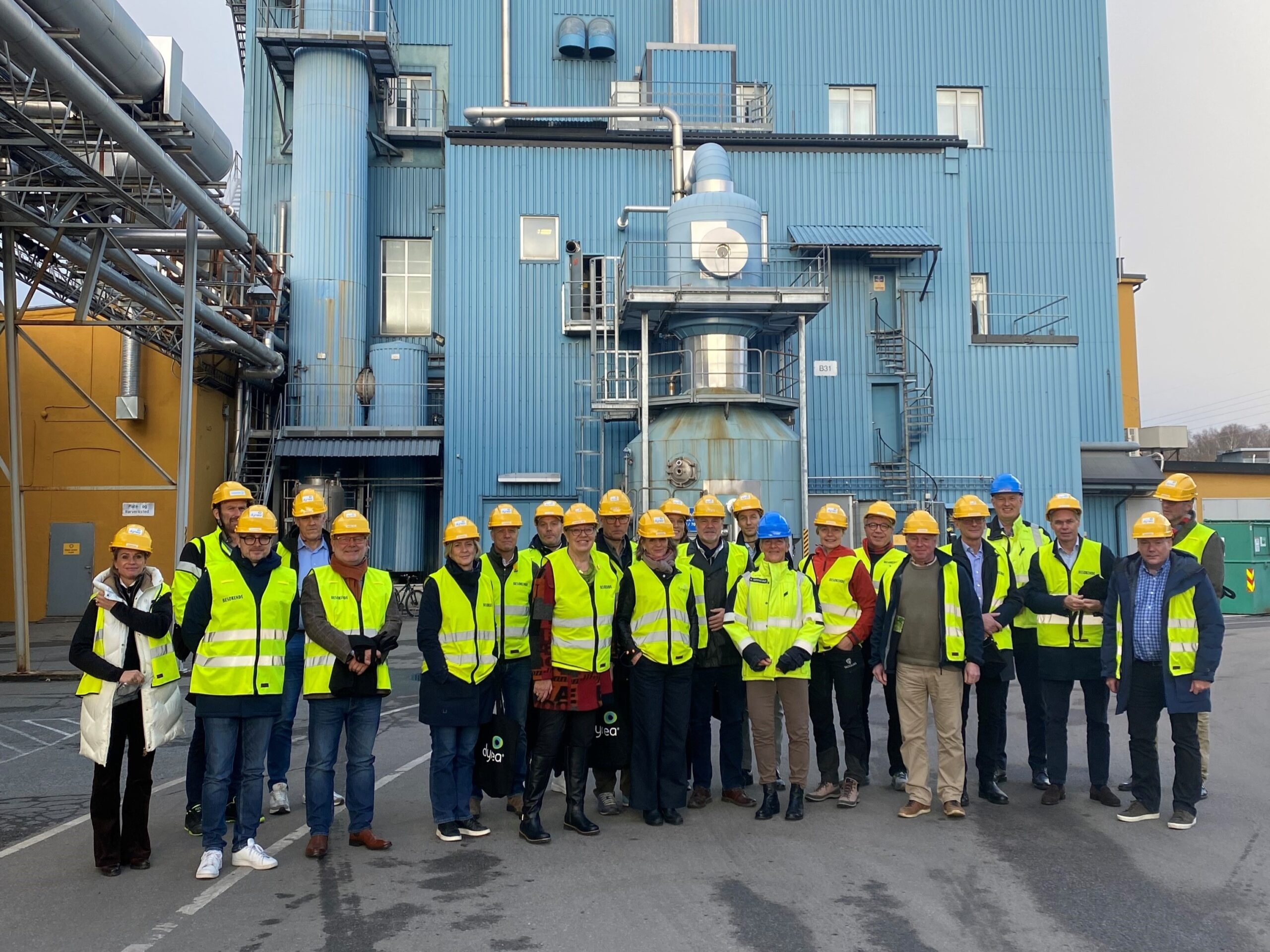
Top management gathering with new insights
The meeting began with a visit to Dynea AS to learn about the development and production of adhesives for the wood processing industry. We were impressed by an active and innovative lab and test environment that develops and tests adhesives for various types of wood and products for European, Asian and American markets. CEO Tarje Braaten and Innovation and Development Manager Kristin Grostad showcased a company with long traditions, but at the same time a strong, innovative will, which is necessary when supplying adhesive products for different types of wood and applications, and to regions with different climate conditions and regulations for adhesives in wooden buildings.
EU deforestation regulation on the agenda
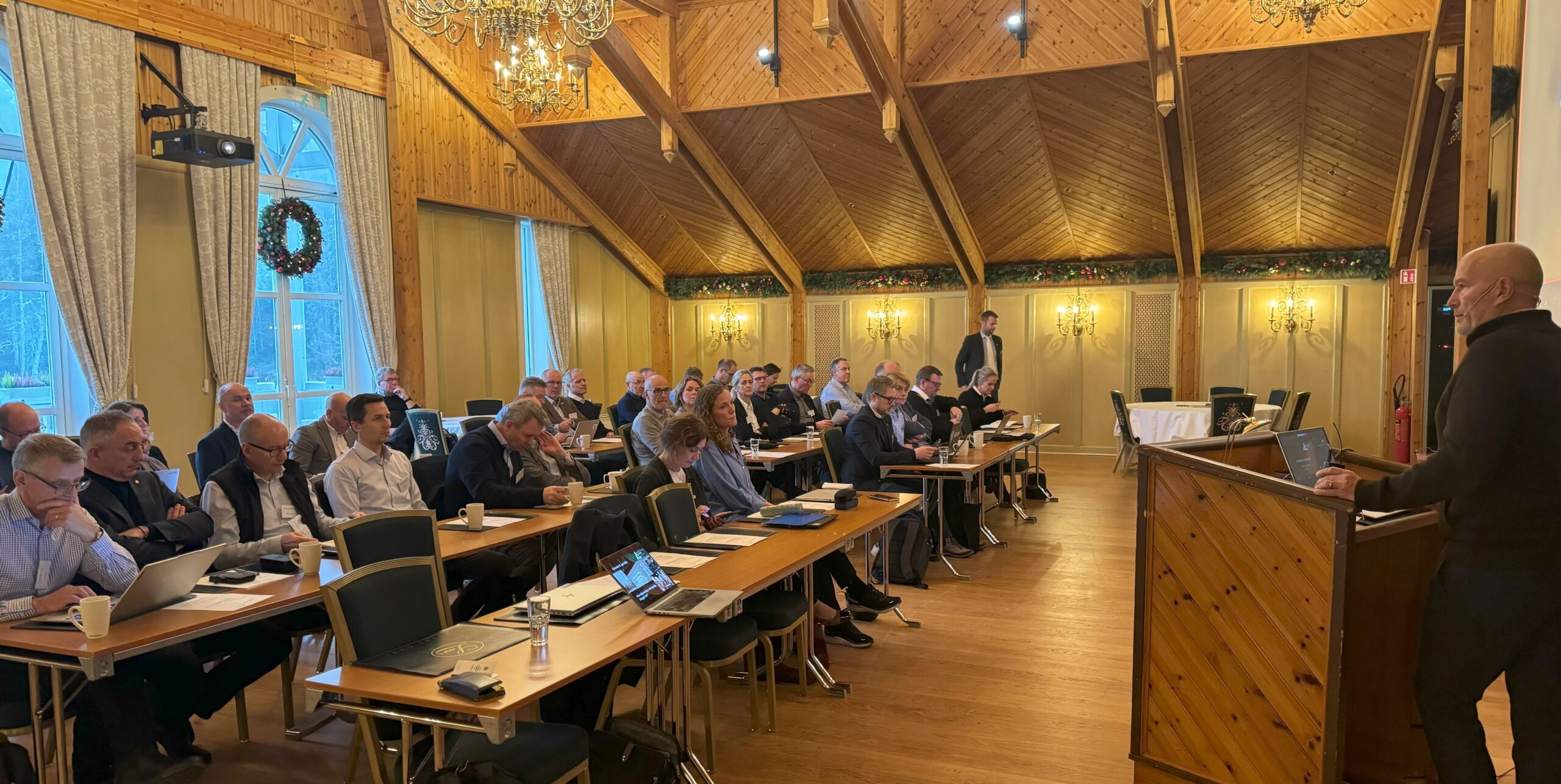
After the visit to Dynea, the meeting continued at Losby Estate where Emma Berglund from Skogsindustrierna and Johan Freij, advisor and former head of forestry at Danske Bank, were invited to share thoughts and knowledge about upcoming regulations and the future timber market.
Emma Berglund is responsible for the Swedish Forest Industries Federation’s forest issues in the EU and internationally, and follows the processes surrounding the EU Deforestation Regulation (EUDR). She was invited to give us an update on the EU’s work on the EUDR and paint a picture of what we need to prepare for.
The Deforestation Regulation aims to prevent goods that have caused deforestation or forest degradation from being traded in the EU. The regulation includes requirements for due diligence, traceability and information. Although the entry into force of the regulation is likely to be postponed until December 30, 2025, there are major challenges associated with its implementation.
Before the regulations can be put into practice in the EU, there are a number of questions that need to be answered. These include definitions of terms such as “forest destruction” and “plantation forest”, as well as questions about product bans and traceability.
The government has still not decided whether the EUDR will be partially or fully incorporated into Norwegian law, so Norway is currently regarded as a third country. This is unfortunate, and the industry wants clarification as soon as possible. In Norway, the Timber Industry is following up the development of the regulations on behalf of the industrial companies, and the administration of the NWC is in dialogue with the Timber Industry on the matter.
The battle for raw materials – the new reality
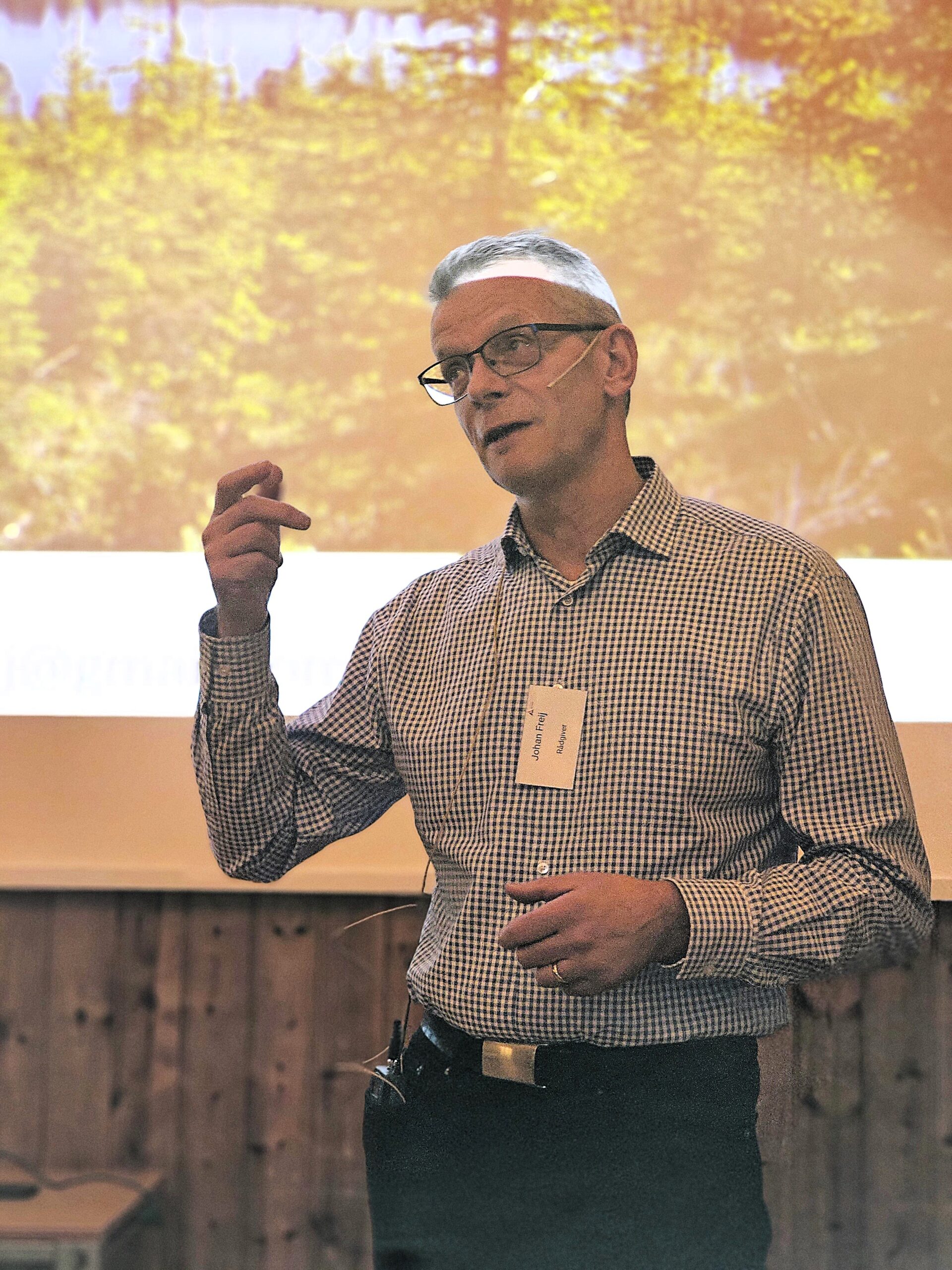
Access to raw materials for the woodworking industry is affected by political decisions, the nature agreement, beetle attacks, forest fires and the war in Ukraine. How will this affect the situation in Norway, can we build as much with wood as we want in the future? And how will the competition between wood and other materials in construction develop in the future in light of the nature crisis and climate crisis? We asked Johan Freij, now an independent advisor, but formerly head of forestry at Danske Bank for many years, to look into the crystal ball.
At a time when the construction market is at a standstill, things look bleak for the wood industry. But Freij was concerned about the long-term picture and assured that better times will come. Among other things, this is because there has been a major expansion of pulp production capacity worldwide, which means that there will be a shortage of long-fibre spruce and pine timber, which is important for lighter and stronger products. According to Freij, our Nordic softwood will become increasingly sought after as both pulpwood and building material.
We’re currently experiencing a global recession and a severe shortage of timber. What will it be like when the economy turns around, will the lack of wood become a threat or a reality?
– “I believe that those who are ‘wood stingy’ (stingy = greedy) and get the most out of the log will be the winners in the future,” said Freij. He listed utilization of grot*, thinner saw blades, finger jointing, gluing, composite materials and recyclable and demountable products.
– And remember that air is cheaper than wood. It’s not rational to use solid wood if you can fill the core with air or inferior qualities,” he said. Freij’s closing words were that it’s just a matter of “going with the flow” and working on improving logistics and developing new products.
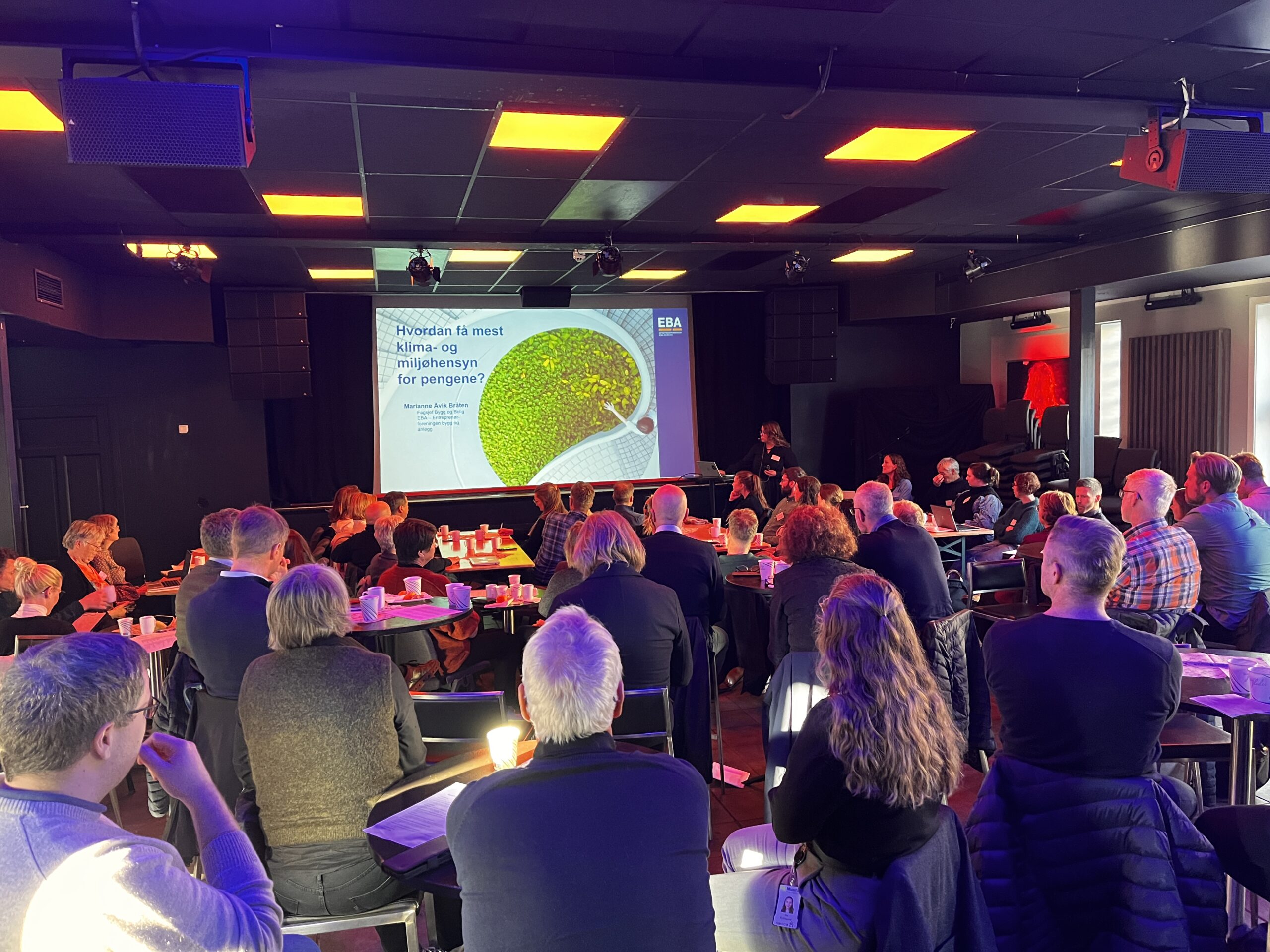
Large attendance at specialist meeting on climate in the construction industry
Collaboration and dialogue will become more important as the requirements for sustainability in construction projects become more extensive. When the Climate-Friendly Buildings Innlandet project has held meetings and gatherings with players in the industry, the recurring theme has been that “we need a meeting place”. To discuss solutions, opportunities and risks, and share good and bad experiences.
That’s why the project took the initiative for this first professional gathering under the heading “The construction industry of the future in Inland Norway”. On the agenda was knowledge transfer and sharing from processes and construction projects.
Upheaval in the construction industry
The construction industry accounts for 40% of global greenhouse gas emissions and just over 20% nationally, so we all know why emissions need to be reduced. However, there are still many unanswered questions about how, what, who and when. Eivind Selvig from Civitas and the Climate-Friendly Buildings Innlandet project drew a picture of all the ambitions and requirements that the industry must meet in the future. A good mix of expected and planned tightening of requirements in EU regulations and Norwegian regulations.
Meeting the requirements requires methods, knowledge, interdisciplinary collaboration, development and testing of new products and solutions. Suppliers must document the climate and environmental properties of their products and deliveries. Public procurement will set requirements or invite competition for the best deliveries.
– We are facing a paradigm shift throughout the construction industry. The reuse of buildings, building components and materials will become the new normal. We need to look at buildings as a material resource, both when we rehabilitate, rebuild for other uses and when we dismantle entire buildings. In other words, we need to think circularly throughout the process, throughout the building’s lifetime and find solutions that extend its lifetime. We can learn a lot from going back and seeing what and how we did with timber-framed buildings, which are excellent examples of circular solutions with a long lifespan; they can be dismantled, moved and reused,” said Selvig.
Guide for greenhouse gas reductions in buildings
When regulations and methods are constantly changing, it can be difficult to know which measures to prioritize. The Norwegian Association of Building and Construction Contractors (EBA) recommends starting with the measures that cost the least but have the greatest climate impact, which is described in EBA’s guidelines:
Marianne Åvik Bråten, Head of Building and Housing at EBA, gave us an introduction to how the guidelines can be used as a tool when planning a building. Part 1 describes some basic principles of great importance for greenhouse gas emissions that are common to all projects. Part 2 deals with the use of materials in a building project and looks at the most cost-effective measures in relation to possible CO2 reductions when choosing solutions.
– “By going through the guide and assessing the building elements, you can see how you should consider replacing materials to reduce emissions. This is a simplification and cannot be used as a pick list, but it starts the little gray areas when we work on projects,” explained Bråten.
At the same time, she noted that it’s important to look at the big picture: “Some sites may not be suitable for building on. And we need to build durable buildings that will stand up to the future and the climate changes we face, including waterproof basements. At the same time, we need to build in resilience so that we can adapt the buildings and use them for other purposes later. There are many choices to be made, and early involvement of the executing contractor will often be important,” she pointed out.
As a result of more and better products on the market, the EBA is in the process of updating the guide with new CO2 values. The new edition is planned to be launched before Christmas.
Experiences with climate reduction in construction projects
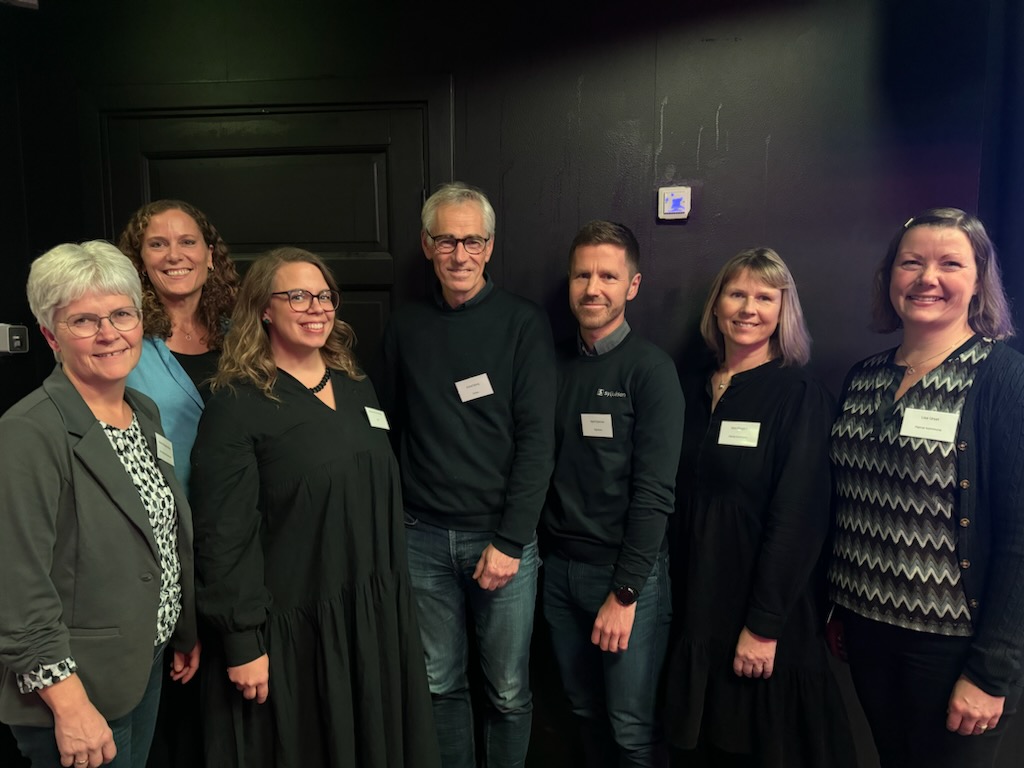
Project manager Kjetil Kjærnes presented the “Stasjonsveien 7-9” project, where Syljuåsen has been both client and contractor. The background was a slightly different call for tenders from Løten municipality, where the order was for a building that could house a medical center in the center of Løten, in return for the municipality providing a long-term lease.
– When you’re a developer, the expected property value in the future is of great importance. That’s why we received a clear recommendation to achieve Breeam certification in this project. But such certifications are expensive and large sums are spent on hired consultants. Is this the way to get the best environmental value for money?” asked Kjærnes.
Kjærnes also highlighted some practical experiences with the weighting of climate in public procurement: “It is entirely possible to weight the environment by setting requirements in the specification, and not in the procurement criteria. Then we think that the environmental goals should be linked directly to CO2 emissions instead of specifying an exact construction method. Can we have competitions on the percentage reduction of greenhouse gas emissions, so that what we achieve beyond the minimum requirement will provide some benefits?” he said.
Public procurement: Stakeholder dialogue is important
The rule of 30% weighting of climate in public procurement was introduced on January 1, 2024. How do you rig these tenders to maximize the environmental impact while ensuring that local and regional bidders can participate in the competition? We invited the municipalities of Hamar and Alvdal to share their experiences.
Hamar Municipality shared experiences from its market dialogue with building and construction contractors and the Association of Mechanical Contractors (MEF). “We wanted to get answers to some important questions: where does the market think there are the most environmental benefits to be gained, and what do they think about our proposed environmental and climate requirements,” said Östgård, sustainability engineer at Hamar Municipality.
In the process, the award criteria from DFØ’s guide were used as a backdrop. “Some of the experiences we made are that the market in Inland Norway is ripe for fossil-free (not emission-free) building and construction sites, and that many are concerned about transport, material use and reuse of masses,” she explained. The plan is to continue the market dialogue, including with waste management companies.
In Alvdal, regional procurement advisor Hanne Maageng Olsen has been involved in the early phase of planning for new care homes, where they want to use climate-friendly materials and at the same time build local expertise. “Anchoring is very important, and we have received a decision from the municipal council that we will move forward with “green building” and that we will look further into possible forms of contracting,” she began.
In October, the municipality invited suppliers to a dialog meeting. One of many suggestions was that the requirements for the number of reference projects should not be too high if local contractors are to take part in the competition. “The participants were very positive about this type of dialogue, and the municipality received good input for further work,” said Maageng Olsen.
Want a permanent meeting place
The conference was rounded off with a Menti survey on usefulness and what thoughts the participants have about establishing a permanent meeting place for “The construction industry of the future in Inland Norway”. In summary, most were very positive, both in terms of form and professional content. An overwhelming majority would like to see two such meeting places a year, and preferably more time to mingle.
The Climate-Friendly Buildings Inland project is following up the input in collaboration with the stakeholders who participated in the planning of the conference: EBA Innlandet, Arkitektforeningen Hedmark og Oppland, Innlandet County Council, Hamar Municipality, Østlandet Gjenvinning and Tema Eiendom.
Project Climate-friendly buildings Innlandet
The aim of the project is to speed up the transition to more climate-friendly construction in the region. Climate-friendly use of materials is central to the project, and knowledge is being disseminated about greenhouse gas calculations/budgets, certification schemes, forms of construction, rehabilitation and reuse.
Duration: February 2023-February 2026
Target group: All players who order or deliver services/products for construction in Inland Norway
Led by: Norwegian Wood Cluster, Civitas and Norconsult
Funded by: Innlandet County Council and Innovation Norway. The state administrator supports the project.
Read more and sign up for newsletters: www.klimavennligebygg.no

Supporting startups from the forest
CircBio Go provides multi-level support around new business opportunities and sustainable solutions related to forest-based bioeconomy. It could be within wood pulp, bio-based materials, packaging, wood construction – or that you offer services or products to the wood industry.
We offer a series of webinars that provide knowledge about sustainable and circular business development to take your business and innovation to the next level. There will also be opportunities to participate in networking, pitch sessions and an accelerator program that connects you with experts and investors. Stay tuned!
Sign up for one or more webinars now:
-
November 12, 2024 Circular business models
-
November 28, 2024 From prototype to large scale
-
January 16, 2025 Pricing and marketing
-
February 13 Sustainability reporting
-
March 13, 2025 IP strategy
-
April 3, 2025 Internationalization
The webinars are free, but you need to register for one or all of them.
Kristiansand leads the way
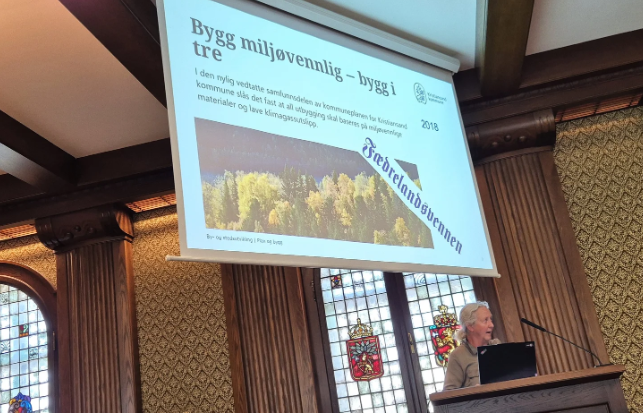
Today, Kristiansand can showcase exciting office buildings, apartment buildings and student housing made of wood. “Politicians gave us clear guidelines to ensure increased use of wood in larger buildings. We have followed up on this,” says Venke Moe, Head of Planning and Building in Kristiansand Municipality.
Clear political guidelines
In 2015, Kristiansand became a member of Nordic Cities of Wood. At the time, Kristiansand lacked major reference projects in wood, and politicians called for the use of wood in buildings.
– In 2018, there were formulations in the community section of the recently adopted municipal plan that stated that all development should be based on environmentally friendly materials and low greenhouse gas emissions, but school buildings were still being planned in concrete and steel. “The politicians didn’t like that, and the political order to increase the use of wood in larger buildings was therefore tightened,” says Venke Moe, Head of Planning and Building in Kristiansand Municipality.
– “We obtained assessments from the Ministry of Local Government and Modernization to make sure that the guidelines we wanted to use were in accordance with the Planning and Building Act. The Ministry confirmed that we had the authority to mandate the use of wood in building structures in the zoning regulations,” says Moe.
Since then, a number of exciting wooden buildings have popped up in the municipality.
Visited exciting wooden buildings
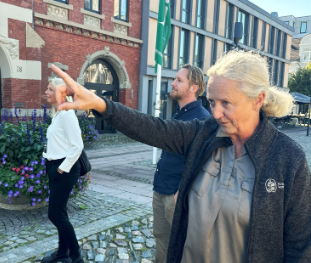
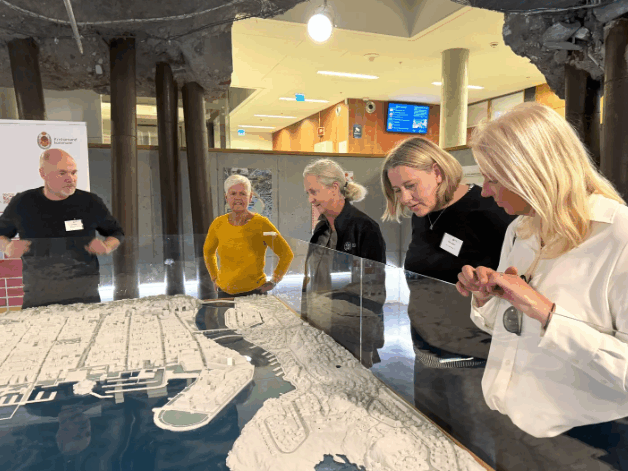
As a result of the interesting developments in Kristiansand in recent years, the Norwegian Wood Cluster recently arranged a study trip to the Kristiansand area for its members. A couple of representatives from the Innotre cluster in Agder also took part. Jørgen Tycho, architect and founder of Oslotre, was responsible for the program.
In addition to meeting Head of Planning and Building Venke Moe, the participants got to see student housing, apartment buildings and office buildings in the city of Kristiansand. They also visited Aanesland Treindustri and Vennesla Kulturhus in neighboring municipalities.
Want more study tours
Everyone found it interesting to hear the city planning manager tell the story behind the conscious wood investment in Kristiansand. Participants also expressed interest in Norwegian Wood Cluster organizing new study tours.
– The Kristiansand trip was top-notch in terms of content and included prepared and educational presentations. Both useful and inspiring. I hope there will be more study tours,” says architect and partner Jørn Reiner of Kontur Arkitekter.
– “This gave us a taste for more. There is definitely value in visiting good example buildings and, not least, meeting architects, developers and contractors to hear their assessments and experiences,” says Head of Department Eivor Slåtten, Norconsult.
– “It was interesting to visit the various buildings and make contact with both builders and contractors. In addition to the professional benefits, the trip served as a useful meeting place for new connections,” says CEO Steinar Lyseng of Vyrk Innovation.
The signal building in Vennesla
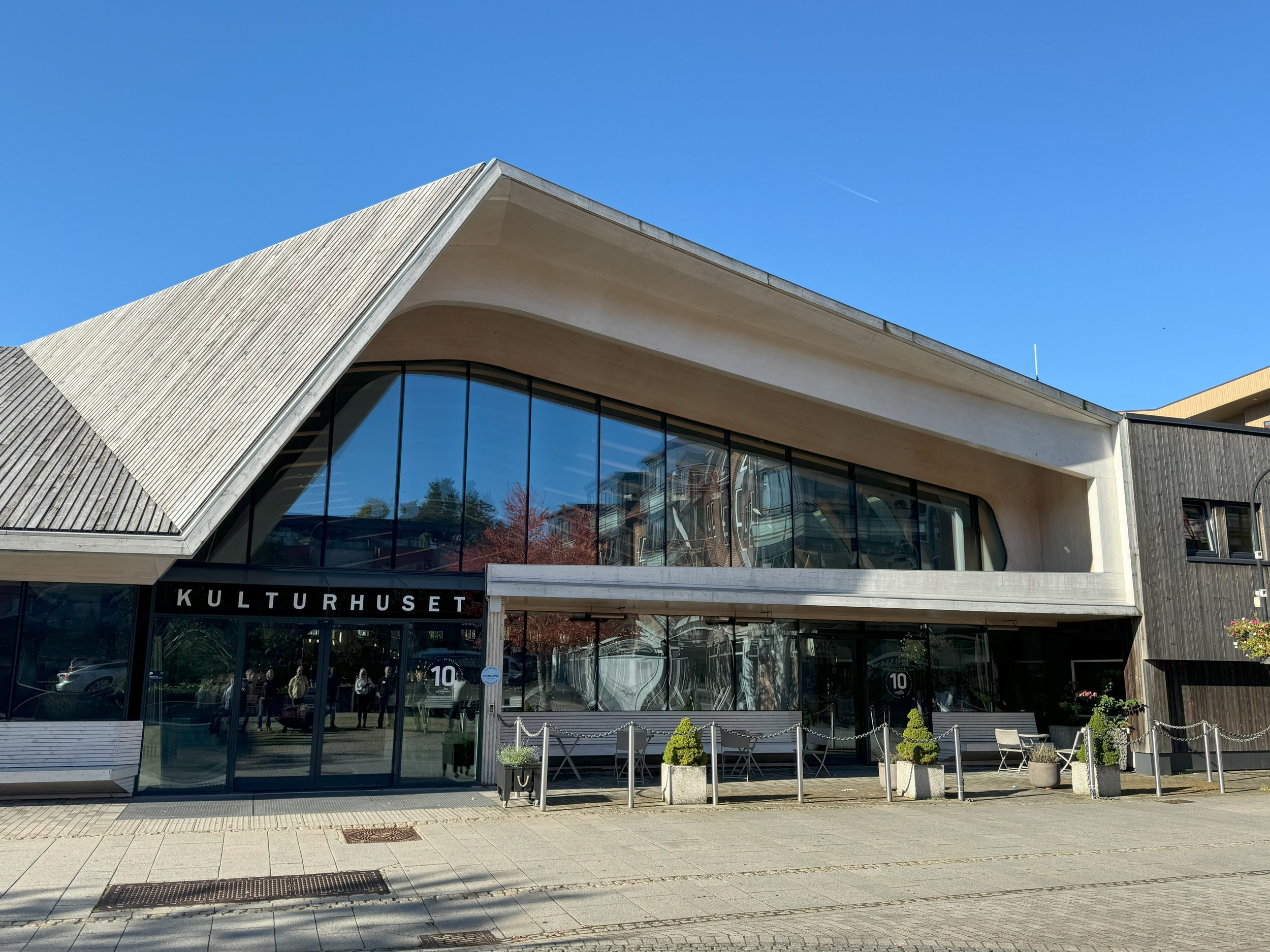
Vennesla municipality wanted to establish a public meeting place and also raise the architectural quality in the center of the municipality.
The result was Vennesla Library and Cultural Center, which was completed in 2011.
The building has attracted a great deal of attention nationally and internationally and won a number of awards, including Wood Building of the Year 2011 and the National Building Award in 2012.
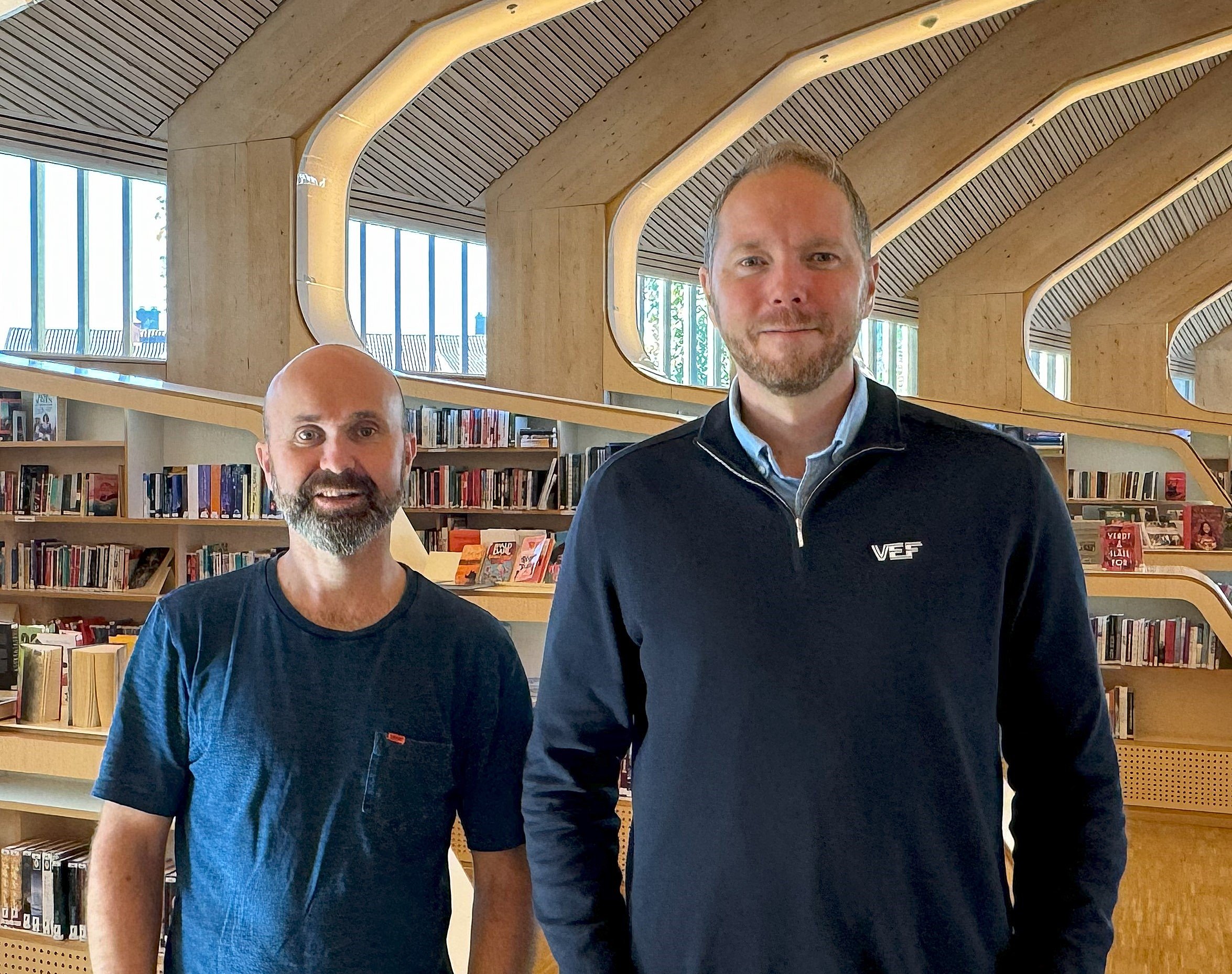
Iconic solution
Stavanger-based architects Helen & Hard won the contract and created an unusual solution for the building. Helen & Hard had received a lot of praise for Prekestolhytta. With the library in Vennesla, the office further distinguished itself as an innovative architectural firm.
– All the load-bearing elements of the building are made of laminated timber, and the construction is characterized by the 27 ribs in the ceiling that create rhythm and spatial experience. Moelven Limtre delivered a column-dragon glulam construction. “Site-built furniture, lighting and all technical infrastructure were attached to the structure as ‘add-ons’ and thus became an integral part of the building’s overall architecture,” says architect Njål Undheim, Helen & Hard Arkitekter.