




From steel to wood at Gardermoen
On December 5, NSW Architecture and the National Conference for Wood Architecture hosted an afternoon seminar at the premises of NSW Architecture in Oslo. The theme for the evening was the Terminal Building at Gardermoen, which was opened in 1998.
The terminal building is described as one of the most iconic buildings in modern Norwegian architectural history. After 25 years, it is possible to lift the veil a little. The questions at the seminar were: Why was the terminal’s roof structure built in wood and not steel? What impact has this building had on Norwegian architecture and Norwegian industry?
From Hurum to Gardermoen
NSW Arkitektur was involved in designing the new airport terminal, which shows innovative use of Norwegian materials. At the seminar, the partner and founder of NSW Arkitektur talked about the process of developing one of Norway’s largest land-based development projects. The terminal building was to be characterized by Norwegian and Nordic calm, and by “silent monumentality”.
The architectural team that won the competition consisted of Niels Torp Arkitekter, Skaarup og Jespersen Arkitekter and Narud Stokke Wiig Arkitektur (NSW). They won with a clear concept:
– Norwegian natural stone on the floor of the arrivals hall, reminiscent of the Norwegian bedrock.
– Wood in departure areas, inspired by the surrounding forests.
– Steel in the roof structure, to give a light and striving expression, with light canvas above that lifted towards the sky.
The three architectural offices behind the winning design were organized through Aviaplan AS to continue work on the new terminal building.
From steel to wood
Ole Wiig, the founder of Narud Stokke Wiig Arkitektur (NSW), was president of the Norwegian Association of Architects in the early 1990s. He was a key supplier of premises for the first stage of construction of the terminal building at Gardermoen.
– When the terminal was moved from Hurum to Gardermoen, the architectural team Aviaplan AS continued with the concept we had developed. However, the Storting decided that the roof structures should be built in wood, so there was a change,” Wiig explained. He pointed out that it was a unanimous transport committee in the Storting that decided that the roof structures should be built in wood, with Sissel Rønbeck as rapporteur.
– We experienced a political commitment to strengthen the use of Norwegian materials and to increase the use of wood in the terminal building. The then Minister of Culture, Åse Kleveland, our first and only “Minister of Architecture”, was strongly committed to this. Minister of Transport Kjell Opseth was also a driving force. The rest of the government got behind it, and the final result was both Fauskemarmor and Otta slate in the floors, and wood in the roof structures, on the floors and in a number of other places,” says Wiig.
Innovation boost with the Viking Ship
Moelven Limtre was chosen to supply the wooden structures at Gardermoen. At the seminar, Åge Holmestad gave a historical review of the innovation work that had taken place at Moelven Limtre and which enabled the company to supply solutions for the terminal building at Gardermoen.
Åge Holmestad is a former technical manager and general manager at Moelven Limtre, and played a key role in Moelven Limtre’s innovation work to build the Viking Ship in Hamar for the 1994 Olympics. Glulam arches with spans of as much as 96 m were made there.
– It was the Viking Ship that was the real breakthrough for Moelven’s advanced glulam solutions. A lot of innovation took place during that process, and we improved as a company. After the Viking Ship, we went from innovation to development in many ways,” said Holmestad.
– In this sense, Moelven’s assignment at Gardermoen was technically relatively straightforward, because we could build on our expertise from the Olympic facilities. The major new challenges were related to design, layout and surfaces. The terminal building is an example of how architects are our best friends. After all, architects are much quicker to take on new things than engineers. Together with the architects, we also found solutions for design, layout and surfaces, so it was an exciting building to work on,” says Holmestad.
He explained that after the terminal building at Gardermoen, Moelven Limtre saw increased demand for long-span wooden bridges. As the company could also supply sports halls with long spans, demand also increased.
– This opened up completely new markets for us, thanks to the expertise we gained from building the Viking Ship and then delivering the wooden structures with a new design for the terminal building at Gardermoen,” said Holmestad.
The expertise gained from the Viking Ship and wooden bridges meant that Moelven Limtre was able to deliver solutions to Treet in Bergen and then Mjøstårnet, the world’s tallest wooden building…
Emphasis on quality
When the terminal building at Gardemoen opened in the fall of 1998, it was clear that it had become a beautiful building with great use of wood and Norwegian natural stone in large parts of the terminal building.
– We were keen to create a simple visual expression. Passengers should be put at ease when they enter the building. The emphasis throughout was on quality and robustness. This meant that we had to use good materials that could withstand high wear and tear. We also needed a concept that meant people in the building would have as few changes of direction as possible,” says Lise Rystad of NSW Arkitektur, who worked on the wooden beams and the use of wood in the terminal building at Gardermoen.
– In 1998, the terminal building was built as an airport, so this was well taken care of. “The new phase of construction is more in keeping with the fact that it is both an airport and a shopping center,” said Rystad.
The national conference for wood architecture
The Norwegian Wood Cluster is one of the partners of the National Conference on Wood Architecture, which held its first conference ten years ago. The next full-day conference will be held in Oslo on April 4, 2024.
Read more about Trearkitektur here: https://www.trearkitektur.no/
Watch the video: VIDEO: Iconic Norwegian wooden architecture: Oslo Airport (youtube.com)

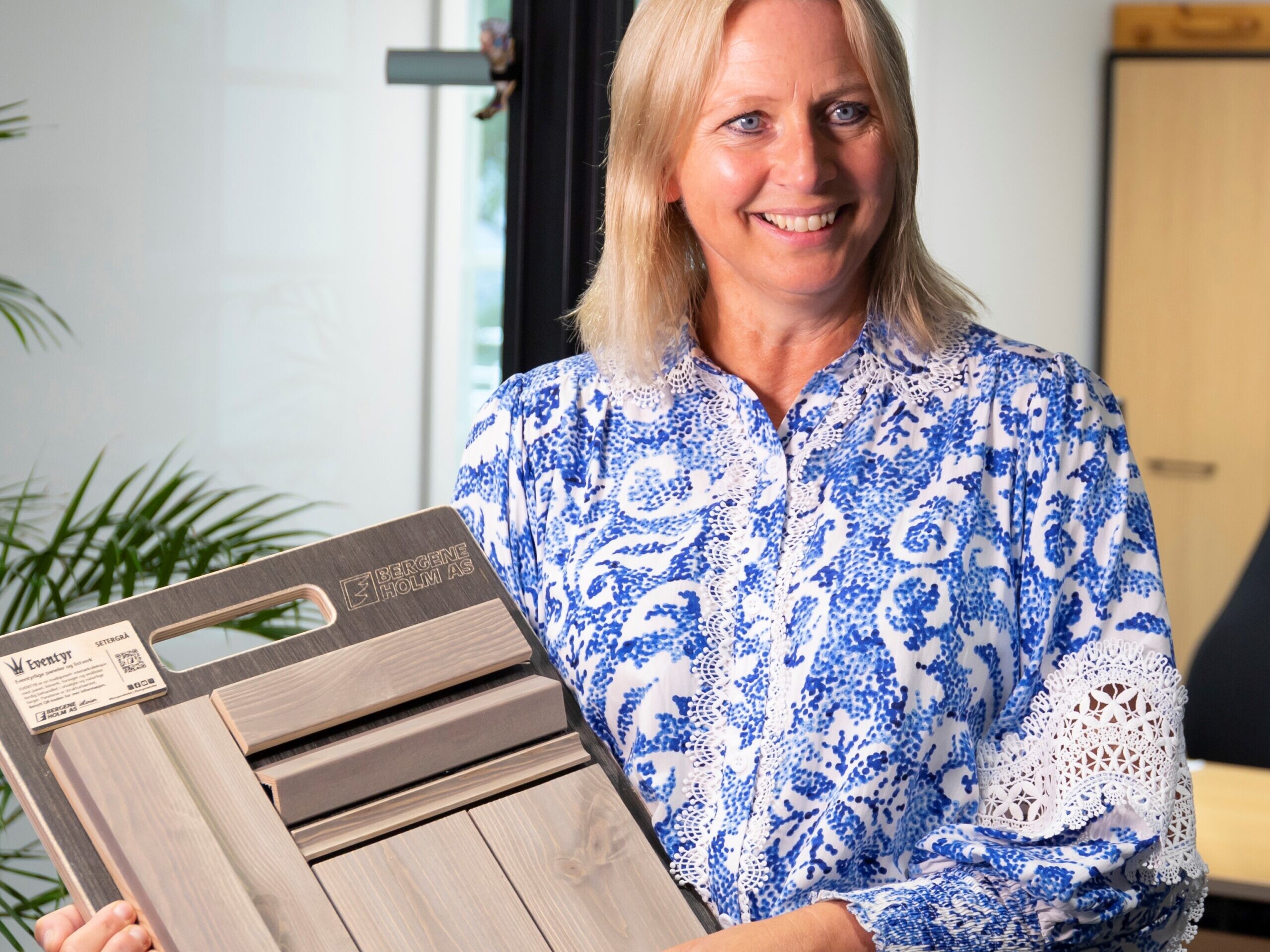
Bergene Holm joins the NWC
Bergene Holm AS is a Norwegian timber group with 450 employees in seven production departments. The head office and two production departments are located in Larvik municipality, while operations otherwise take place at departments in Åmli, Holmestrand, Grue, Kongsvinger and Sør-Odal. In 2022, the Group had a turnover of NOK 2.3 billion.
Interesting collaboration opportunities
– “The Norwegian Wood Cluster has many interesting members from different parts of the value chain, so we expect the cluster to be an exciting arena for sharing knowledge and looking at collaboration opportunities,” says CEO Erland Løkken. He believes that Bergene Holm can contribute to the cluster with, among other things, expertise in sustainability, innovation, communication and digital solutions.
– “We see ourselves as a forward-looking company that is proactive and a driving force in several fields. We bring this into the Norwegian Wood Cluster. The value chain also has common documentation needs in various areas, which is an obvious area for collaboration,” says Løkken.

Standardization as an example
Bergene Holm has its own innovation department with a strong focus on innovation, business and product development. The Group works actively with documentation and digital data and was Nobber of the Year in 2023. Innovation Manager Mona Gran Sukke points to the mobilization work that the Norwegian Wood Cluster has done in the area of standardization as an example of the benefits of the cluster.
– Bergene Holm has its own sustainability manager who participates in the standardization work for climate and environment for building materials. In this field, the Norwegian Wood Cluster has taken an important initiative to mobilize woodworking companies to become more involved. “We had the pleasure of participating in a workshop on standardization at Mjøstårnet in September. Then we saw the benefit of the cluster’s work,” says Innovation Manager Mona Gran Sukke at Bergene Holm.
She also points out how the Norwegian Wood Cluster is concerned with the right division of labor to avoid duplication.
– “We have noted that the Norwegian Wood Cluster has taken responsibility for mobilization, while at the same time building on the Wood Industry’s role as ‘home’ for the industry’s standardization work in close collaboration with Treteknisk. This is a wise approach and completely in line with our view,” says Gran Sukke.
Read more about the standardization workshop here: https://www.nwcluster.no/nyheter/mobiliseringforstandard
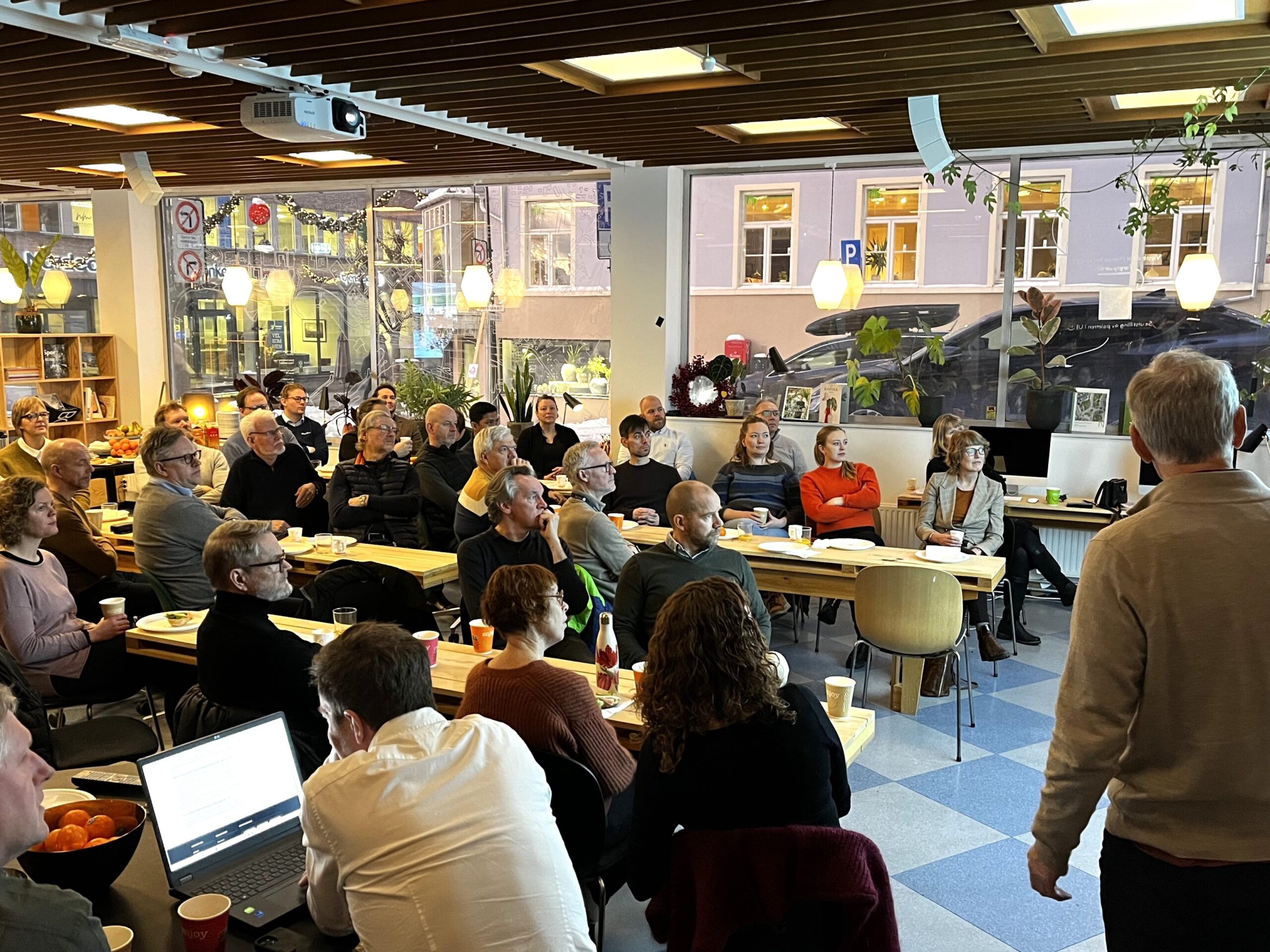
40 gathered for seminar on climate-friendly buildings
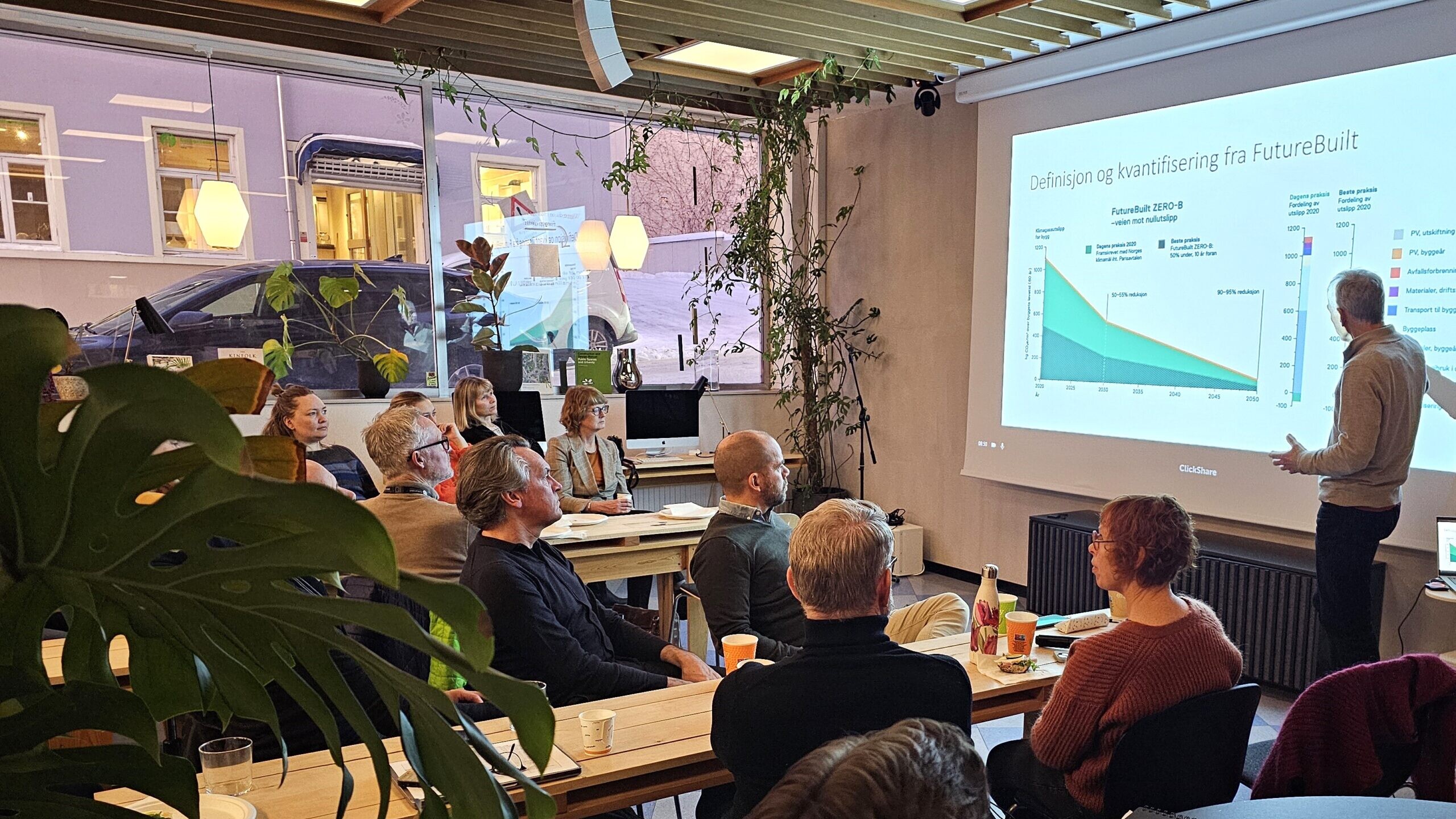
The meeting was the first of a series of breakfast seminars organized under the auspices of Klimavennlige bygg Innlandet. The meeting opened with a briefing on the project, and Eivind Selvig spoke on the topic What is a climate-friendly building? There are no clear answers to the question, but the goal must be for the building to have a significantly lower climate footprint than those built according to “normal” practice.
– The climate-friendly buildings use materials that have a low climate footprint, including reuse. Energy consumption should be low and the proportion of renewable energy must be high. In addition, emissions at the construction site, the choice of building land and location with regard to transportation have a lot to do with the total,” Selvig explained.
Climate Friendly Buildings Innlandet has chosen to emphasize climate-friendly material choices, although it is the sum of all the focus areas that will contribute to the overall goal: to reduce CO2 emissions in the Norwegian construction industry and help to achieve national climate goals and the goals of the Paris Agreement.
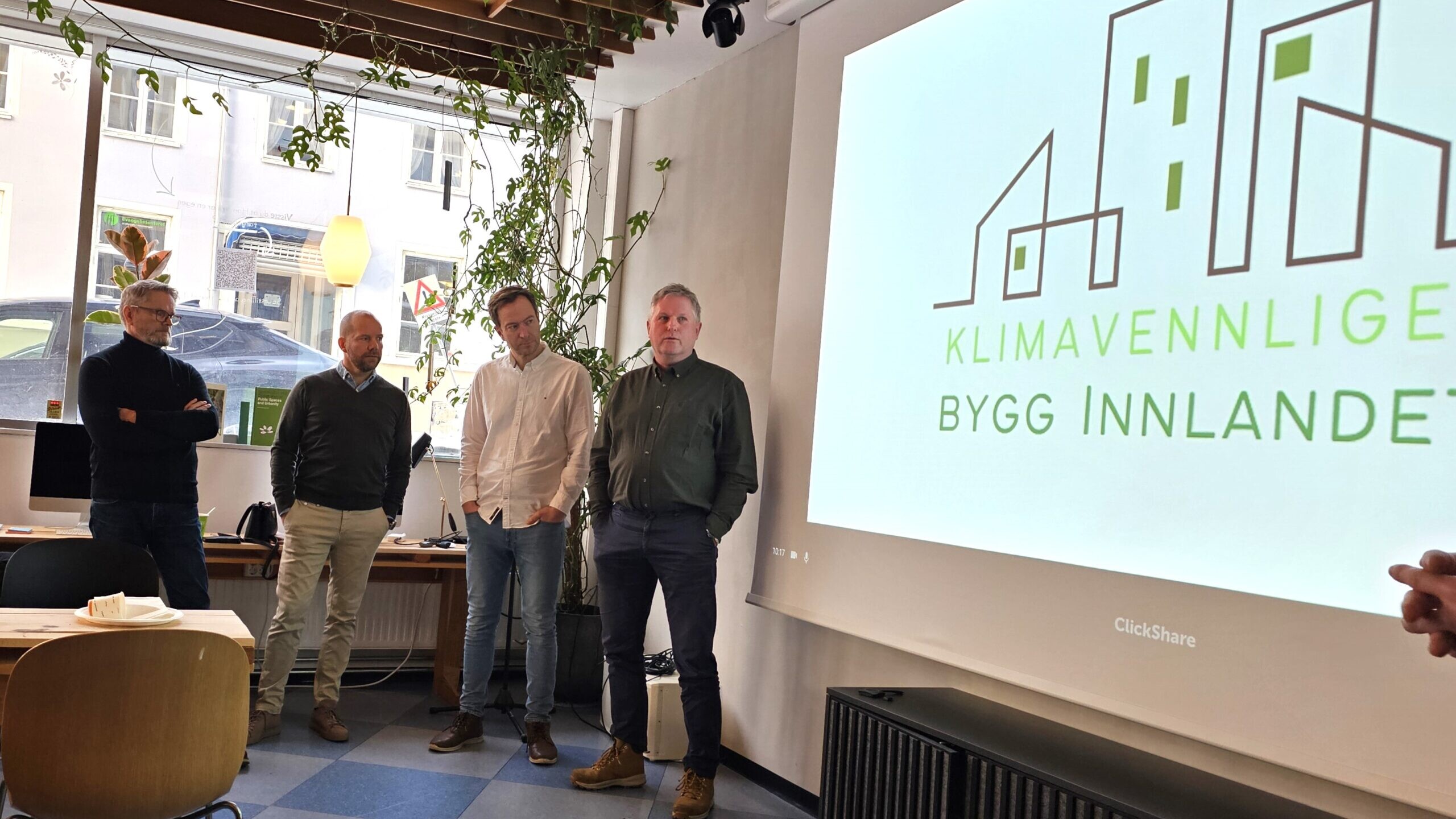
At the meeting at Bylab, three players were brought in to talk about their work on the newly opened Drivkrafthuset in Hamar. The 13,000 m2 building was completed in November 2023 after an impressive construction period of just 22 months. The developer Utstillingsplassen Eiendom, tenant Eidsiva and contractor Betonmast Innlandet all have clear ambitions for sustainability, including greenhouse gas emissions. This was reflected, among other things, in the use of environmentally friendly, purified environmental concrete, which produces 75% lower greenhouse gas emissions than traditional concrete, and the use of robust materials throughout. The eco-concrete’s low emissions are partly due to the addition of reused excavated material that has been washed, cleaned and sorted. The building will be certified as BREEAM Excellent and has calculated greenhouse gas emissions from materials that are at least 20% lower than the reference level achieved. It has energy label A and is built as a passive house with a leakage rate of 0.3. The building is connected to Eidsiva Bioenergi’s district heating system for space heating, hot water and space cooling (absorptive cooling). The district heating was also used for building drying. There is also a photovoltaic system on the roof.
Over the next few weeks, similar breakfast seminars will be held at
About Climate-friendly buildings Innlandet
A project that will contribute to more climate-friendly construction in inland Norway
Funded by Innlandet County Council and Innovation Norway
Focus areas: Climate-friendly materials and building systems
Target group: The entire value chain, from client to developer, architect, contractor and building product supplier.
The project will raise competence in areas such as
– Greenhouse gas calculations
– Climate footprint for different materials and systems
– Certification schemes for climate-friendly buildings
– Reuse and repurpose
– Financing schemes
Duration: 2023-2024-2025
The project is run by Norwegian Wood Cluster, Civitas and Norconsult
More info at www.klimavennligebygg.no
Would you like to receive newsletters from Klimavennlige bygg Innlandet? Click here
Artificial intelligence in wooden architecture
Program
08:00 Doors open
Refreshments, mingling and visit to the exhibition
09.30 – 13.45 Conference opening
09.00 Welcome
Knut Werner Lindeberg Alsén and Aasmund Bunkholt
09.35 – 13.45 Session 1 Architecture and Artificial Intelligence
09:35 Artificial intelligence and digital transformation
By architect Hugo Nilsen CEO at OCODU Design Lab
09:55 A new workflow – digital fabrication.
By architect Aksel Ludvigsen, Technology Lead LOF Architects
10:10 “Rethinking Architecture in the age of A.I.”
By architect Tim Fu, Studio Tim Fu (transmitted digitally, live)
10:30 Break with mingling, activities at the exhibition and refreshments
Activities in the exhibition
– 3D printing showcase
– Exhibitions & new products and much more!”
– 3DNet, showcasing the latest in desktop 3D printing
11:00 Making architects accountable again, by democratising the access to building knowledge. By Franz Forsberg, CEO Spacio
11:30 Artificial intelligence requires knowledge and intelligence about the material properties of wood and its potential.
Sustainability Manager Hege Voll Midtgaard, Bergene Holm
11:50 -12:30 Lunch with mingling and visit to the exhibition
12:30 Digital Materiality in Architecture.
Professor and architect Fabio Gramazio, ETH Zurich
12:55 Seeing is Believing: How Visual Technologies Empower Communities. Dr. Scient. Associate Professor Ramzi Hassan, NMBU
13:10 Dialogue between speakers and conference participants
13:45 – 14:00 Break: Mingling and refreshments
14:00 – 15:00 Session 2 Presentation of subject networks and groups
14.00 Geometry group- SINTEF
Researcher Konstantinos Gavriil, SINTEF
14:10 NMBUtre Project manager
Project manager Knut Magnar Sandland, NMBU
Associate professor Gabrielle Bergh, NMBU
14.20 Norwegian Wood Cluster
Cluster leader Berit Sanness
14.30 InnoTre
Cluster leader Krister Moen
14.40 Wood Works! Cluster
Cluster leader Kjersti Kinderås
14.50 AHO WORKS AWARDS (Outstanding use of wood in architecture)
Winner Brage Banken Lervåg, AHO (Project: “Book exchange”)
15.00 Closing time
The conference is streamed. Info and registration
The Norwegian Wood Cluster is one of the supporters of the Wood Conference in 2024.
Project "Packaging and construction" presents the results
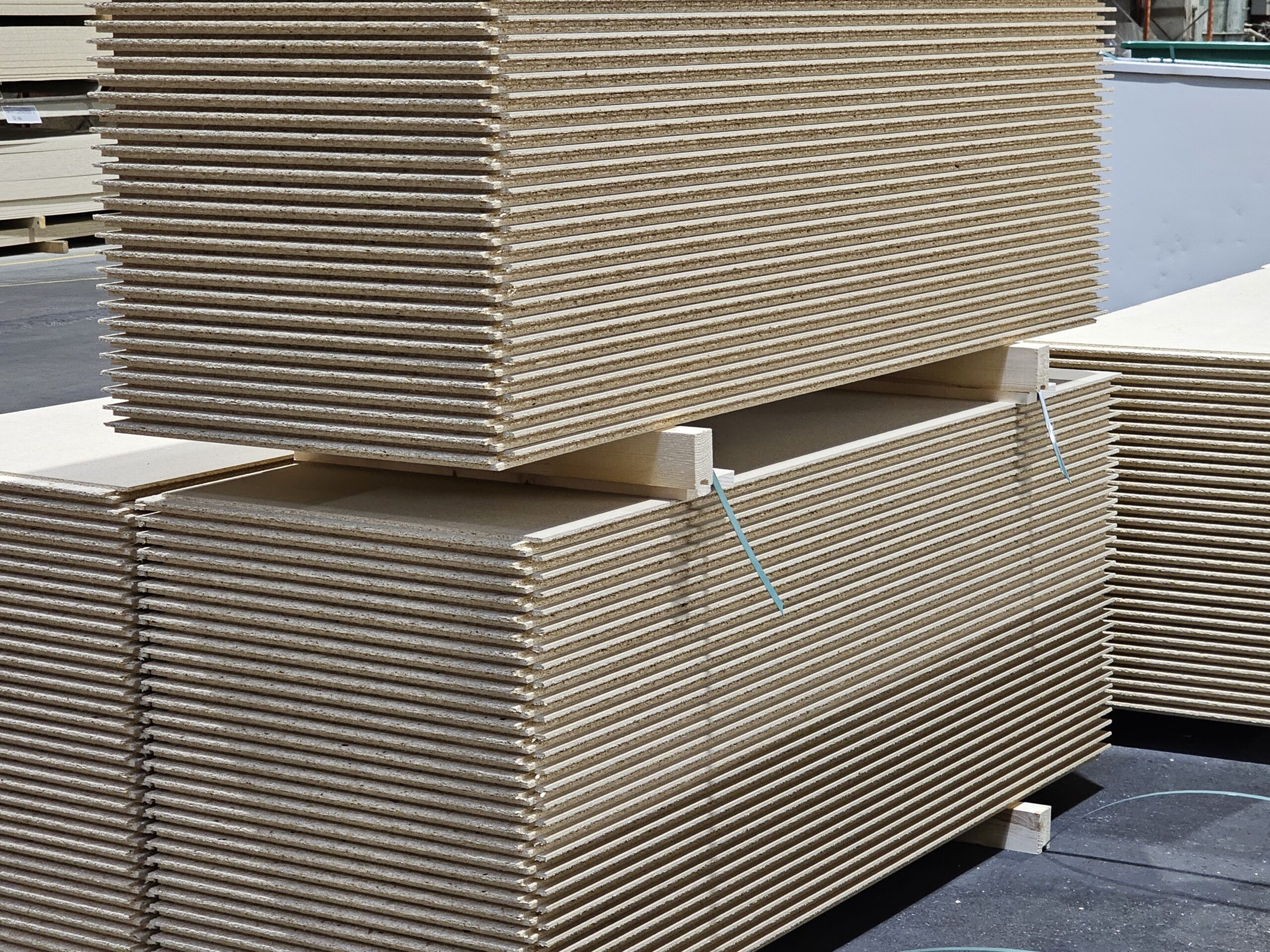
The project “Packaging and construction – circular resource utilization and packaging of wood materials for construction” has been carried out as a collaborative project between the Circular Packaging Cluster and the Norwegian Wood Cluster, and with support from Viken County Council. The main purpose of the project has been to collaborate on solutions for better resource utilization of wood for buildings and contribute to efficient, circular packaging in the wood industry and construction industry.
The basic idea behind the project is to transfer experience between the packaging value chain and the wood industry in order to contribute to a more circular, industrial economy. Packaging has been actively developing circular business models for many years and the turnover rate is high, making the value chain well suited to the development and piloting of various systemic, technical and commercial solutions.
– For our companies, it has been useful to get to know the systemic thinking of the Circular Packaging Cluster. Among other things, the project has identified blockages to increased circularity in the wood industry, which the Circular Packaging Cluster will present during the webinar. In addition, Forestia, as part of the project, has rethought the packaging area and made very interesting experiences, which Forestia’s CEO. Kristian Hanssen will talk about,” says cluster leader Berit Sanness.
Program 8.30-10.00
Brief introduction to the clusters and the project
v/Ola Ronæss, Circular Packaging Cluster, and Berit Sanness, Norwegian Wood Cluster
Project findings: Circular barriers and solutions in the wood industry
v/Ola Ronæss and Jørgen Ingeberg, Circular Packaging Cluster
CASE: Testing a solution where cardboard replaces chipboard as packaging
v/adm.dir. Kristian Hanssen, Forestia AS
Questions and comments
You can also find the program here
Registration
Link to registration can be found here: REGISTRATION

Continuing the journey with Climate Friendly Buildings
First up was a webinar on weighting climate in public procurement on January 30. It was attended by 32 people from municipalities, consultancy firms and construction companies. Eivind Selvig gave an introduction to the new requirement that climate must be weighted with a minimum of 30 percent in public tenders.
How should the requirement be practiced, and what do the new requirements mean for the construction sector? The public sector purchases goods for around NOK 740 billion a year (Statistics Norway 2023), and the climate footprint of these procurements is approximately 10.3 million tons of CO2 (Menon, 2023). Eivind showed various examples of how requirements and weighting can be designed, as well as a brief presentation of DFØ’s guide. You can watch a recording of the webinar here.
Kongsvinger: Climate-friendly buildings that lead the way
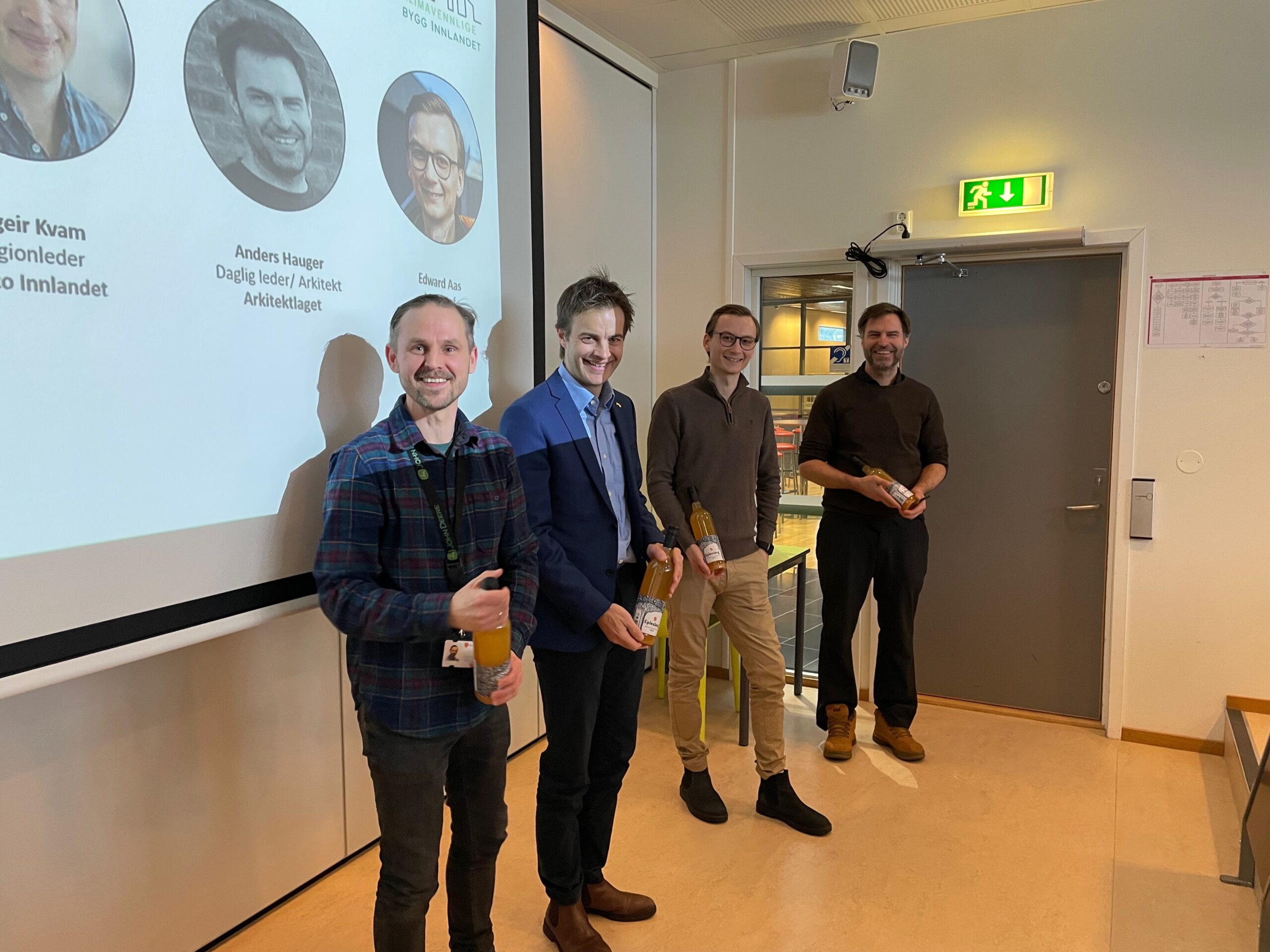
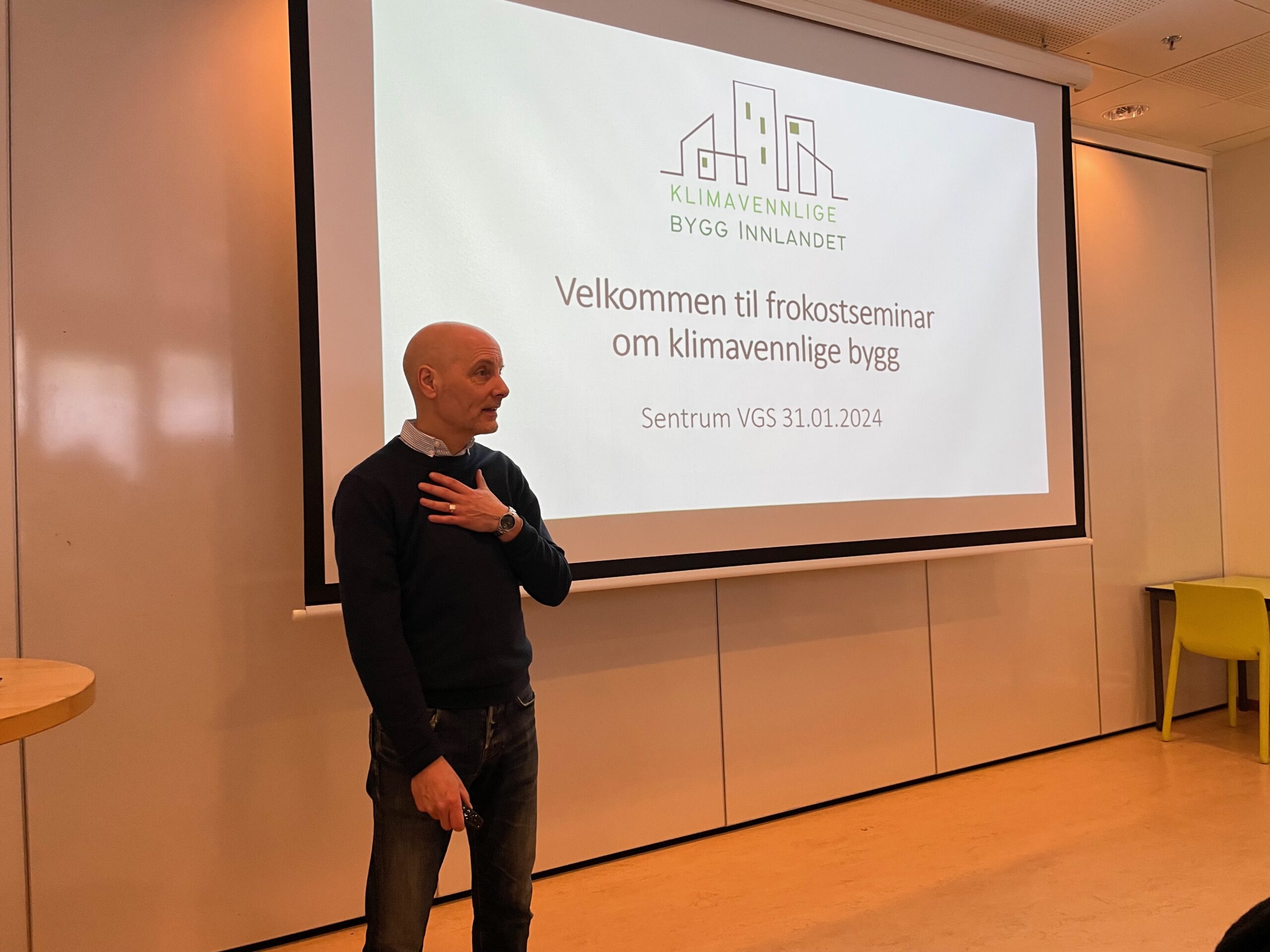
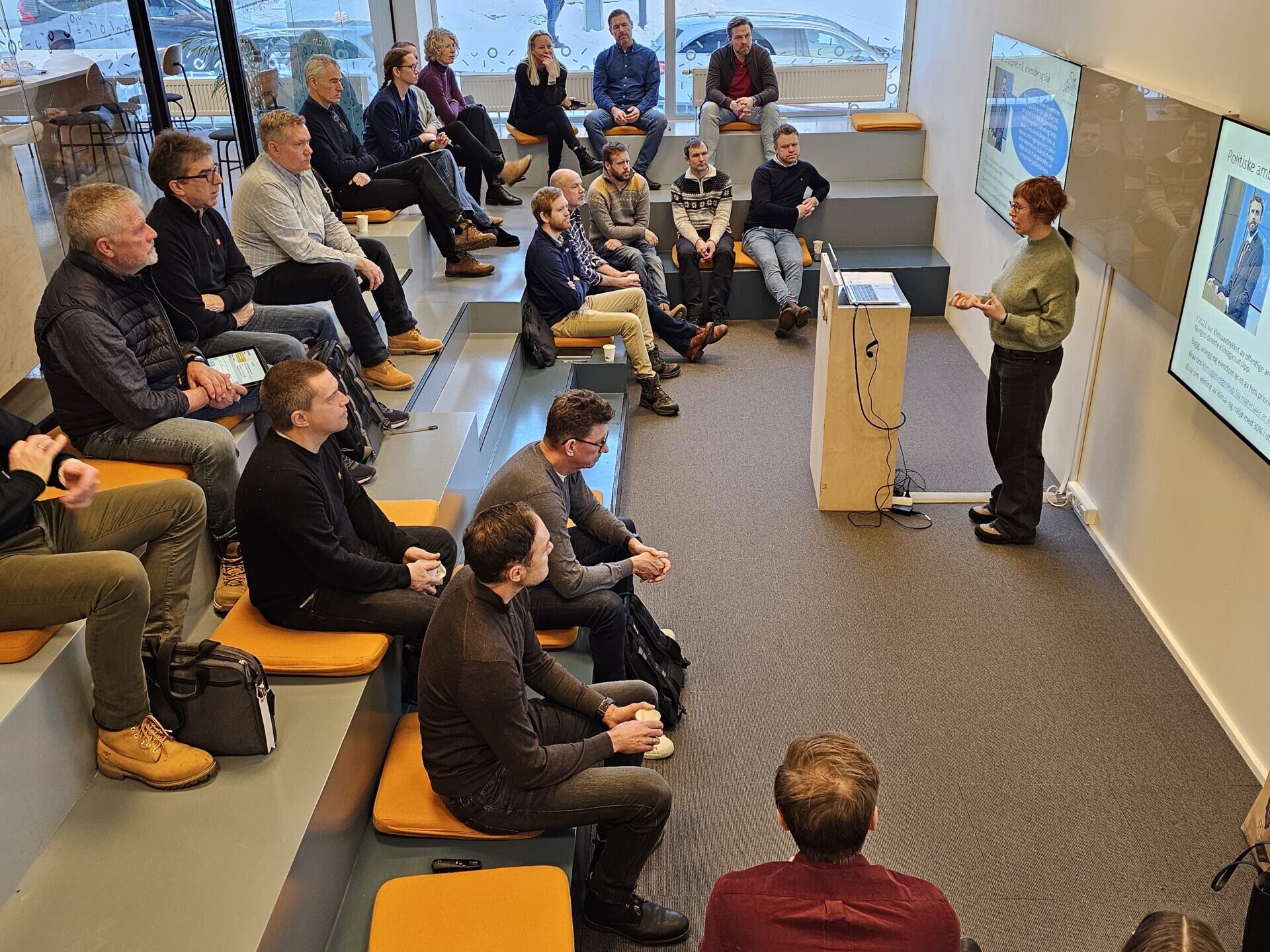
On January 31, 19 people met for a breakfast seminar at Sentrum VGS in Kongsvinger. Edward Aas, Sustainability Manager at ØM Fjeld, presented the BREEAM Outstanding project The Plus and four different forms of contract that the company has worked with in processes involving climate-friendly buildings. ØM Fjeld’s own conclusion was that the form of contract is set based on the criteria and requirements determined by the developer, and that cooperation and trust are crucial to achieving climate-friendly buildings.
The debate panel included Ole Gunnar Holen from Sør-Odal municipality, Anders Hauger from Arkitektlaget and Asgeir Kvam from Sweco. Together with the contractors, architects and consultants in attendance, there was discussion and exchange on the topic of reuse. “Today, it’s not clear how best to compare costs between building new and renovating. We need to get better at this, and we need some guides for the work.
A number of wishes emerged from the meeting; about rehabilitation, forms of construction, greenhouse gas calculations and climate planning in smaller construction projects. The participants clearly expressed that they wanted a local meeting place to discuss and further develop these topics and ideas.
Gjøvik: Sustainability in construction projects
22 people met for breakfast at NT6 in Gjøvik on February 7 to hear Tema Eiendom present its work on sustainability. The company owns 370,000 square meters of commercial buildings, mainly in Inland Norway, and manages existing buildings as well as developing new ones. Ingrid Lotterud is a sustainability manager with four months’ experience at Tema Eiendom, but is already well on her way to implementing the company’s sustainability strategy. “We’ve spent a lot of time mapping and looking at how we can work smarter and create more with fewer resources. The goal is for our sustainability strategy to be in place in the first quarter of this year,” she said.
Tema Eiendom presented Meieriet in Lillehammer, an older factory building that was rehabilitated with a strong focus on preserving the existing building stock. “The best decision we made was to choose rehabilitation over new construction. The building had a lot of good qualities, both a flexible building envelope and good load-bearing systems. In addition, this was a building from the 1950s that many people in the local area had a relationship with,” says project manager Kristian Kraabøl.
Stangeskovene joins the Norwegian Wood Cluster
Stangeskovene AS was established in 1899 and comprises forest properties, production of timber and windows as well as building materials stores. In total, the Group has approximately 270 employees and a total turnover of approximately NOK 1.3 million. Most of the Group’s operations are located in Østfold, the eastern part of >Akershus and the southern part of Inland Norway. The head office is located in Aurskog-Høland in Akershus.

Interesting in several key areas
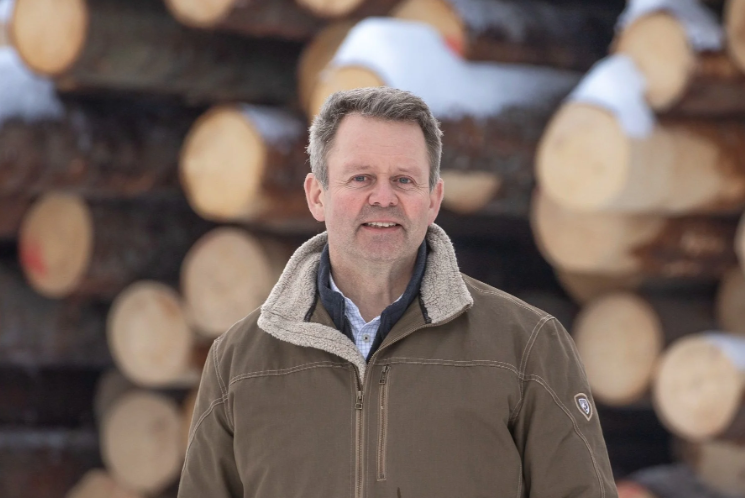
– Stangeskovene is one of the few companies that encompasses the entire wood-mechanical value chain with forestry, industry and building materials. This makes it natural for the group to participate in the Norwegian Wood Cluster, as the entire business can participate in a joint program,” says CEO Per Morten Wangen. Per Morten Wangen, Stangeskovene AS.
– For us, membership of the Norwegian Wood Cluster will be particularly interesting in the areas of sustainability with associated certifications, skills development and recruitment of the workforce of the future, standardization and increased digitization in the industry’s transaction exchange in the value chain. We therefore look forward to taking an active part in the cluster’s work and contributing to a good sharing culture,” says Wangen.
Valuable supplement
Cluster leader Berit Sanness welcomes Stangeskovene AS as a member of the cluster.
– As an integrated business, Stangeskovene will be able to contribute expertise and participate in various interdisciplinary forums within the Norwegian Wood Cluster. The Group also signals that it will be able to clarify and test conditions in various sub-projects that require integrated collaboration. Stangeskovene thus represents a valuable supplement to the current members,” says Berit Sanness.
Formally, it is the board of Norwegian Wood Cluster SA that processes applications for membership of the cluster. Stangeskovene AS was admitted as a member during the board meeting on February 6, 2024.
Educational about sustainable finance and green loans
The aim of the seminar was to provide insight into how the EU taxonomy affects the financial industry and, in particular, what products banks can offer within green loans.
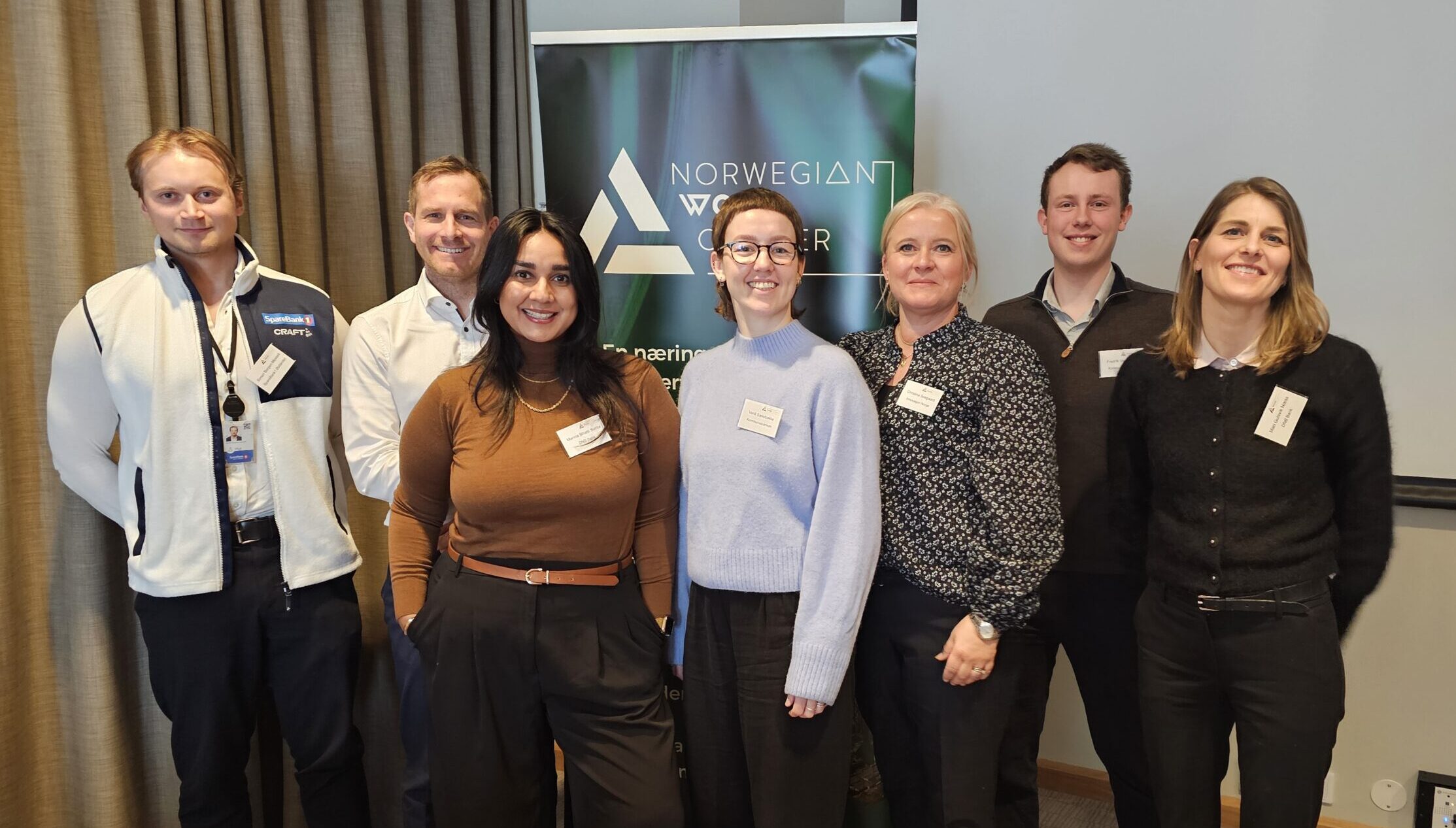
– The overview from Finance Norway provided the right platform before Kommunalbanken, DNB Bank, SpareBank1 Østlandet and Innovation Norway contributed with their presentations. The banks’ presentations complemented each other well, so I think we got a lot of interesting insights through the seminar,” says cluster manager Berit Sanness of Norwegian Wood Cluster.
– In addition to the speakers delivering very interesting presentations, there was also good dialog with the participants. The feedback was also that the banks’ representatives found it useful to be updated on other banks’ work with the taxonomy and green loans, so we are pleased with that,” says Sanness.
The big picture
It’s essential for the forestry and timber industry to keep a close eye on what’s happening in the field of sustainable finance. It was therefore worth its weight in gold that Kristian Ruth, Director of Sustainability at Finance Norway, had made the trip to Mjøstårnet to give the status of sustainable finance and analyze where we are heading.
CEO Kristian Ruth gave a very good overview of the situation in the EU today and talked about expectations for the future. The legal requirements lead to a significant increase in reporting requirements and affect companies at different times depending on their size.
– Although there is a lot to get to grips with, the aim is that the EU taxonomy will simplify matters. As more companies are required to submit sustainability reports, we will have a basis for comparing companies. The taxonomy will set clear boundaries for what is sustainable and what is not. In this way, the framework of the EU taxonomy can help guide companies in the right direction,” Ruth explained.
In the coming years, a lot of sustainability information will be reported for the first time and the market’s response will be crucial.
– Our advice is that it is already wise to prepare for the coming reporting requirements regarding sustainable finance,” said Kristian Ruth.

Green in KBN from 2010
KBN is the largest lender to the local government sector and offers green loans for investments with a clear climate and environmental ambition. The taxonomy sets the framework for today’s work with green loans.
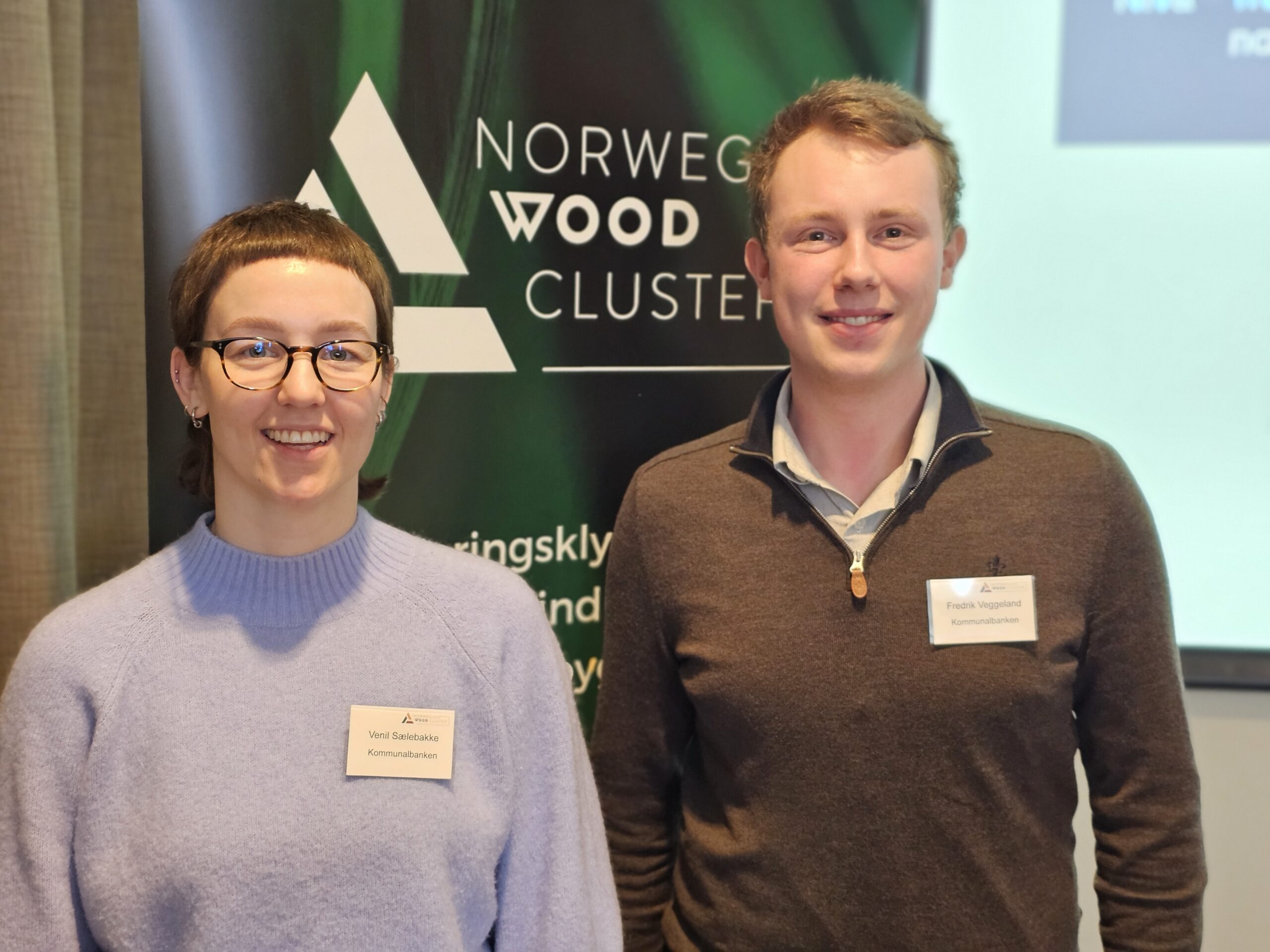
– KBN is not new to thinking about green loans. KBN made its first green loan offers back in 2010. In 2016, the first set of criteria was in place, and the criteria are constantly being developed,” said Fredrik Veggeland, Climate and Green Finance Advisor at KBN.
– KBN wants to be a driving force. “We were an early adopter of green loans, and we have also started preparations for taxonomy loans. Through a pilot project in Sandefjord, we are gaining useful experience of how the taxonomy can be implemented in practice. By 2024, we hope to have five new projects that can be included in a portfolio of taxonomy projects,” said Venil Sælebakke, Climate and Green Finance Advisor at KBN.
Banks’ offers of green loans etc.
DNB Bank and SpareBank1 Østlandet talked about their facilitation of green/sustainable bonds and green loans to companies.
DNB Bank said that sustainability-related loans have been used by several global companies in the forestry/forest industry with loans from the bank.
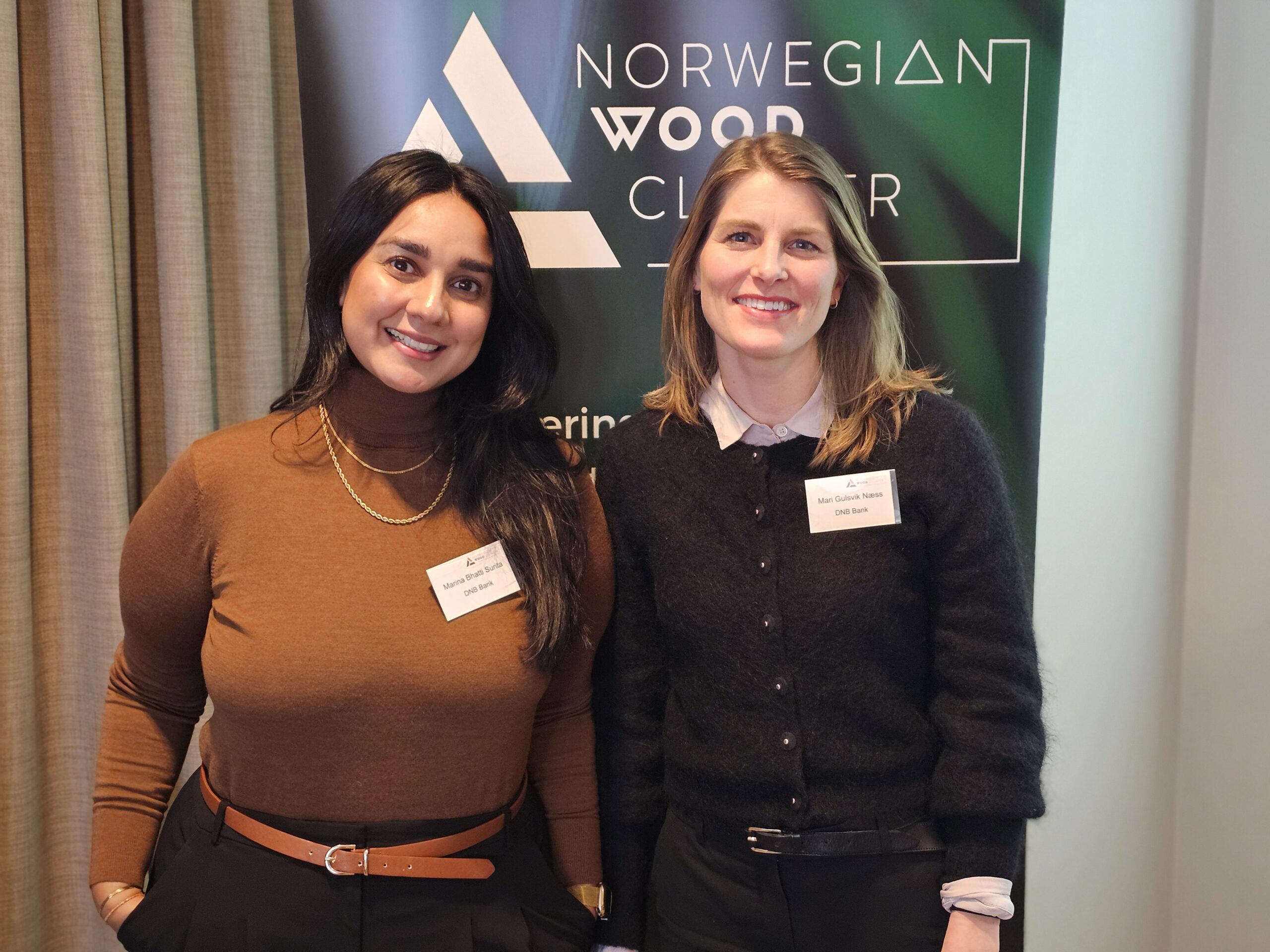
– The criteria for green loans for the forestry and timber industry include a 30% reduction in energy consumption and that the raw material is certified. For sustainability-related loans, the following KPIs (Key Performance Indicators) are relevant: greenhouse gas emissions, energy efficiency, pollution, waste, biodiversity, resource use, circular economy and health and safety, said Marina Bhatti Surita and Mari Gulsvik Næss, senior sustainability advisors at DNB Bank.
Agriculture and forestry account for 12% of SpareBank1 Østlandet’s corporate market portfolio. Sustainability has been on the agenda in the bank’s operations since 2008.
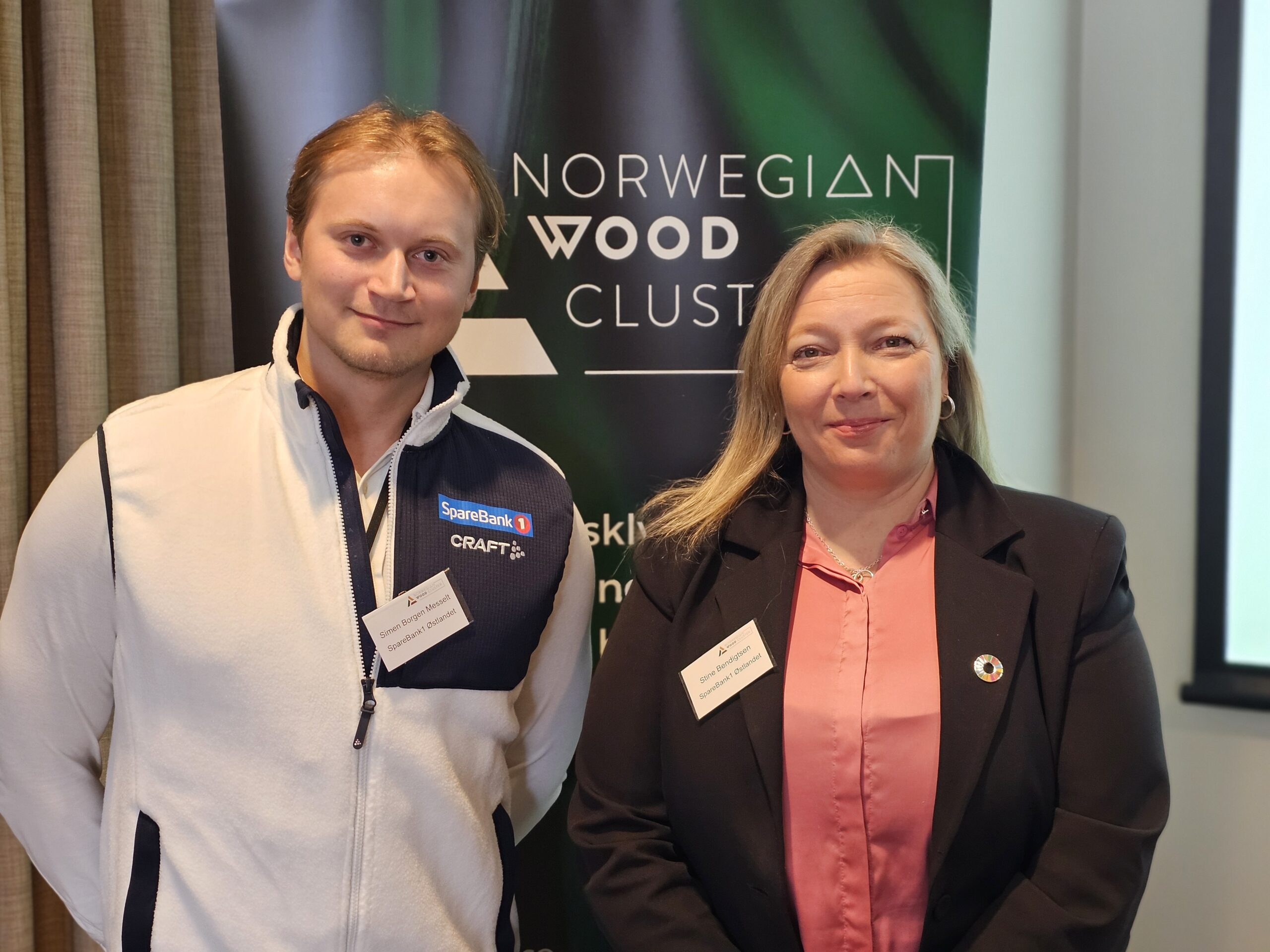
– “The bank has received very good feedback on corporate social responsibility and reporting. We therefore believe that we have taken a credible leadership position in sustainable banking,” said Stine Bendigtsen, Senior Sustainability Advisor at SpareBank1 Østlandet.
– One of the challenges with the taxonomy is that it relates to a carbon account of 30 years, while the typical cycle time in Norway is 80-90 years,” said Simen Borgen Messelt, Sustainability Advisor, SpareBank1 Østlandet.
Current financial instruments from Innovation Norway
Innovation Norway also has financial instruments that may be of interest for green financing.
– For our green financing scheme, we use the EU taxonomy as a framework to define whether a project is sustainable. Our environmental technology scheme may be of interest. We also support projects within the circular economy,” said Christina Seegaard, Head of Finance, Innovation Norway.
Green Growth Loan is aimed at companies that want to invest in climate-friendly solutions.
– The loan can be used to establish production of solutions that reduce greenhouse gas emissions. Co-financing with a bank is also relevant,” said Seegaard.
Part of project “Finance and sustainability”
The seminar on green loans is part of the project “Finance and Sustainability”, which the Norwegian Wood Cluster is currently conducting. The project “Finance and Sustainability” is part of the comprehensive Green Platform project “SirkTRE”, which is supported by Innovation Norway, the Research Council of Norway and SIVA. Read more about “SirkTRE” here: www.sirktre.no
The main objective of the project “Finance and sustainability” is to create increased insight into ongoing work within finance and sustainability with relevance to the forest and wood industry, both to meet documentation requirements and to exploit opportunities. This applies in particular to the consequences of the EU taxonomy. The need for sustainability reporting is central. Reuse, material recovery and recycling are among the many topics the company must consider when preparing its own sustainability report.
How climate-friendly is it to build in wood
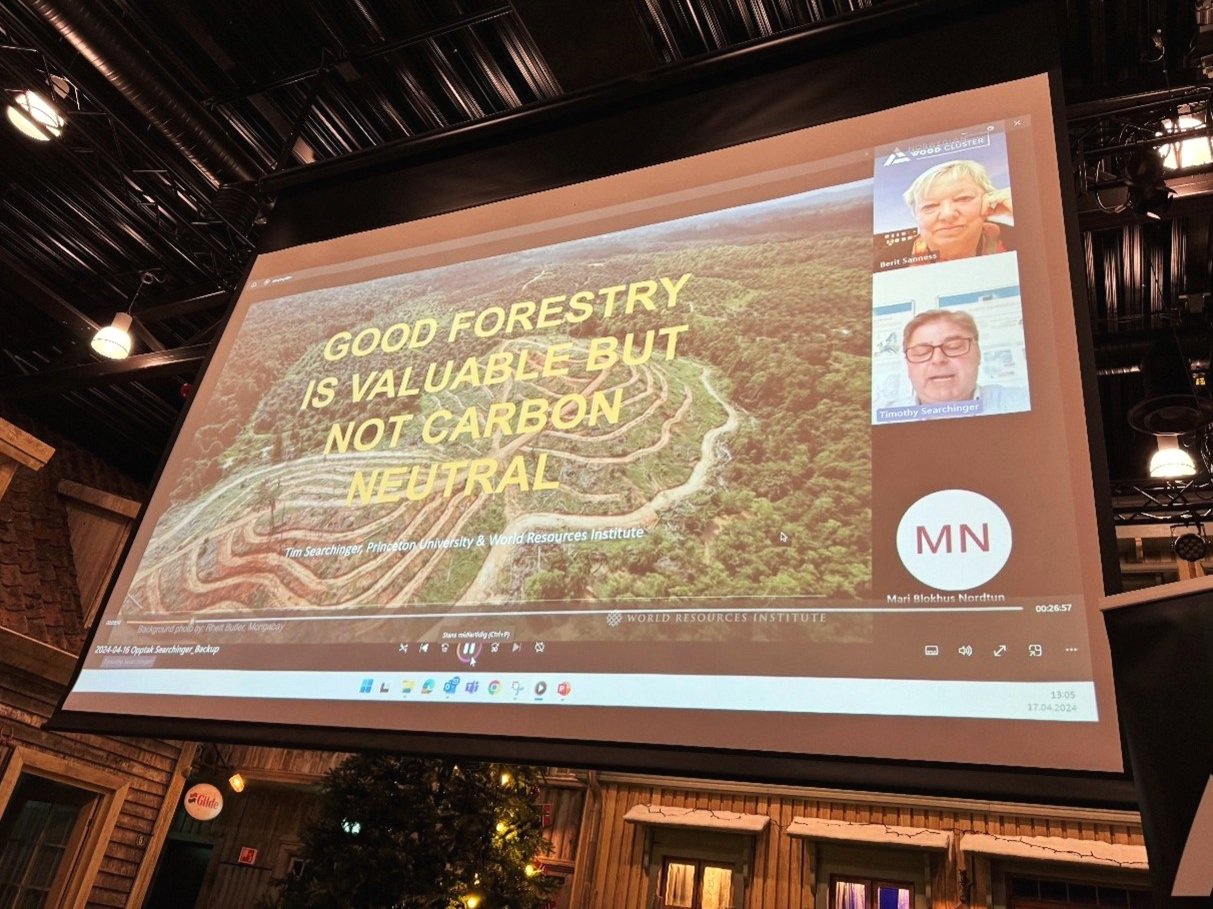
Senior researcher Timothy D. Searchinger at Princton University is, among other things, co-author of a Nature article from 2023 entitled: The Carbon Costs of Global Wood Harvest”. He contributed with a digital presentation at the owners’ meeting, explaining why he believes timber is not carbon neutral and that the climate impacts of logging have been overlooked.
Searchinger: Timber is not carbon neutral
– Modern forestry is valuable, but not carbon-neutral. Even if a forest is used for CLT, most of the carbon will still be lost very quickly. Everything that doesn’t become timber (roots, bark, pulpwood, coppice/chips) is decomposed or burned. This carbon loss is repaid over a long period of time, but not over 30-40 years. Therefore, forestry will lead to more carbon emissions than absorption,” said Searchinger.
He pointed out that consumption is expected to increase by 54% from 2010 to 2050 in the richer part of the world.
– It has been said that wood is carbon neutral as long as we don’t cut down more than we grow. But if we harvest less, the forests will grow more, i.e. bind more carbon. “We believe that we should keep the need for wood down so that more natural forests are maintained. This is the most positive thing for climate emissions over the next 20-30 years,” said Searchinger.
Calculates on a 40-year horizon and ignores substitution
Professor Erik Trømborg from NMBU said there was nothing new in Searchinger’s approach and that this is something NMBU has been teaching for 15 years. But his calculation of carbon neutrality is based on a 30-40 year cycle, while it takes 80-90 years from planting a tree until it is ready for felling in our boreal forests.
– Therefore, after 40 years, the curve shows that emissions from the forest are greater than removals. If he had extended the curve to 90 years, they would have met!” said Trømborg.
Both Trømborg and several members of the audience were critical of the fact that substitution was not mentioned in the presentation. “If we’re going to use less wood, what should we use more of?
– Should we treat biogenic and fossil carbon in the same way? What we release from the forest takes 80-90 years to sequester, and we need to be aware of that. Searchinger doesn’t discuss the alternatives, and I think the oil industry is happy about that. The global challenge is the use of fossil carbon. Is it then okay that we continue to use a lot of fossil fuels and push the problem in front of us? Trømborg asked.
Status of Skjerven Biopark
During the owners’ meeting, the participants received a brief update on the development of Skjerven Biopark. Active efforts are being made to establish an R&D center for the woodworking industry and bio-based materials in connection with Skjerven Biopark in Gjøvik. The investment in Skjerven is part of the Inland portfolio.
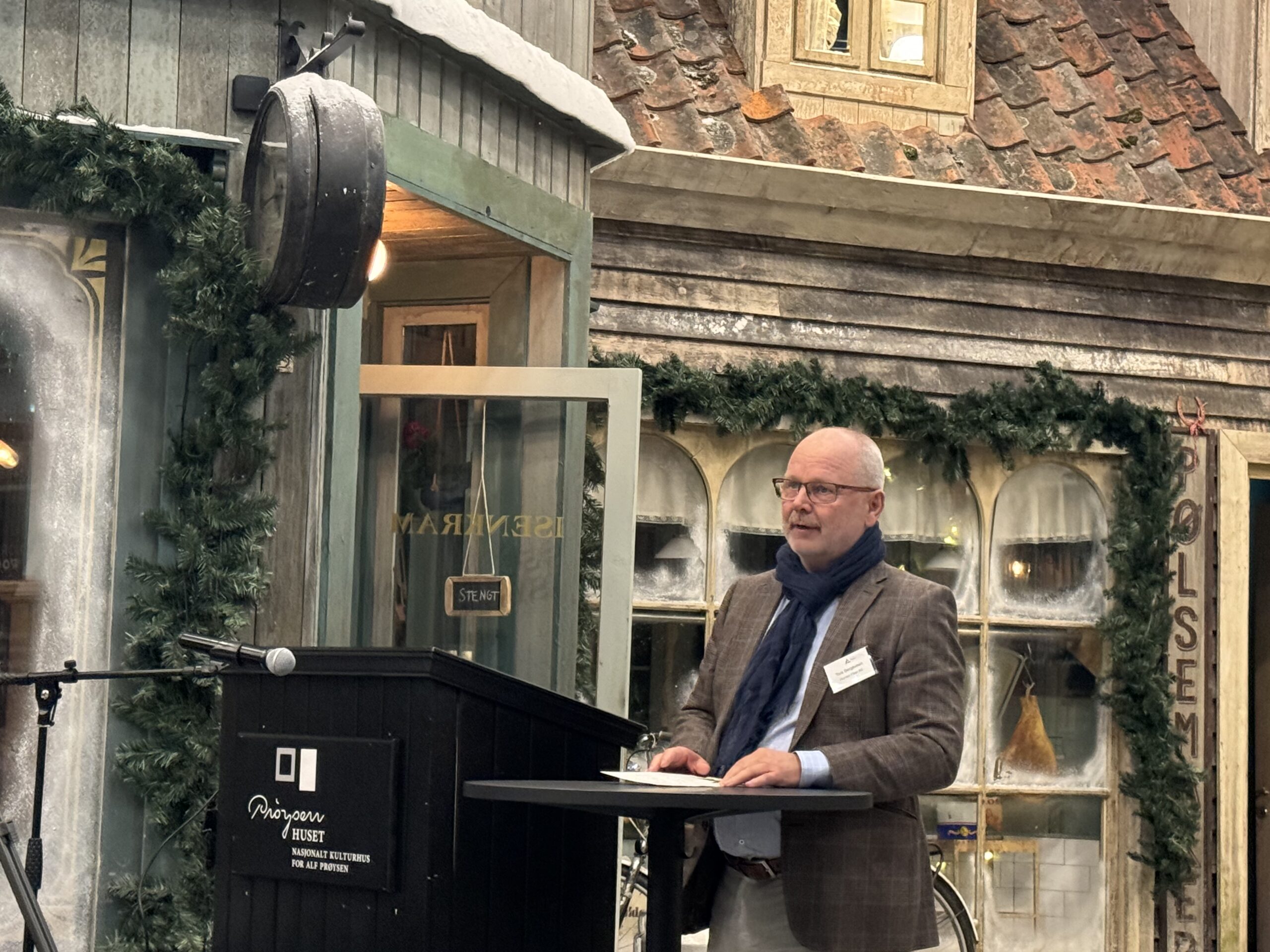
– “As a result of dialog with relevant users, we are now planning to split the building at Skjerven into an office building with meeting rooms, canteen and offices, as well as a test building with a lab and facilities for early-phase testing in the areas of sound/acoustics, fire, emissions and strength properties,” said Hunton Fibre’s HR director Tore Bergsveen.
– We continue the dialog with companies. As of now, 4-5 companies have initiated various types of feasibility studies. We now hope that more companies in the Norwegian Wood Cluster will join in,” said Bergsveen.
Encourages increased use of SkatteFUNN
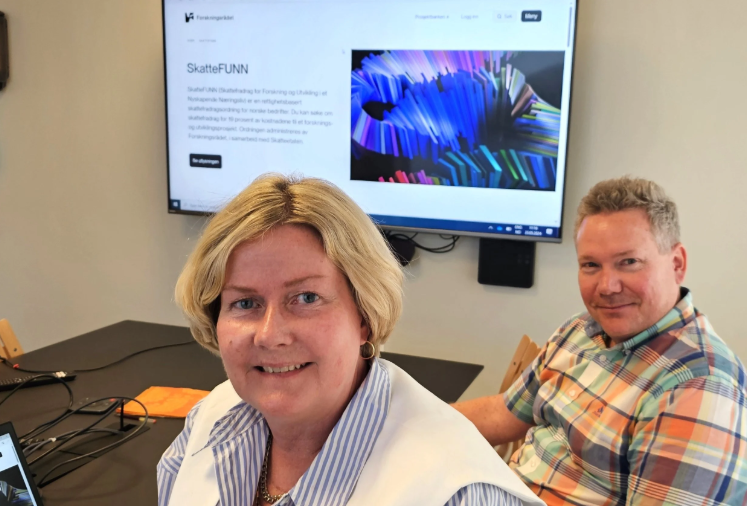
We have had a visit from Elisabeth Sjöberg Frydenlund, special advisor at the Research Council of Norway with responsibility for Innlandet and Akershus. She holds courses in SkatteFUNN and provides guidance on the various support schemes available at the Research Council.
Support for development
SkatteFUNN is a scheme to support research and development projects in companies. If your company is involved in development projects, you can apply for SkatteFUNN and receive a 19% tax deduction on project costs. You can apply year after year, and you can apply for several projects in one and the same year. The annual limit for each company is NOK 25 million.
– This scheme is particularly suitable if the development takes place internally in the company, with the help of its own employees,” explains Frydenlund.
Simple application
This scheme is easy to apply for and has a short processing time. You must apply in the same year as the project starts, but it doesn’t matter if the project has already begun. The majority of applicants are granted a tax deduction.
– “We encourage NWC member companies to use the scheme as much as possible. You can write the application yourself, set aside a day or two and feel free to contact the Research Council for free assistance,” says Frydenlund.
Apply early
She recommends that companies apply before September 1, and preferably well in advance. “Applications tend to pile up in September, and we can’t guarantee that everyone who submits after the deadline will have their application processed for the current year,” she explains.
Read more about SkatteFUNN at https://www.forskningsradet.no/skattefunn/
Tips on how to apply: https://www.forskningsradet.no/skattefunn/sok/
You can also search for previous projects in the Research Council’s project bank
For general questions: skattefunn@forskningsradet.no, +47 22 03 75 00