



Annual meeting of Norwegian Wood Cluster
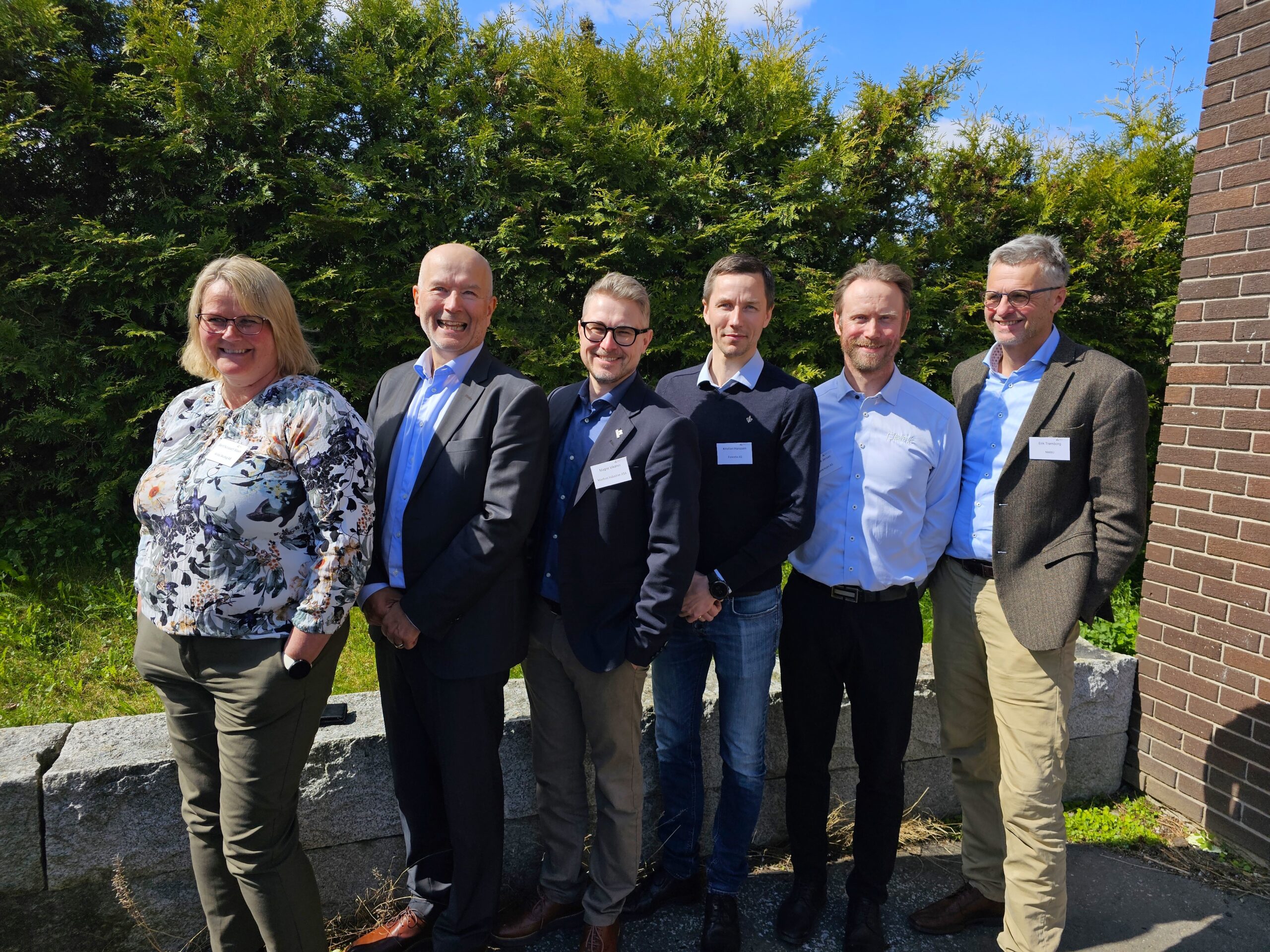
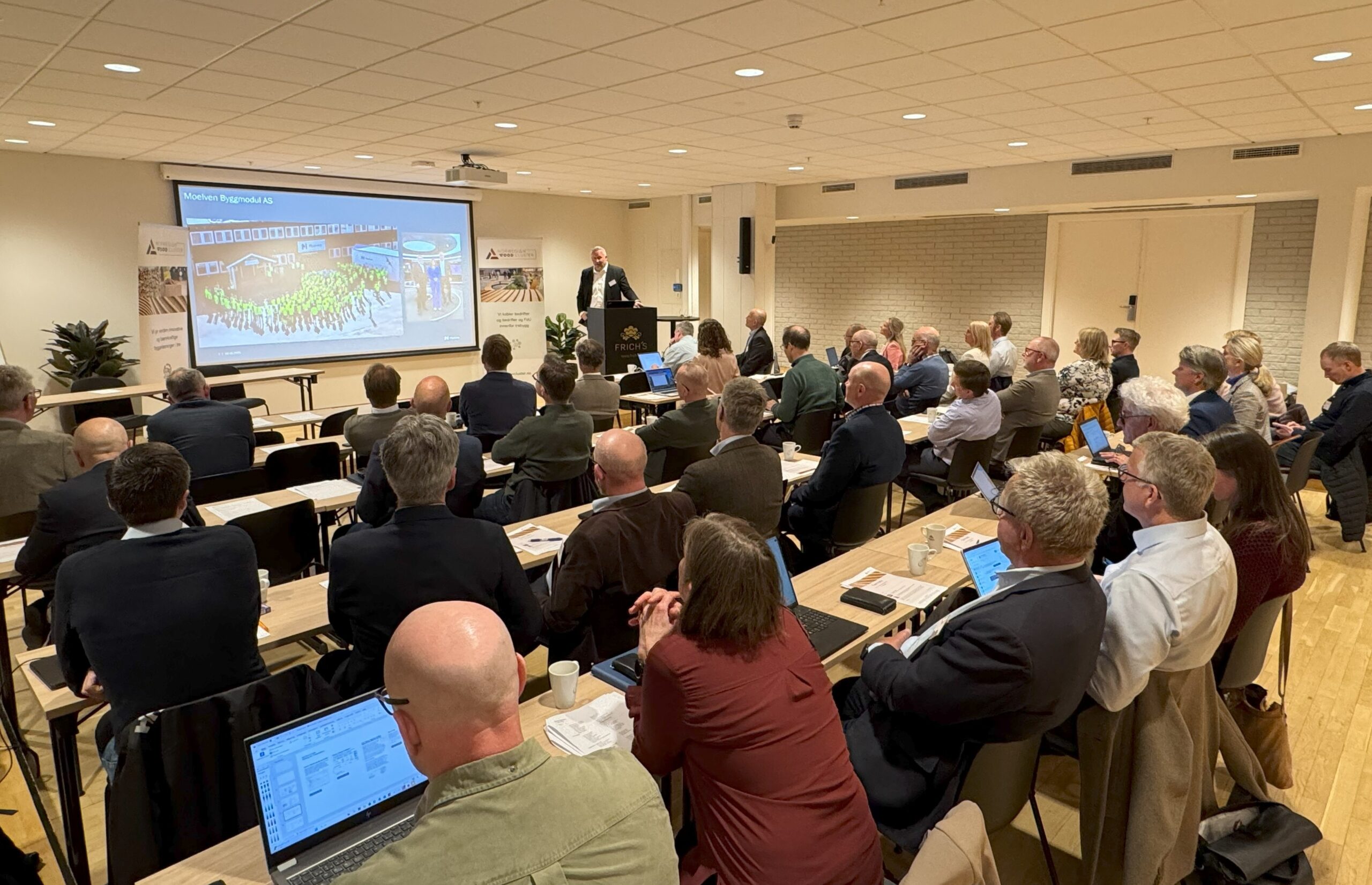
The cluster held its annual meeting at Frich Hotel outside Hamar on May 6, 2025. After the formal business and elections, it was time for the owners’ meeting with very exciting speakers.
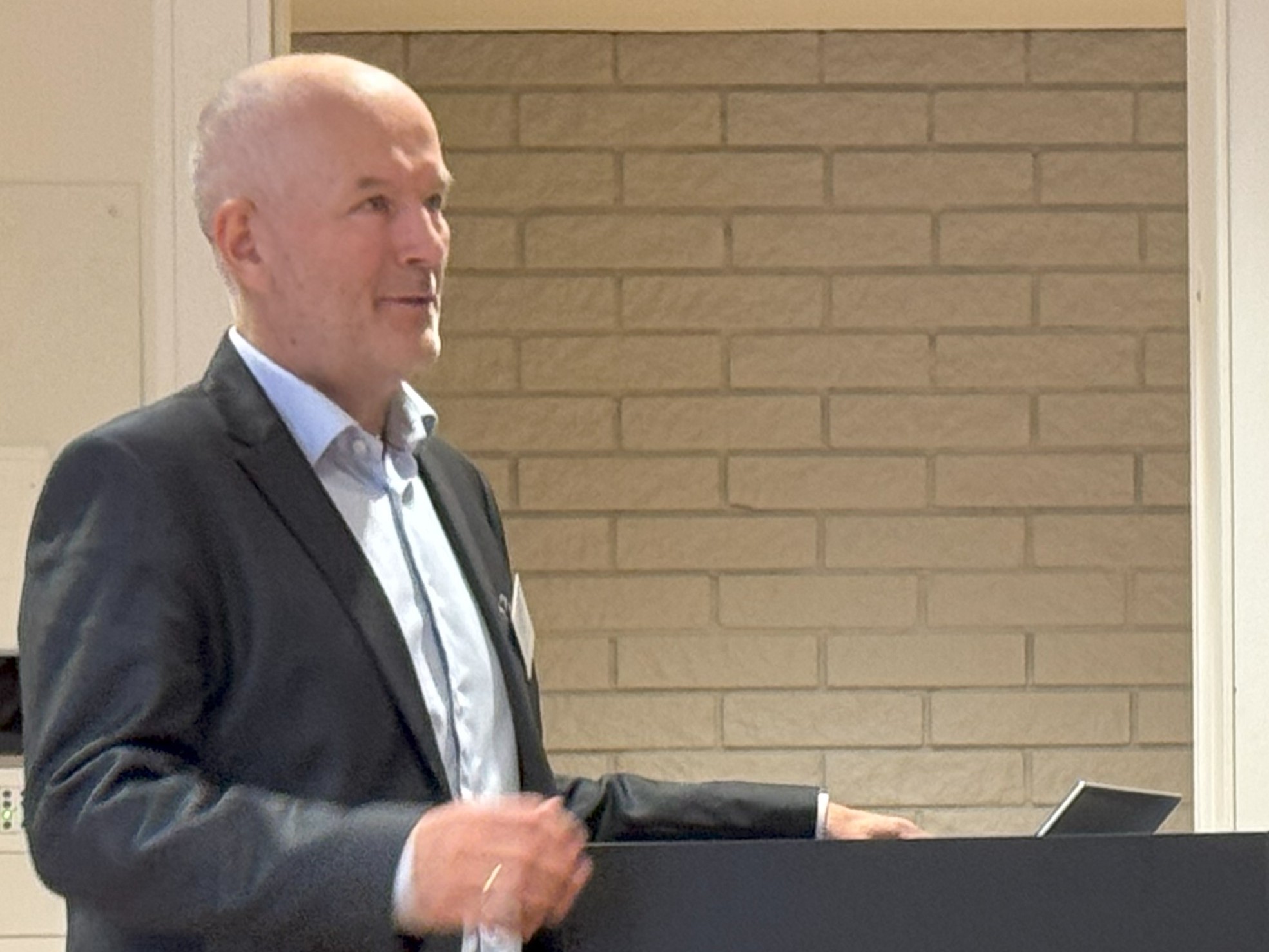
At the annual meeting, the chairman of the board, Jan Tore Meren, reported on the work of the cluster.
– We believe the cluster is developing well. Despite a tough market for the member companies, their involvement in the cluster is still very satisfactory. Together we are working well to achieve the cluster’s vision of providing the world with innovative, sustainable building solutions in wood. The plan now is to apply for admission to Innovation Norway’s cluster program for 2026-2028,” said Jan Tore Meren.
– “While Norwegian Wood Cluster started in the Inland region, the cluster is now a national cluster with its main focus in the Inland region. The nomination committee has therefore emphasized reflecting this, said Tor Henrik Kristiansen when he presented the nomination committee’s unanimous recommendation to the annual meeting.
After the annual meeting, the board of Norwegian Wood Cluster consists of:
Chairman of the Board Jan Tore Meren
Deputy Chairman Magne Vikøren, Moelven Industrier ASA
(deputy: Vera Flatebø, Moelven Industrier ASA)
Board member Tarje Braaten, Dynea AS
(deputy: Hans Olav Wedvik, Sparebank 1 Østlandet)
Kristian Hanssen, Forestia AS
(deputy: Jan Helge Nordby, Statskog SF)
Glenn Andre Jensen, Bergene Holm AS
(deputy: Marthe Lie, ARE Treindustrier AS)
Board member Berit Nordseth Moen, Alvdal Skurlag AS
(deputy: Jørn Nørstelien, Gausdal Treindustrier SA)
Øyvind Moshagen, Norconsult Region Innlandet
(deputy: Jørn Reiner, Kontur Arkitekter AS)
Erik Trømborg, NMBU
(deputy: Vibeke Tronrud Teslo-Andersen, Viken Skog SA)
New election committee:
Chairman Mads Severin Lo, DNB Bank ASA
(deputy: Lars Storslett, Moelven Industrier ASA)
Deputy Chairman Ylva Kleiven, Gausdal Treindustrier SA
(pers. dep.: Eva Skagestad, Skogkurs)
Member Anita Ihle, Glommen Mjøsen Skog SA
(deputy: Per Morten Wangen, Stangeskovene AS)
Delivering modular homes to Ukraine
In recent years, Moelven Byggmodul has delivered modules for everything from rigs on tugboats, to parental accommodation at Rikshospitalet and student housing. In 2024, the company delivered module number 100,000 – a milestone. Over the past couple of years, however, Moelven Modular Buildings has also taken a closer look at what the company can do in connection with the reconstruction in Ukraine and has carried out a pilot to gain experience. A task with extra meaning.
Becoming Europe’s largest construction site
With 6.5 million people without permanent housing, the need for new housing in Ukraine is enormous. For the duration of the war, soldiers also need temporary housing to gather strength between the brutal battles on the battlefield. Here, too, the need is great.
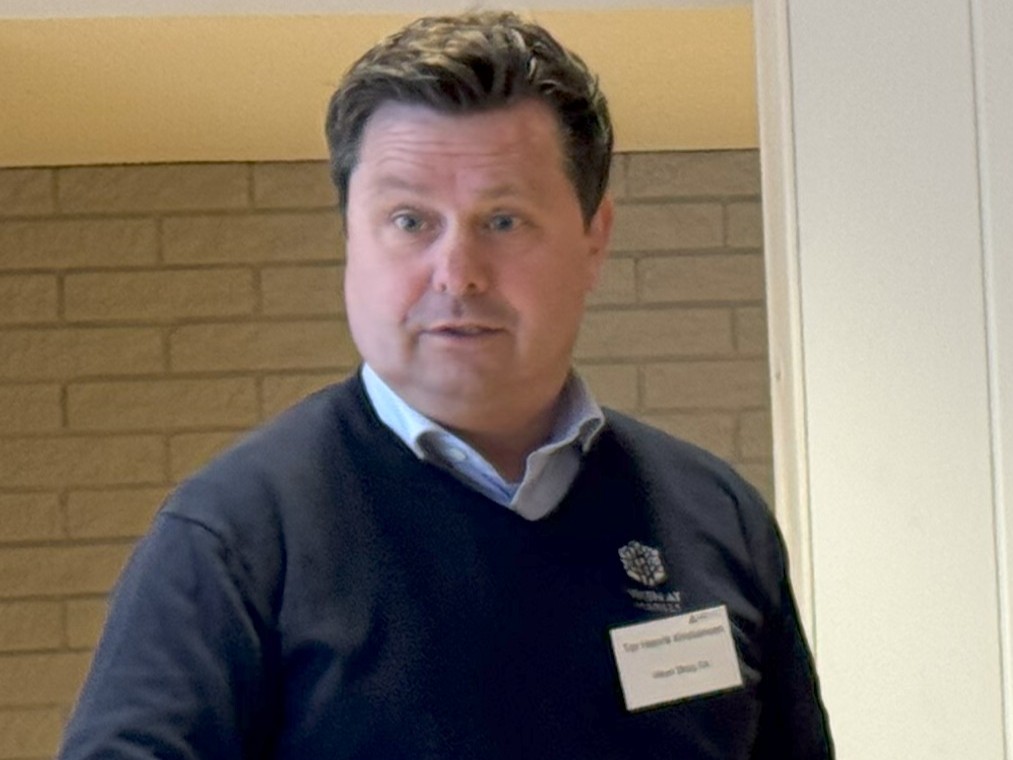
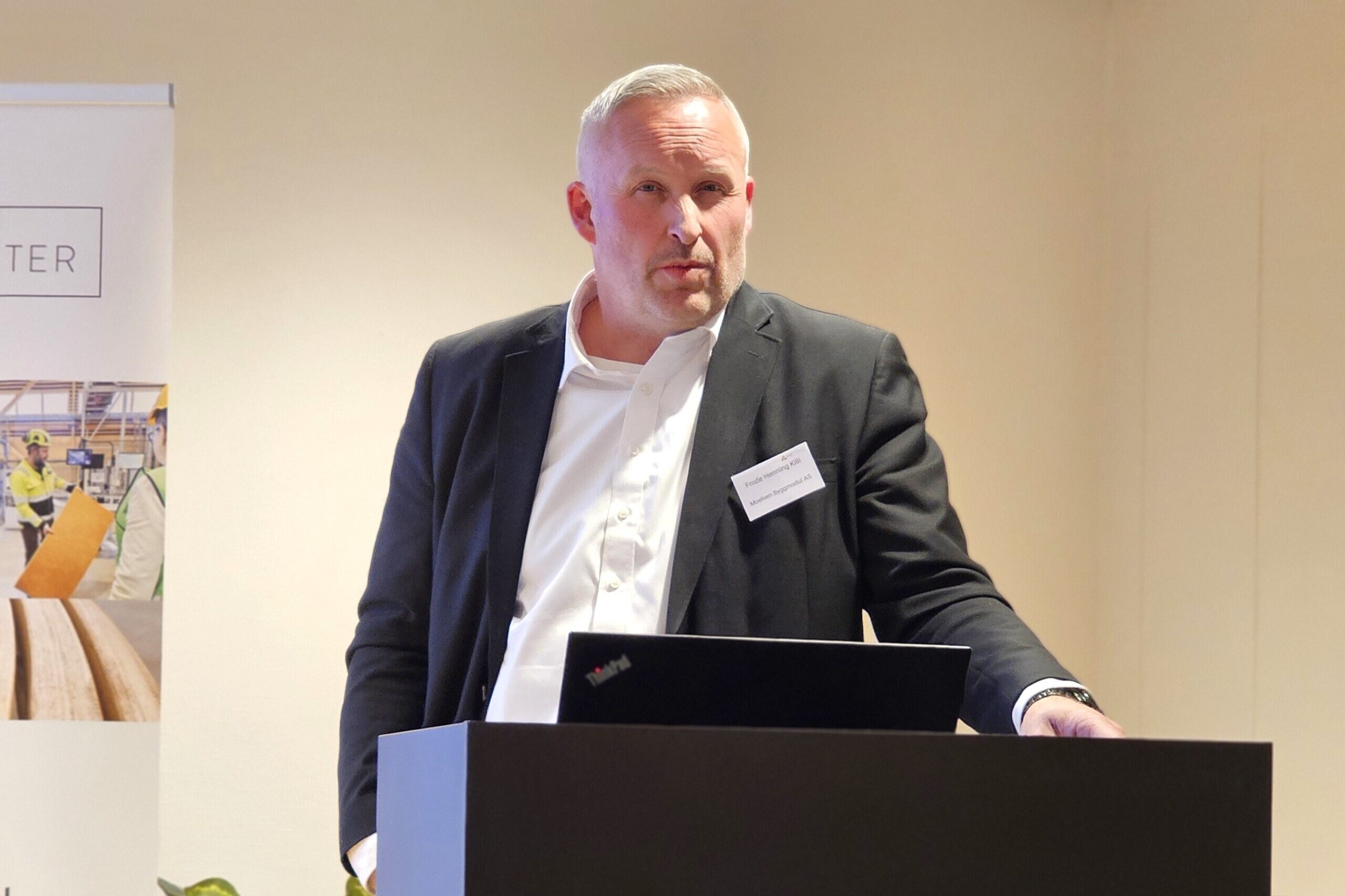
– With so many men in the war, there is a labor shortage in the construction sector. Through our research, we became aware of both the importance of prefabricated solutions and access to materials,” said CEO Frode Henning Killi of Moelven Byggmodul. Frode Henning Killi of Moelven Byggmodul to the owners’ meeting in Norwegian Wood Cluster.
From concrete to wood
Ukraine has not been accustomed to wooden buildings, but many now want to switch from concrete to wooden structures to free themselves from Russian building practices.
– However, there are major regional differences and a need to change legislation to enable timber construction, so work needs to be done here,” said Killi.
He emphasized the importance of understanding the culture and how decision-making processes take place. “Moelven has chosen Itera as a partner because Itera has extensive experience of working in Ukraine. It has been a useful collaboration.
A job with meaning
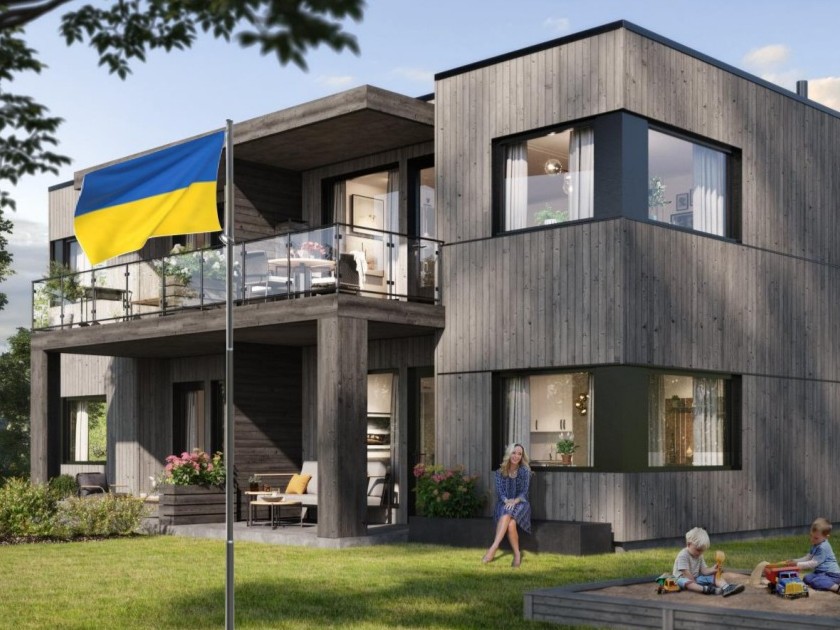
-“Moelven finds it meaningful to work with this. We can build houses, schools, kindergartens etc. to help. In collaboration with our suppliers, we are now running a pilot to test all aspects of deliveries to Ukraine. The house is built from 8 prefabricated modules and will be offered to four doctor families in a municipality with a shortage of doctors. We know that the need for new buildings is formidable. At the moment, however, the financing of new buildings has not been resolved,” said Killi.
– A final reflection; An impressively large part of Ukraine is functioning. One third of Ukraine is hardly affected by war, one third is very affected in terms of many internal refugees and in the last third are the acts of war. That’s the reality in Ukraine now,” said Killi.
Tailored educational offerings for the wood industry
The Norwegian labor market is characterized by high employment and low unemployment, which makes it difficult to recruit new employees with the right skills. The main goal of the Heartwood project has been to improve the skills of employees in the woodworking industry, with special emphasis on lifelong learning, digitalization and advanced manufacturing.
Pressured labor market
After two and a half years of targeted work, the Heartwood project, initiated and led by the Norwegian Wood Cluster, was officially concluded with a successful conference in Mjøstårnet on June 20, 2025. Here it became clear that the results after two and a half years of work, respond well to the industry’s challenges.
A tight labor market makes it difficult to recruit new employees with the right skills. This challenge is further exacerbated in the woodworking industry, which is undergoing rapid technological change and therefore has an increased need to develop the skills of existing employees.
Need for tailored expertise
Through the Heartwood project, it has become clear that there is a significant need for closer cooperation between industry and educational institutions. Ringsaker Upper Secondary School finds that few teachers have a background in the woodworking industry, which makes it challenging to give students a broad insight into the industry. The project concludes that there is a need to establish closer contact between schools and businesses. In particular, it is pointed out that internships should be facilitated, which will lead to concrete cooperation between schools and companies.
– “We’re currently in a situation where we largely have to train people internally in our companies. It’s not just timber anymore, but also a lot of production technology and chemistry that is important to us, Berit Nordseth Moen from Alvdal Skurlag said during the conference. She highlighted the industry’s desire for a flexible part-time offer for a vocational certificate in production technology, especially adapted to the distances in Inland Norway.
Concrete progress and future offers
One of the most important milestones presented during the conference was Innlandet County Council’s response to a new certificate course in production technology, tailored for the woodworking industry. This course will start on January 9, 2026 at Gjøvik, will consist of 10-12 sessions and will combine physical and digital sessions. The county council will also offer a part-time course in logistics.
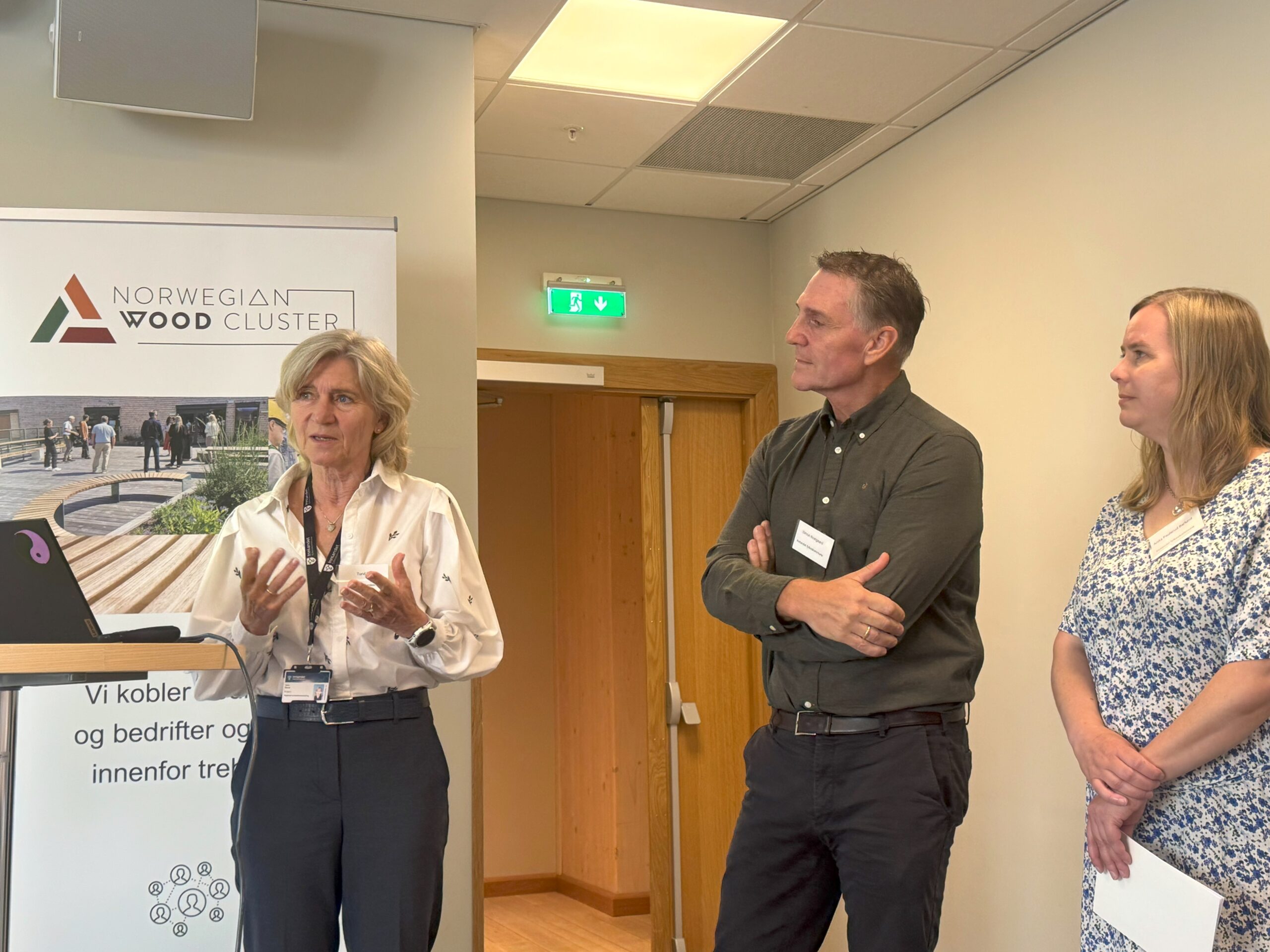
– We are now setting up an offer that is a direct response to the industry’s needs. It’s crucial to have a flexible offering that meets the needs of the industry and that we can repeat annually. , emphasized Anita Paulsen Barlund, Karriere Innlandet’s contact person for the wood industry.
Focus on micro courses and mentoring
Another key theme during the conference was the development of “micro-courses” and the importance of the mentor role in companies. Treteknisk highlighted the value of shorter, practical training units that can be used during downtime or as part of team building. An important lesson learned was that when companies appoint a mentor who has personal responsibility for the training, both the learning and the ability to implement it increase.
The micro-learning courses were described by several of the companies as “one of the best things to come out of Heartwood”.
“Microcourses address the challenge of limited time for training in everyday life. With a duration of one to three quarters of an hour, planned and unplanned stops can be utilized for competence provision. “, said Hilde Slettvoll, HR Manager at Forestia, Braskereidfoss.
The competence boost of the future
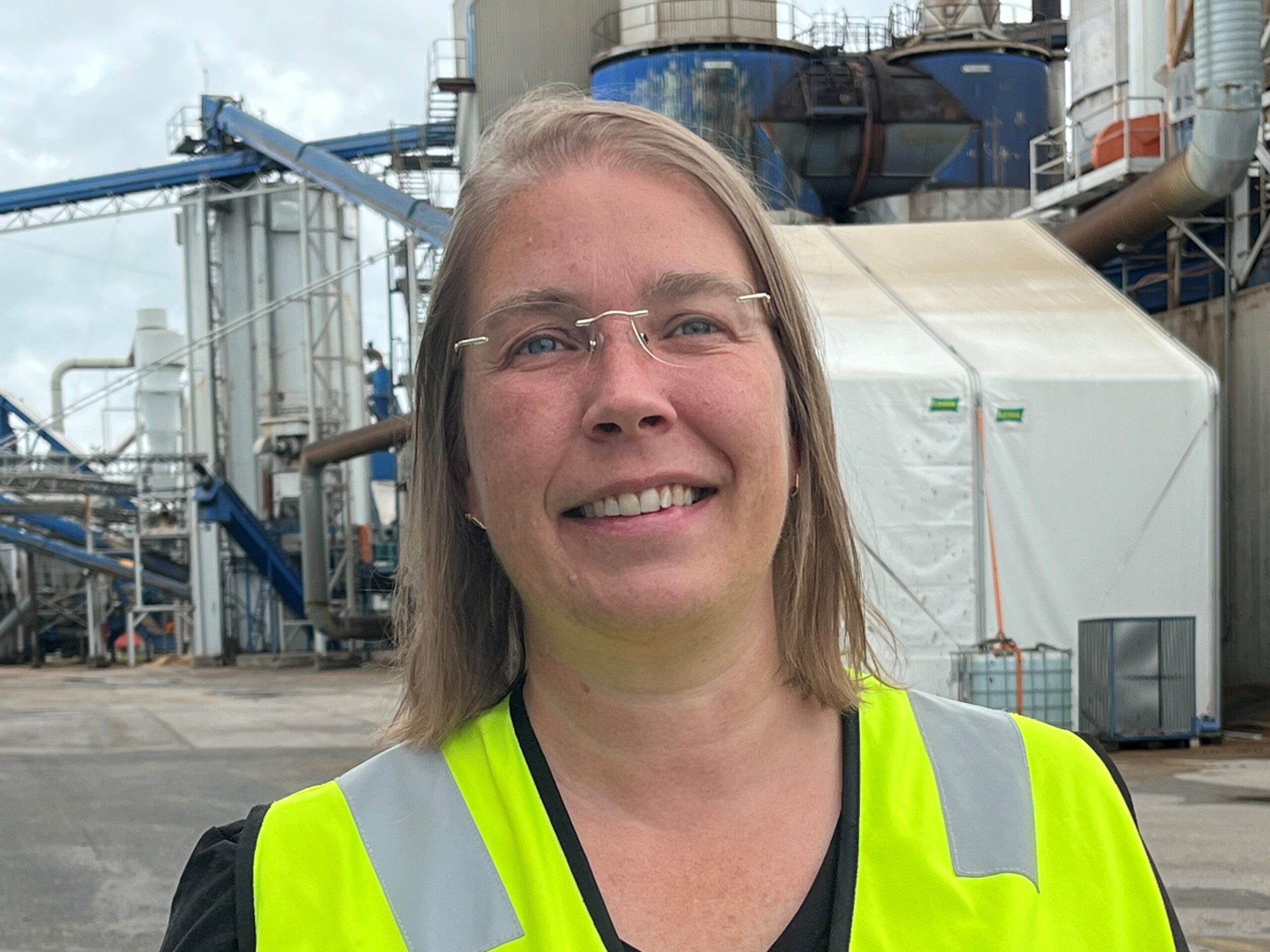
Norwegian Wood Cluster, led by Knut Amund Skatvedt, will continue its work as an important link between the industry and competence providers such as Kompetanse Innlandet and NTNU. The aim is to ensure that the wood industry has the necessary expertise to meet the challenges of the future, especially with regard to increasing automation and the need for interdisciplinary expertise that combines production technology with wood expertise.
“We want to combine the best of two disciplines: modern industrial thinking and in-depth knowledge of wood as a sustainable material,” Skatvedt told the nearly thirty meeting participants.
Closing words from outgoing project manager Karl Einar Røste
“The Heartwood project has shown that, as an industry, the woodworking industry varies greatly in terms of skills needs and work on skills development. What they all have in common is that updated skilled worker competence is important in order to utilize new technology and increasing demands for productivity.
Many companies are facing generational changes that will require a focus on skills transfer and lifelong learning.
In addition to the sharing of experience between companies, the project has provided useful dialogue with Innlandet County Council to find appropriate and sustainable solutions for vocational training.
Participants in the Heartwood project:
Moelven Industrier, Hunton Fiber, G3 Gausdal Treindustrier, Forestia, Begna Bruk
Contact persons:
Berit Sanness, cluster manager Norwegian Wood Cluster, 901 01 843
Berit Nordseth Moen, manager Alvdal Skurlag, 992 20 405
Collecting plastic by the truckload
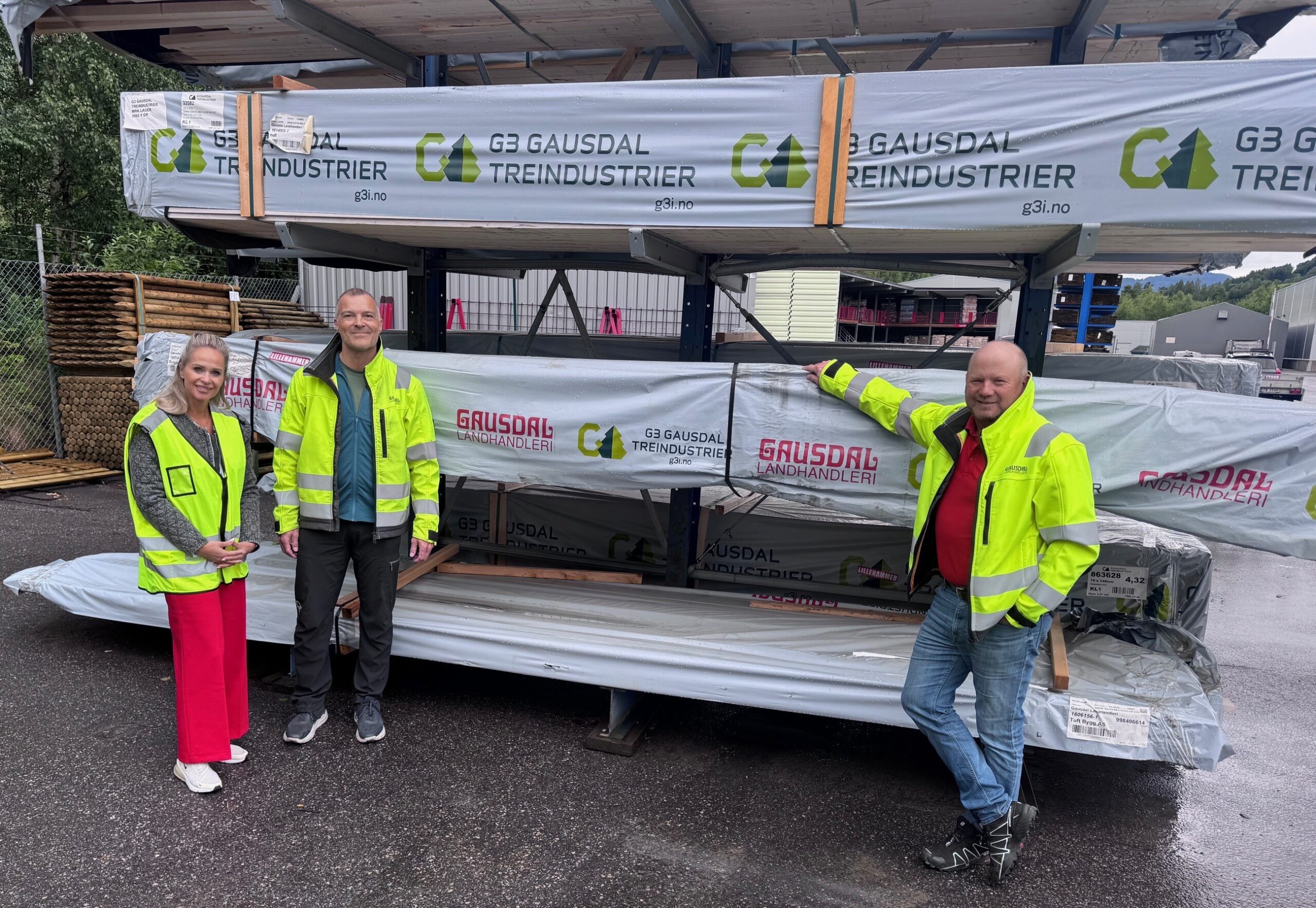
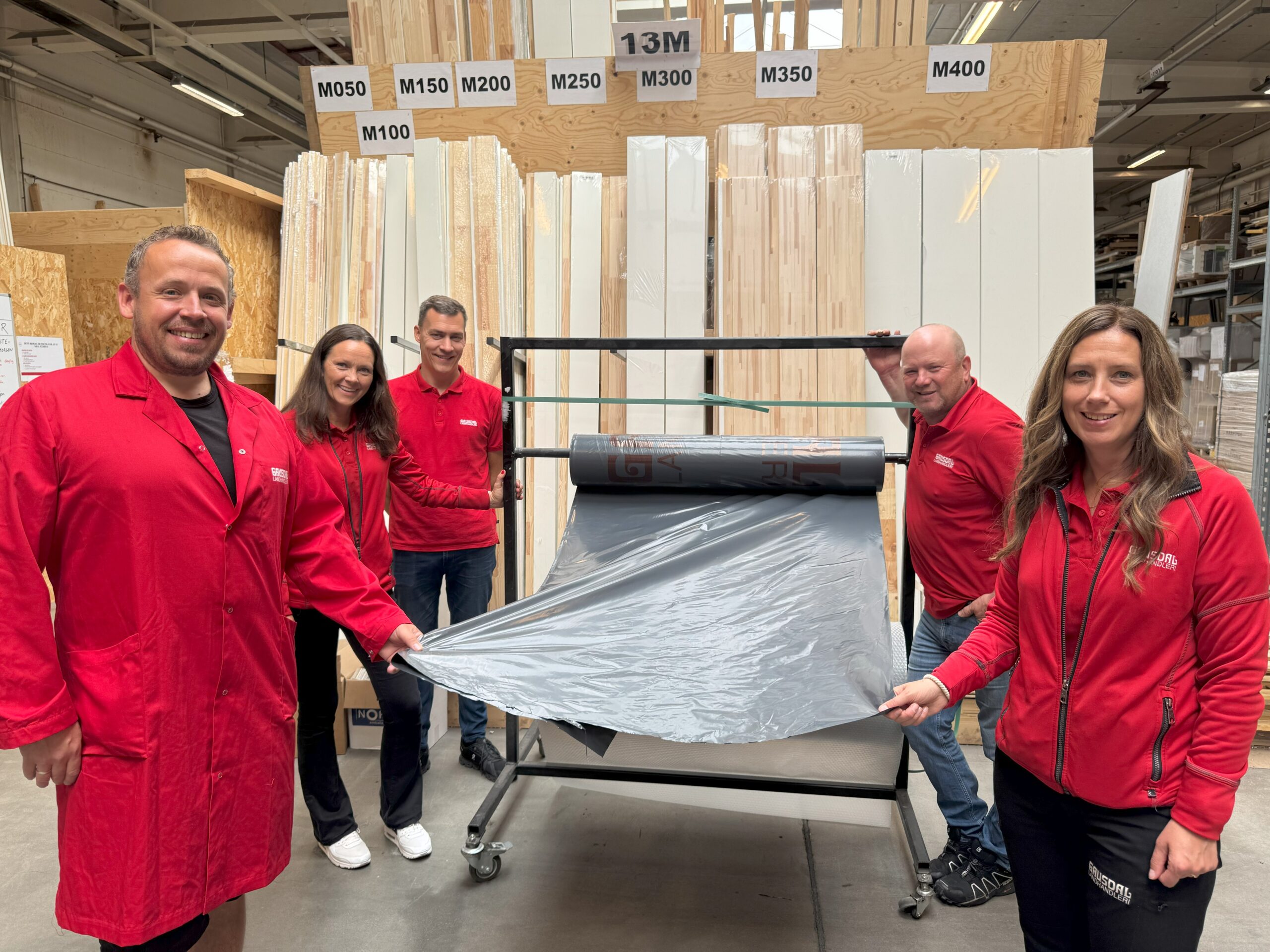
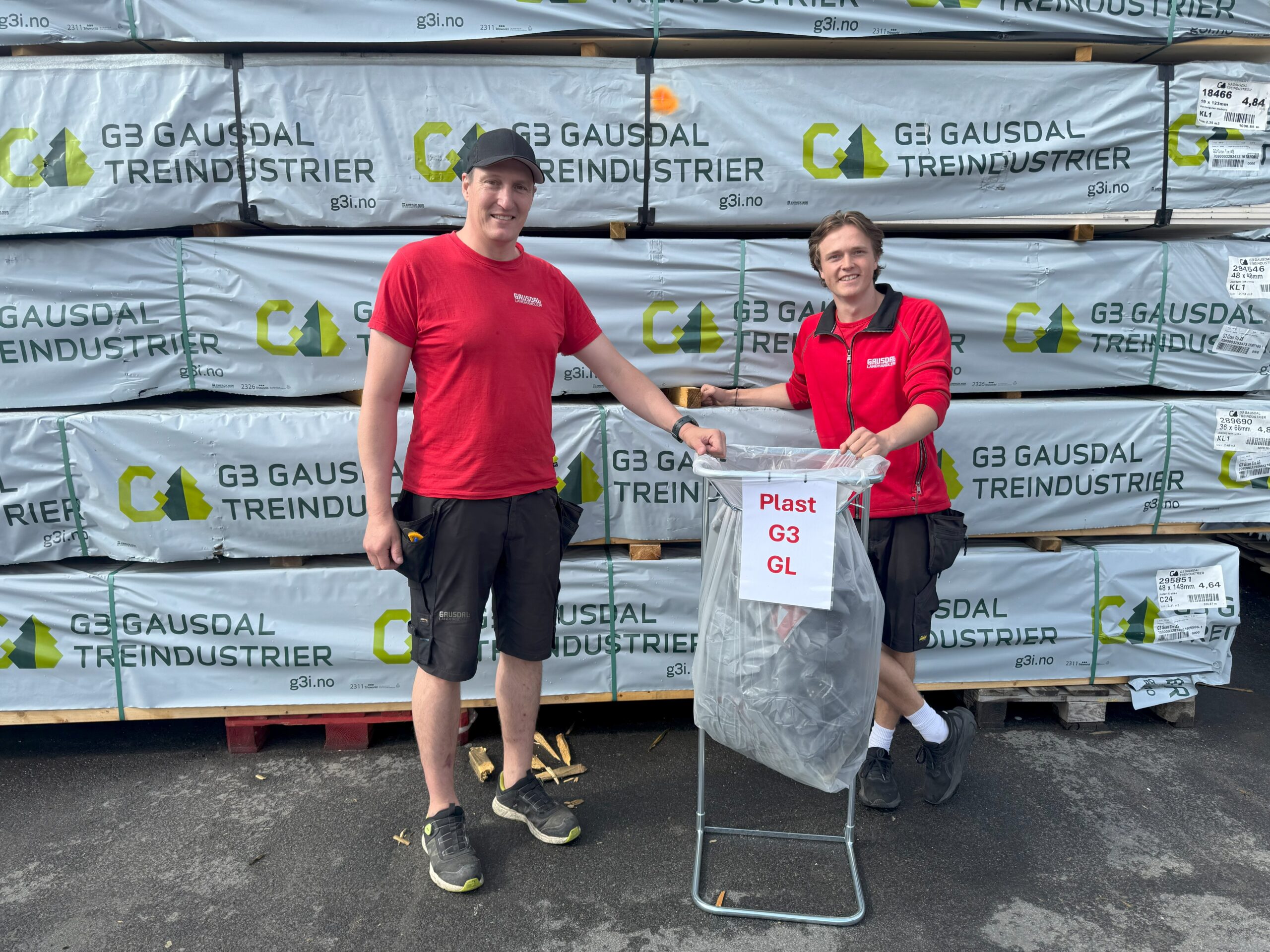
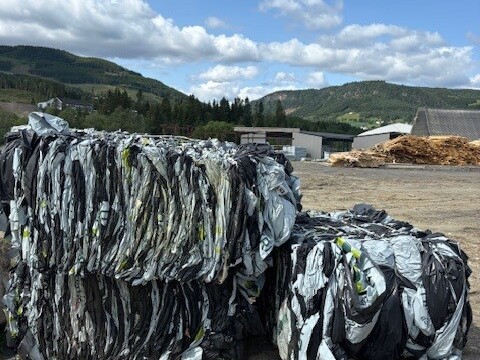
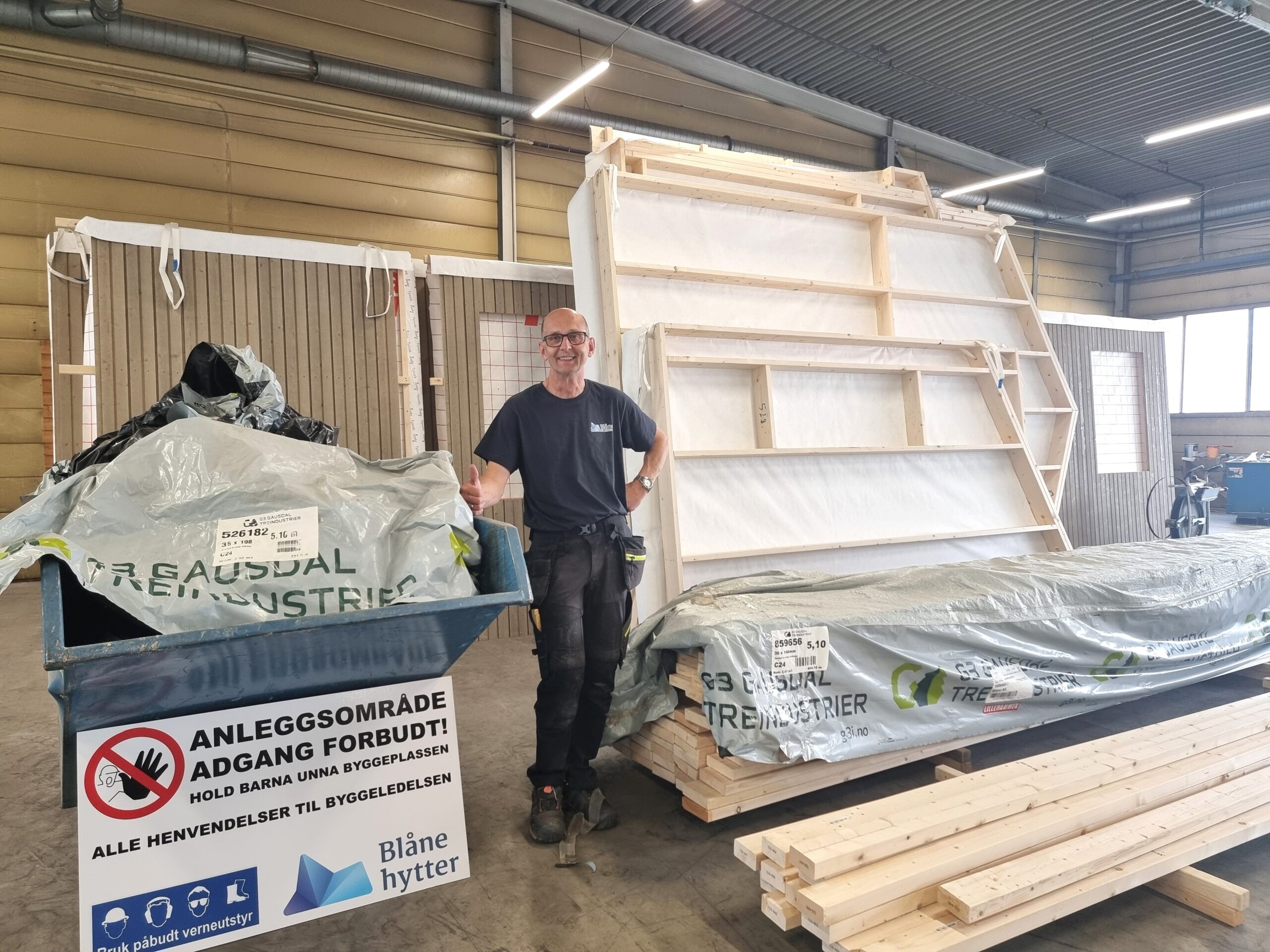
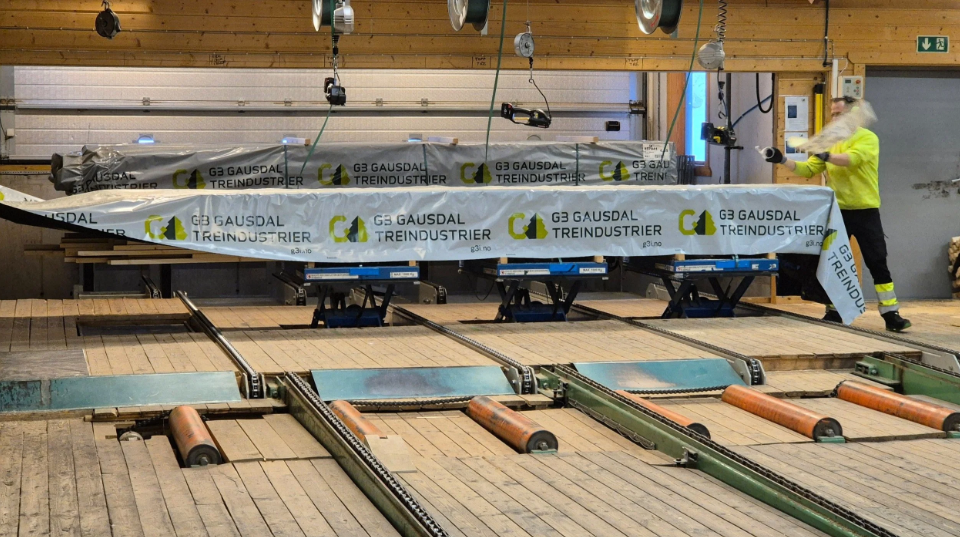
Timber and building products need to be protected to retain their quality, but the use of plastic packaging is a constant headache. That’s why Blåne AS, Gausdal Treindustrier SA and Gausdal Landhandleri AS are currently collecting plastic film. They are all participating in the “Circular lumber foil” project under the auspices of the Norwegian Wood Cluster.
Expectations for the project
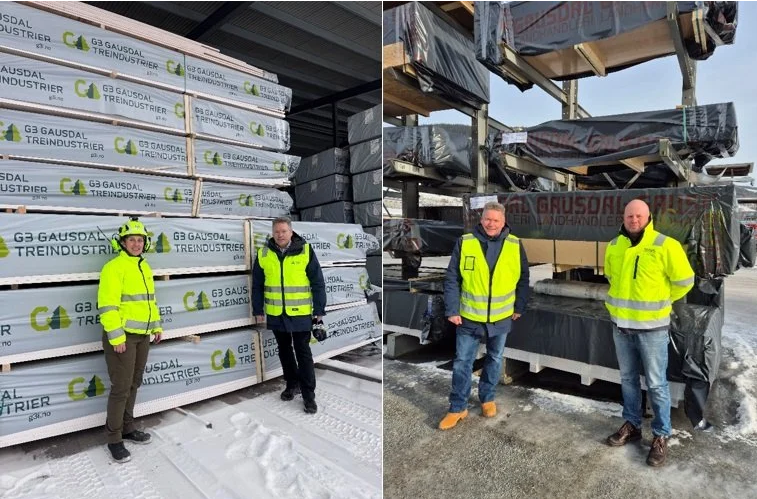
– “In this phase of the project, we are gaining concrete experience with logistics. Østlandet Gjenvinning AS and Litra Containerservice AS will collect the collected plastic and deliver it to Norfolier GreenTec AS’s plant in Folldal,” says logistics manager Paul Erik Hattestad, Gausdal Landhandleri. He says that when the volume is sufficient, Norfolier will produce granules from recycled plastic. The granules will then go to Haagensen Plast AS, which makes the recycled lumber foil. The companies will then test the quality.
– “Of course, we’re excited to see if the quality will be good enough, as we want to solve our packaging needs in a way that reduces greenhouse gas emissions,” says Paul Erik Hattestad, who is a member of the “Circular Lumber Foil” project group.
-“This project is fully in line with Gausdal Landhandleri’s sustainability strategy, and we look forward to the results. We have already changed our use of plastic. If it becomes more difficult to recycle plastic with an imprinted logo, we will have to rethink here too,” says Sales and Marketing Manager Unn Elisabeth Tofthagen at Gausdal Landhandleri.
Positive response in department stores
The collection of plastic film is well underway at Gausdal Landhandleri’s department store in Jevnaker, which is one of the largest department stores in the Group. Department store manager Atle Roen says that the largest volume is collected in the store itself, where customers pick out their materials from the shelves.
– At Jevnaker, we also have a large regional warehouse for department stores and end customers in Oslo, Akershus and Buskerud. There is less plastic waste here than in the warehouse, as it is often whole packages that go in and out of the warehouse, but of course we also collect this,” says Roen.
Gausdal Landhandleri is known for good logistics.
“We receive customer-packaged goods wrapped in plastic film directly from Gausdal Treindustrier. This is packed together and sent on. An efficient solution,” says Lars Ole Magnussen, operations manager for the regional warehouse at Jevnaker.
Both Atle Roen and Lars Ole Magnussen are positive about the project and hope for useful results that will reduce greenhouse gas emissions from plastic use in the future.
Hope to be able to scale up
Lumber wrap is usually made from a material that is suitable for material recycling. However, a significant proportion of the packaging plastic collected from the construction industry disappears from the cycle and is lost as a raw material for new lumber foil. Collected plastic is often sent for energy recovery.
– “Norwaste is mapping the national situation and providing us with a useful baseline. If the recycled plastic is of satisfactory quality, we have a basis for national upscaling,” says Julie Gedde-Dahl, who recently took over as Norwegian Wood Cluster’s project manager for “Circular lumber foil”.
Project “Circular lumber foil”
The “Circular lumber foil” project is owned by Norwegian Wood Cluster and is carried out in collaboration with Gausdal Treindustrier SA, Gausdal Landhandleri AS, Blåne AS, Østlandet Gjenvinning AS, Litra Containerservice AS, Norfolier GreenTec AS and Haagensen Plast AS. In addition, Norwaste carries out assignments for the project. The cluster’s specialist group Sustainability is the reference group for the project.
The aim of the “Circular lumber foil” project is to develop and test on an industrial scale a closed loop of lumber foil to contribute to reduced resource consumption and increased circularity of plastics in the wood and construction industries. In addition, the project aims to help reduce the use of plastic in the wood and construction industries. The project is supported by Innovation Norway and runs from 2025-2026. Julie Gedde-Dahl is the project manager.
New member Hersleth AS focuses on innovative construction method
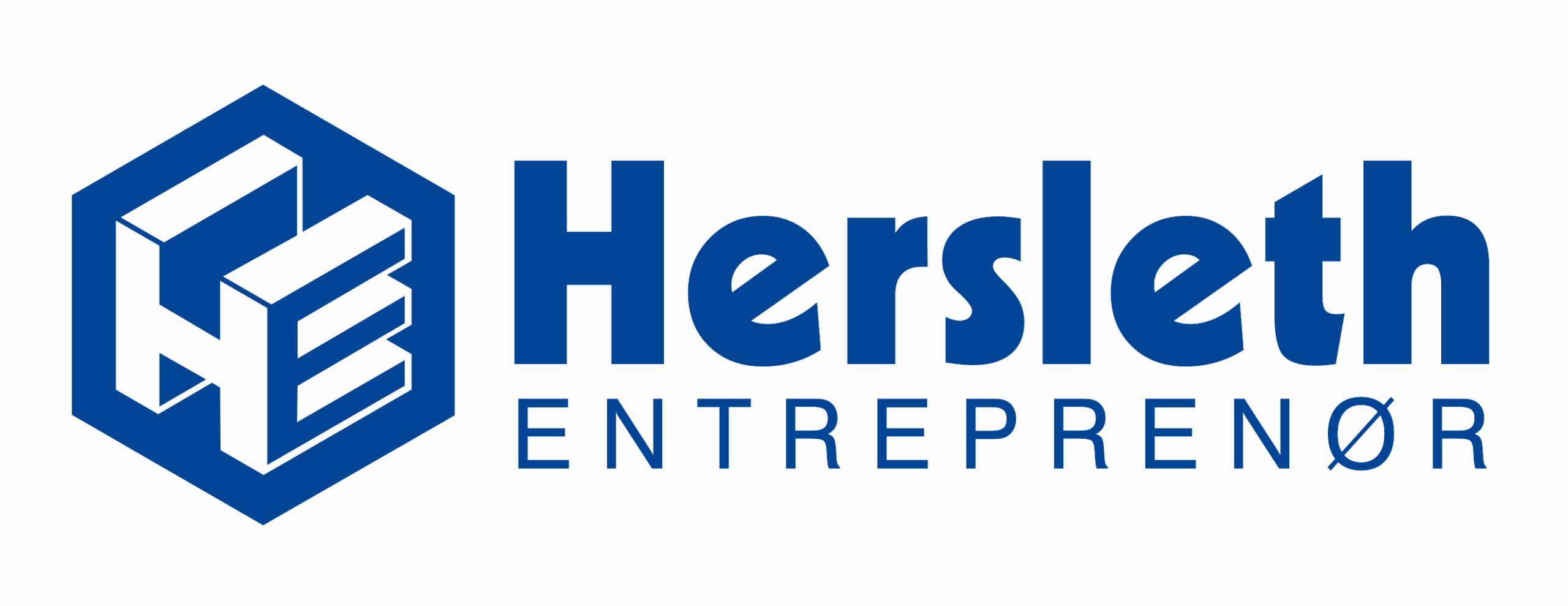
– For more than 30 years, we have helped to create good homes, attractive commercial premises and new and important buildings within culture, health and knowledge in Østfold, Follo and Oslo. Since 2007, we have been focusing on element production, and in recent years also solid wood. This is sustainable and efficient, and contributes to shorter construction times,” says Reinert Hersleth, CEO of Hersleth AS.
Kortere byggetid, økt kontroll på produksjonen og klimagevinst
Hersleth Entreprenør har drevet prefabrikasjon av ytterveggselementer i tre til både større og mindre bygg i egne lokaler på Årvoll i Rygge siden 2016. Ved å produsere elementene i tørre, lyse og rolige omgivelser sikrer entreprenøren full kontroll under produksjonen. Tre til fem tømrere er sysselsatt ved anlegget, og produserer årlig mellom 5-8000 m2 veggelementer til både bolig, butikklokaler, idrettshaller og næringsbygg.
– Oppsummert har vi erfart at denne byggemetoden gir svært mange gevinster i form at den er mer industriell, den sikrer en optimal kombinasjon av tre, stål og betong, gir enklere og mer forutsigbar byggeplasslogistikk, og ikke minst et bedre CO2-regnskap i form av lavere klimagassutslipp, sier Hersleth.
At byggene i tillegg blir demonterbare skaper også fleksibilitet for fremtiden.
Tidlig involvering av ulike fagområder en viktig suksessfaktor
Entreprenøren har erfart at det gir store gevinster i prosjektene når premissene for byggemetoden ligger til grunn fra start. Prosjektene organiseres som tradisjonelle prosjektorganisasjoner, der de ulike fagområdene bidrar med kompetanse og prosjektering i de ulike prosjektfasene, både i skisse-, forprosjekt og detaljprosjektering/utførelse.
Det legges også til rette for at arkitekt prosjekterer overordnet bygningsstruktur og geometri allerede i skisse- og forprosjektet. Deretter kvalitetssikrer og bidrar de ulike fagene med premisser og styrende løsninger underveis i prosjektet. Dette inkluderer alt fra føringer på spennvidder i konstruksjoner, høyder og detaljsnitt, materialbruk og detaljløsninger. Brann og lyd baseres på trygge og gode prinsipper. På denne måten tilpasses og optimaliseres metoden kontinuerlig både innad i prosjektet, samtidig som entreprenøren tar med seg verdifull erfaring til nye prosjekter.
Large neighborhood with 180 apartments
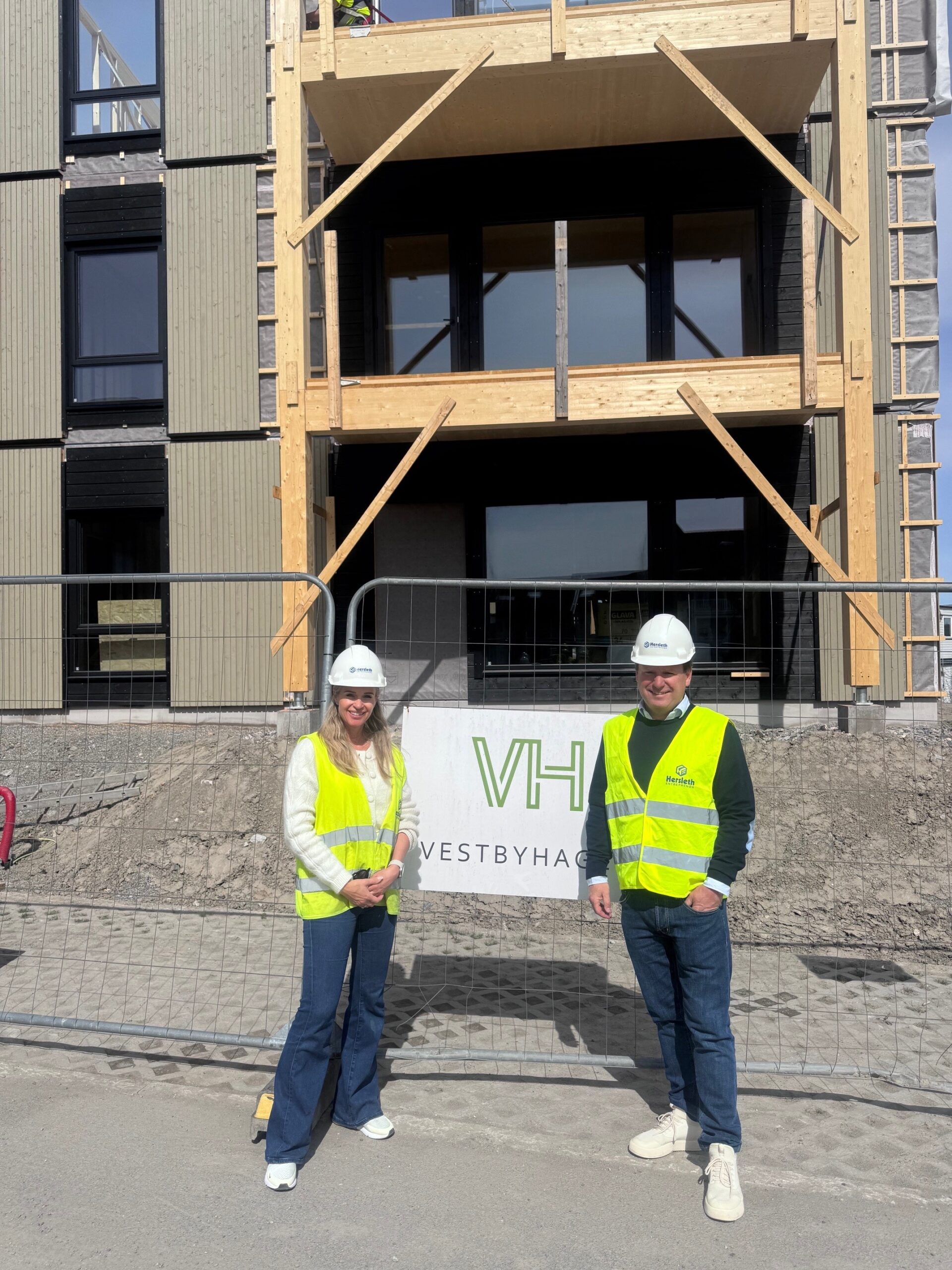
In Vestby outside Oslo, Hersleth Entreprenører is building 64 apartments in 5 buildings on 3 and 4 floors. The project is called Vestbyhagen and is located in central Vestby. All the buildings are being constructed using locally sourced, self-produced external wall elements in combination with solid wood.
The first two buildings, C and D, were completed in the summer of 2024, while building A was handed over in the first quarter of 2025. Buildings B and E are under construction and will be completed during 2025.
When the entire neighborhood is completed in five to six years, a total of 180 units will be built in the area.
Welcome to the cluster
Cluster leader Berit Sanness welcomes Hersleth AS as a member of Norwegian Wood Cluster.
– “It’s exciting to have Hersleth in the cluster. Contractors and real estate developers play a key role in the construction industry, and it’s particularly exciting to have a company like Hersleth, which is committed to developing new, climate-friendly construction methods. One of Norwegian Wood Cluster’s strategic focus areas is to contribute to better resource utilization and sustainability throughout the value chain.
Formally, it is the board of Norwegian Wood Cluster SA that processes applications for membership in the cluster. Hersleth AS was admitted as a member on May 21, 2025.
Om Hersleth AS
Hersleth AS er et familieeid konsernselskap for Hersleth Entreprenør AS og Hersleth Eiendom AS.
Hersleth Entreprenør har nedslagsfelt i Follo, Østfold og Oslo Syd. Selskapet tar oppdrag innen nybygg, ombygging og rehabilitering i privat og offentlig sektor, og omsatte for over en halv milliard kroner i 2024. Prosjektene spenner fra tradisjonelle boligprosjekter til næringslokaler og monumentale bygninger, som for eksempel kirkebygg, kulturbygg, politistasjoner, tinghus, hoteller og andre kulturbærende prosjekter. Selskapet har ca. 80 ansatte fordelt på 40 fagarbeidere og 40 funksjonærer. Hersleth Eiendom er involvert i utviklingen av over 3000 boliger som skal utvikles og bygges de neste 30 årene, inkludert prosjektet på Vestbyhagen.
Les mer på www.hersleth.no
Local commitment to reuse in the construction industry
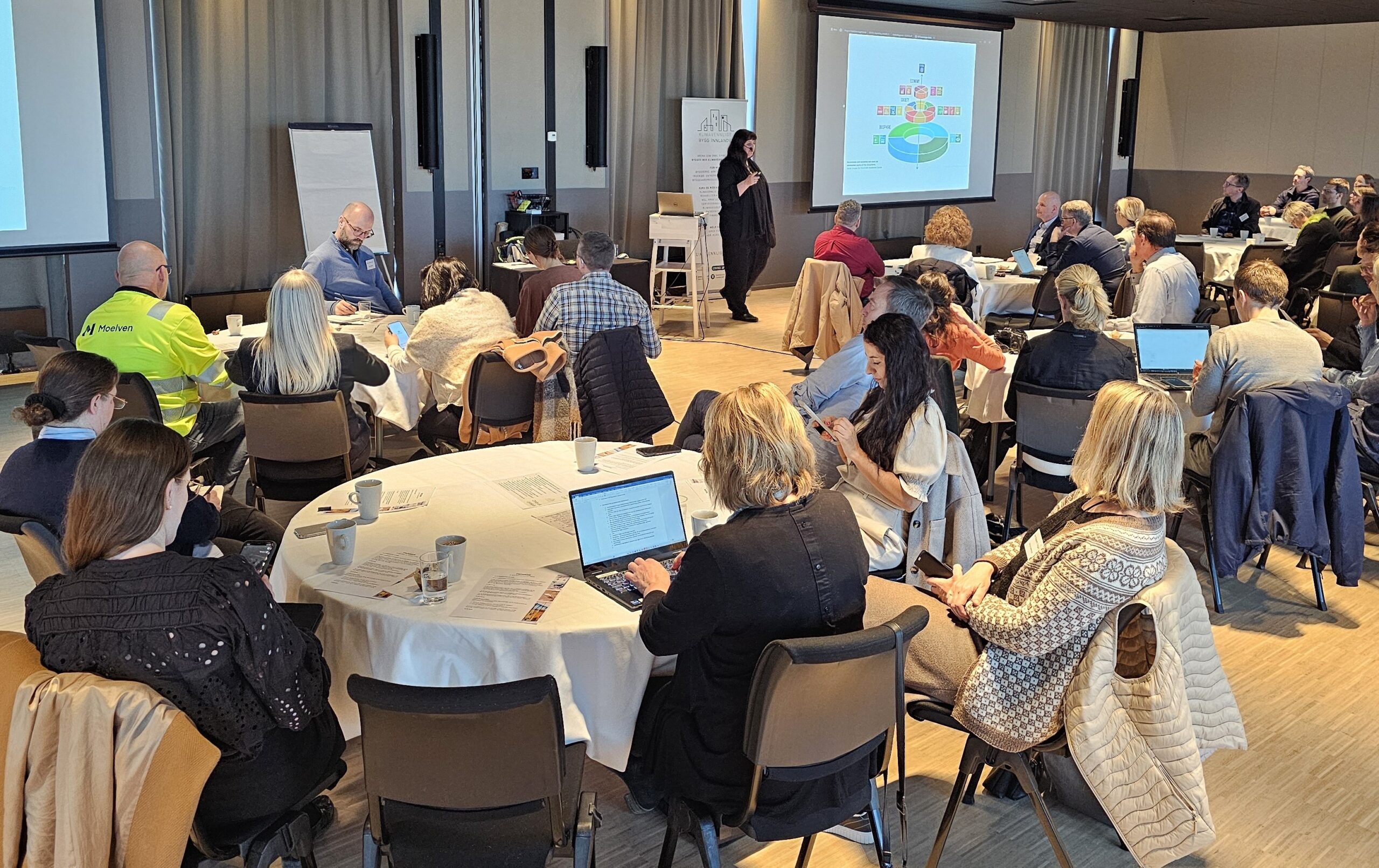
If we are to change today’s building practices, we need to meet and share knowledge and experience at all levels of the industry. That’s why it was gratifying that among the 60 attendees were builders, building materials manufacturers, architects, contractors and recyclers.
Traffic light method for reuse in renovation projects
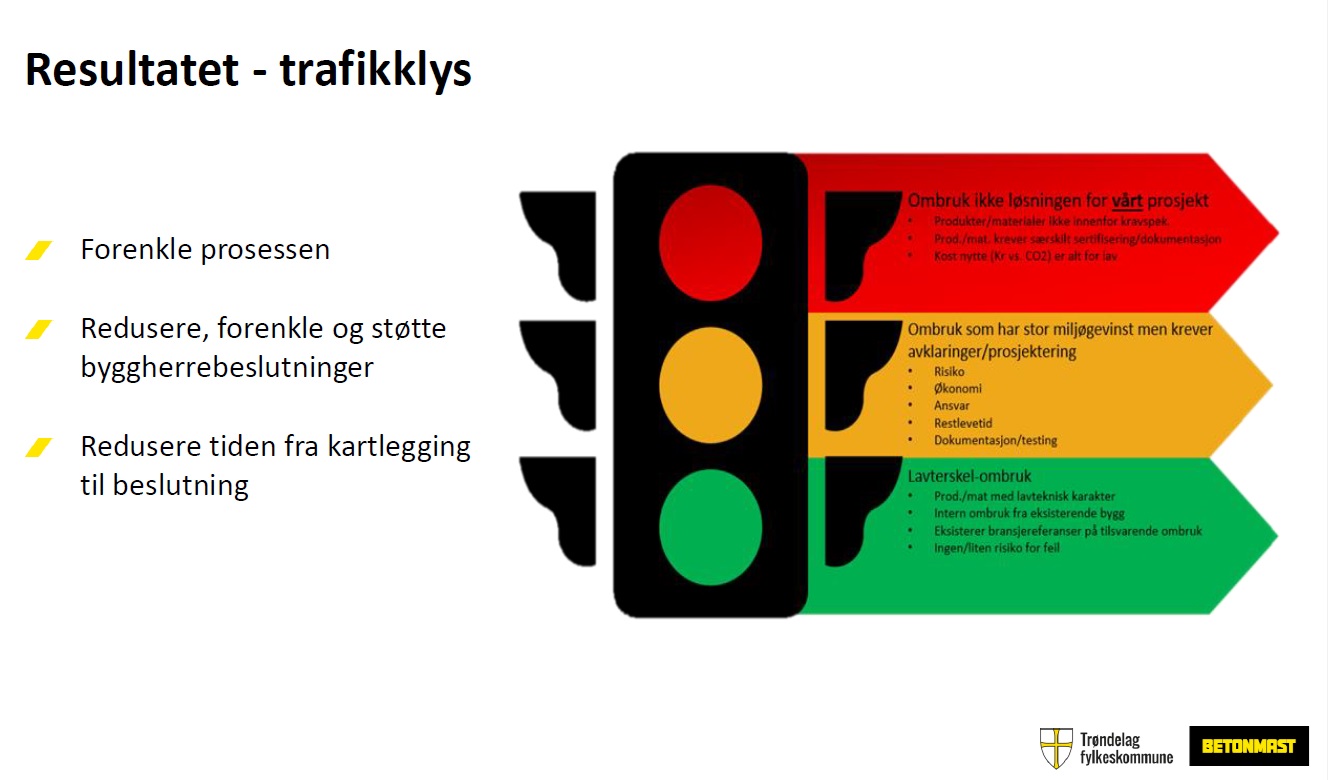
When Betonmast Trøndelag was commissioned to refurbish and build Trondheim Cathedral School in 2022, there was a clear desire from the client, Trøndelag County Council, to look at existing buildings as a source of reused materials. Sondre Synnevåg of Betonmast presented the project, which had a collaborative development phase and included a reuse survey to see which materials could be suitable for reuse and how easily they can be dismantled.
All materials that were defined as “suitable for reuse” were put into a decision matrix to clarify whether reuse would be profitable. The “traffic light model” was established, where Green = low threshold for reuse, Yellow = unsure of the dismantling or reuse potential, Red = not suitable for our project. Whatever fell into the Red category, it was up to the developer to decide whether it should be demolished/thrown away, or sold elsewhere – in which case the income was transferred to the project.
The rehabilitation of Trondheim Cathedral School has shown that it is possible to make the reuse of materials a profitable part of a construction project. The recommendation from the contractor is not to be afraid of tackling the issue, but to make sure you have all the decisions ready before you start demolishing and building. Heather Mason from the county council added that the project had applied for funding from Enova and Klimasats, not large sums of money, but enough to provide scope to try new things and at the same time relieve the contractor of risk.
Do you want to learn more about the traffic light method and the Trondheim Cathedral School project?
-
Watch recording of of the webinar “Contract forms for reuse” (Circular Resource Center 27.11.2023)
-
Read more about the about the construction project at Betonmast Trønelag
Reuse of interiors and bricks
Today, interiors account for a large proportion of greenhouse gas emissions over the lifetime of a building, because the interior is usually replaced every time the building has new users or tenants. But does it have to be this way?
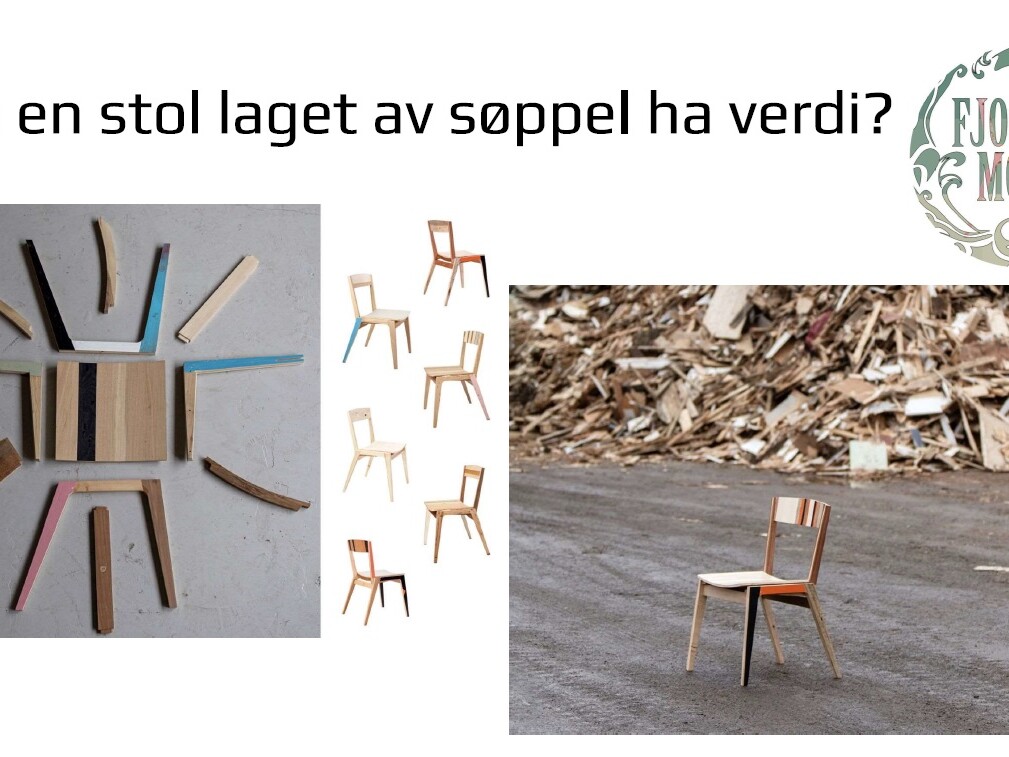
Kirsti Svennung is head of No.17 – a sustainability network for interior architects, and she talked about how we Norwegians suffer from “renovation sickness”. “140,000 tons of office furniture are thrown away every year. And that’s not counting walls and floors. What are we losing by letting “renovation sickness” go? We know that 80% of the footprint is in the design phase. Svennung was concerned that aesthetics requires a new language, we need to ask other questions, including how we view durability. Should we accept that a “good chair” lasts for 7-10 years, is that good enough?
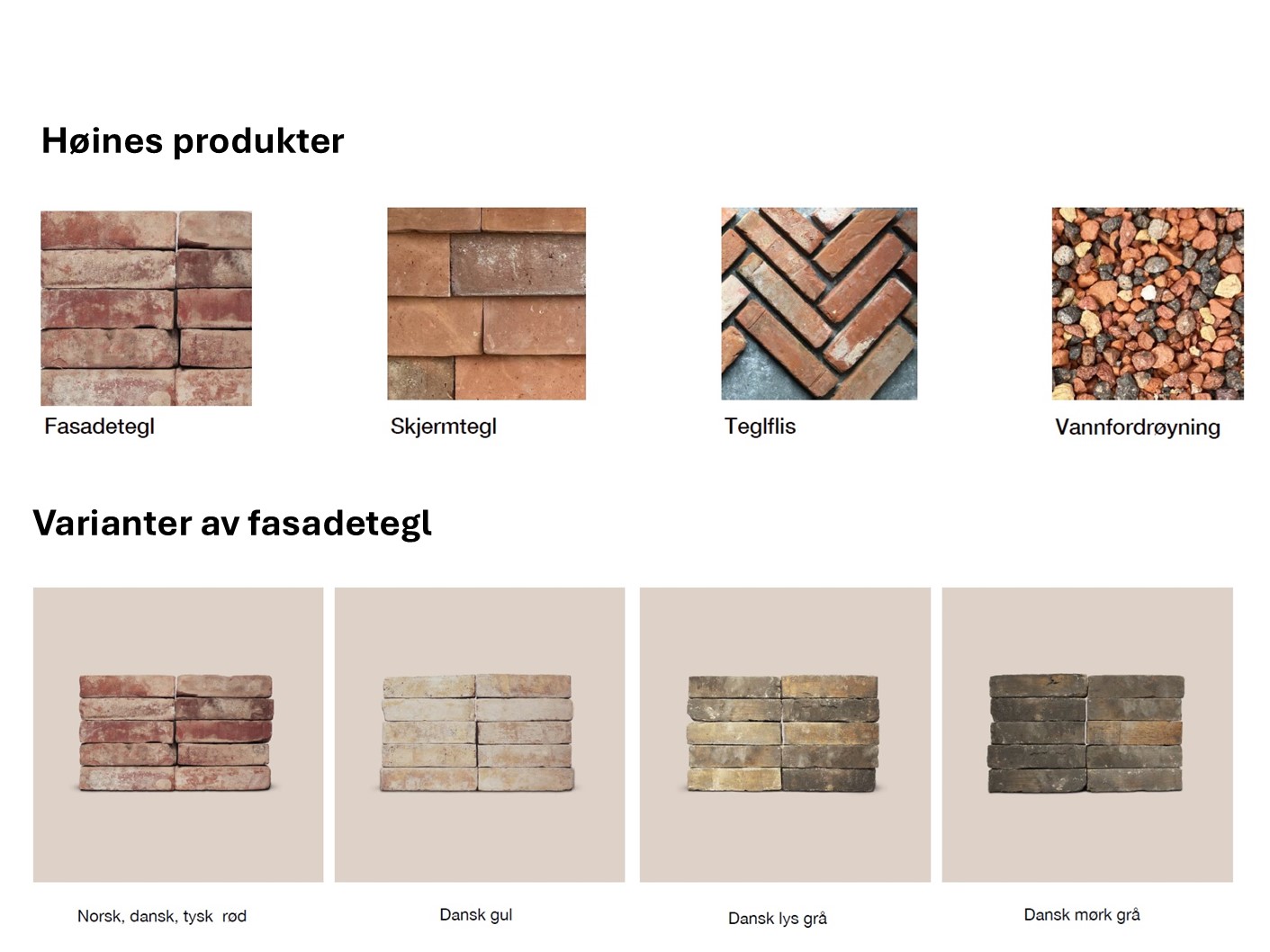
Product longevity is also important to Høine, which specializes in reusing bricks. Every year, around 50,000 tons of bricks are thrown away in Norway, while at the same time 40,000 tons of new bricks are built. The production of new bricks requires large amounts of energy; the bricks are fired at 110 degrees for three days. Brick is robust and durable, so why not use it several times?
Oskar Bringager, Marketing Manager at Høine, explained how the company has worked on a number of challenges since its inception in 2019, from CE marking to cleaning methods and logistics. They are now also working on introducing lime as a mortar in new brick buildings, to make it easier to dismantle the brick at the next crossroads.
You can read more about Høine’s work and construction projects HERE.
Logistics and market for reused materials
Today, Norway is one of Europe’s least circular countries, with a modest reuse of 2.5% of resources. In the EU and the government, the goal for the construction industry is that 70% of the waste should be reused, and thus one must expect constantly new rules and restrictions.
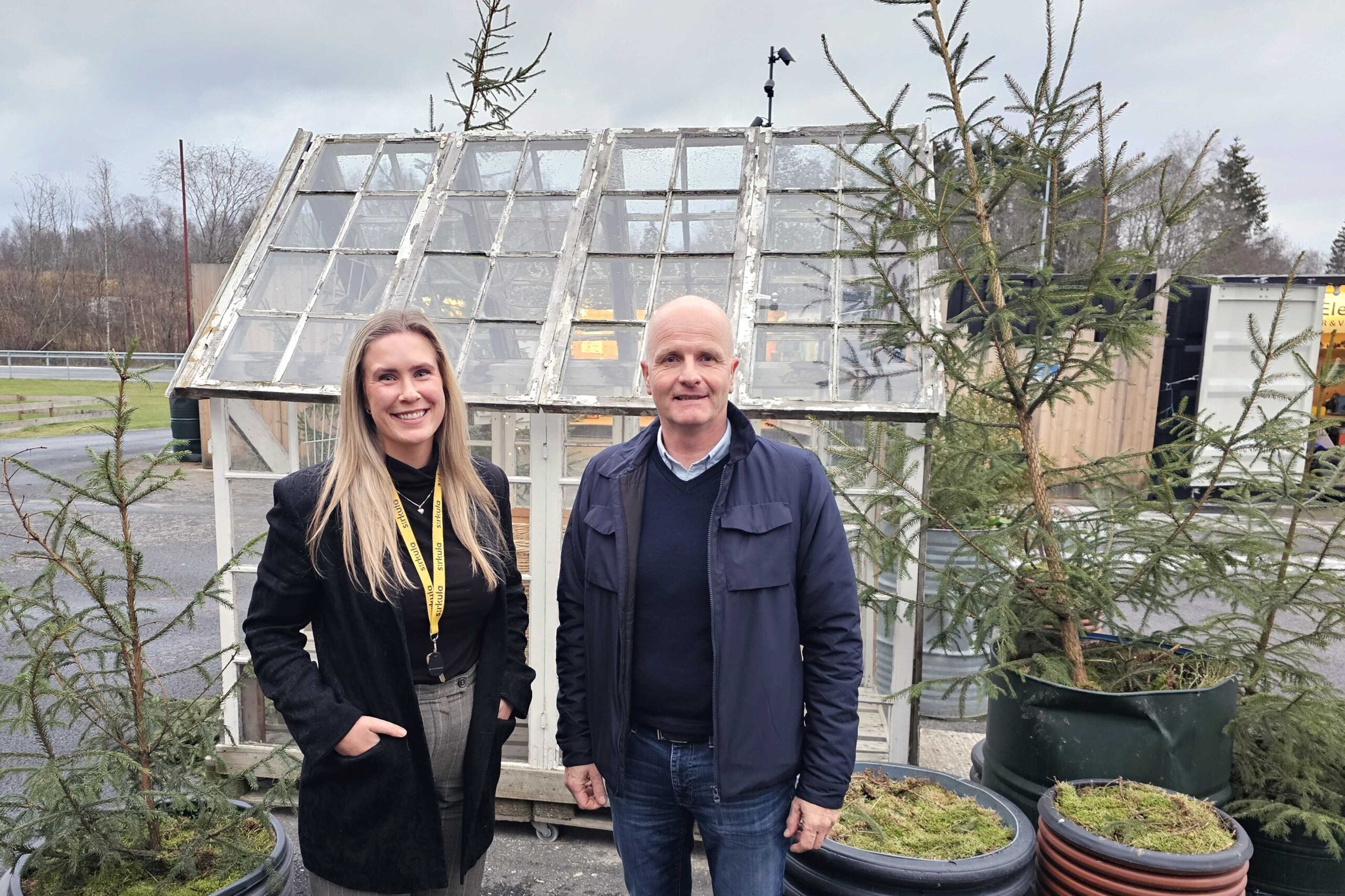
The recycling companies Sirkula and Østlandet Gjenvinning (ØG) want the building materials they currently receive as waste to be reused to a much greater extent. That’s why they have developed a pilot project for a reuse center in Inland Norway, and are now working on ownership and financing.
The plan is to start with a reuse center near Hamar, but at the same time establish a digital platform that makes it possible to trade reused goods without intermediate storage. The reuse center will support the professional players; contractors, real estate companies and builders. The short-term goal is to reuse as much as possible, but within three years the aim is for the business to be profitable.
The project was presented by Ingrid Staveland Reppe from Sirkula and Jon Inge Kjørum from ØG, who encourage the entire industry to work together on the establishment of a reuse center, which they believe will be crucial to meet future rules and requirements for reuse.
You can read more about the reuse center HERE
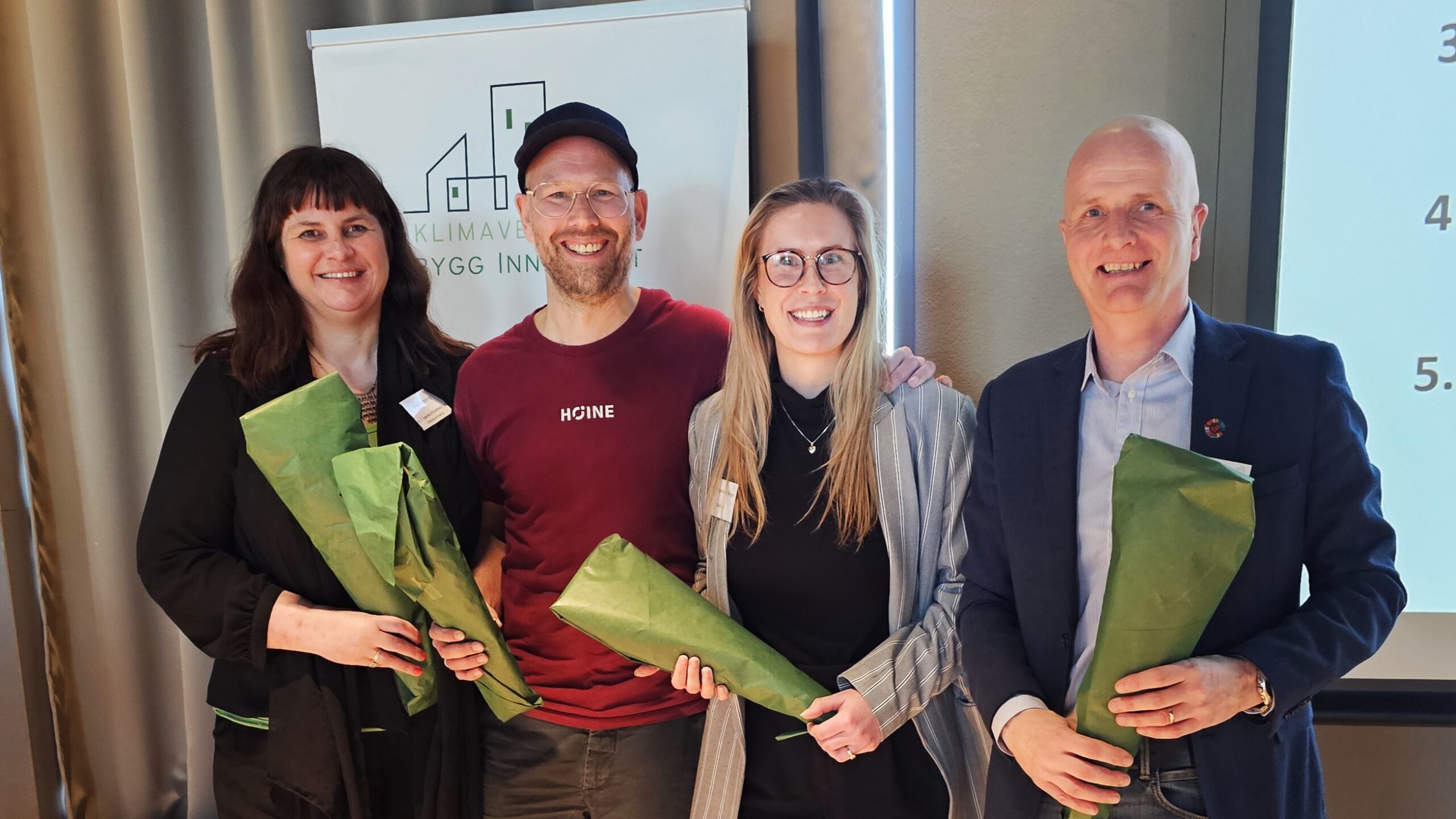
Possible local measures for increased reuse
The session was rounded off with a “World Cafe”, led by Christopher Mc Cormick from Klimavennlige bygg Innlandet. The aim was to involve the bright minds in attendance in solving the challenges of the future around reuse, and here you can see some of the input:
Experience sharing and pilot projects:
– Arrange an experience gathering with reuse projects from Inland Norway
– Start pilot project(s) with documentation of climate benefits and learning
Construction site and supplier collaboration:
– Test local solution for material accounting on construction sites
– Enter into an agreement with local packaging manufacturers on a circular test scheme
Value chain and tool support:
– Influence builders to introduce reuse requirements in procurement
– Develop local LCA module that includes reuse, in collaboration with educational environment
Responsibility and interaction:
– Gather stakeholders in a joint meeting to clarify roles in reuse projects
– Create a checklist/template for roles and responsibilities through project phases
Communication and attitude change:
– Develop a visual campaign: “Reuse is quality”
– Involve pupils and students in the development of new expressions and solutions based on reuse
Logistics and infrastructure:
– Establish test of physical intermediate storage in the Hamar region
– Pre-project for digital logistics platform (availability and timing of materials)
The reuse center in Innlandet:
– Working group with public and private stakeholders
– Preliminary study with mapping of location, players, operation and financing
The next professional gathering for the Construction Industry of the Future in Inland Norway will be held on Thursday, October 30 in Hamar.
Information is shared through newsletters and the website www.klimavennligebygg.no.
Will test circular lumber foil
Timber and building products need to be protected through packaging to retain their quality. However, to become more sustainable, companies need to solve their packaging needs in a way that reduces greenhouse gas emissions.
The aim of the new project, named “Circular lumber foil”, is precisely to develop and test on an industrial scale a closed loop of lumber foil to contribute to reduced resource consumption and increased circularity of plastics in the wood and construction industries. In addition, the project aims to help reduce the use of plastic in the timber and construction industries.
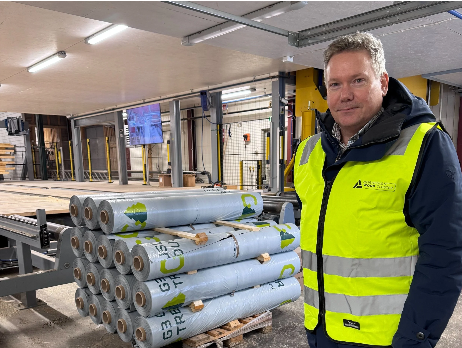
– “Through the new project, we hope to lay the foundation for a circular value chain for plastic packaging for the wood and construction industries. The experience gained from the project will also be used to identify new, specific pilots for circular solutions related to wood in buildings, which have the potential for upscaling,” says project manager Håvard Sørlie of Norwegian Wood Cluster. He explains that the project recently held a kick-off meeting.
– There was great commitment and relevant expertise among the participants in the project group, so it was a motivating meeting,” says Sørlie.
Not so easy in practice
Lumber wrap is usually made from a material that is suitable for material recycling. However, a significant proportion of the packaging plastic collected from the construction industry disappears from the cycle and is lost as a raw material for new lumber foil.
Collected plastic is often sent for energy recovery. Other volumes that are sorted may be contaminated or mixed with different plastic materials from construction sites. This prevents collected plastic waste from being recycled into raw materials of good enough quality to be used in film production.
Testing in a closed circular circuit
The idea for the “Circular lumber foil” project emerged in a cluster-to-cluster project on packaging and construction that the Norwegian Wood Cluster carried out in collaboration with the Circular Packaging Cluster 2021-2024.
– To take a closer look at the challenge, we have recruited seven companies that represent the players in the closed circular loop. They will actively participate in the project together with the cluster and test a concrete circular solution. The project will, among other things, collect plastic at the construction site, produce recycled plastic and test it in use,” says project manager Håvard Sørlie in Norwegian Wood Cluster.
– The pilot test will be carried out in a real environment and will ensure that the results of the project reveal both consequences and opportunities related to environmental impact and costs. In addition, the project will reveal the actual plastic consumption and recycling rate of this type of plastic packaging in Norway,” says Sørlie.
Want to share
The purpose of the project is to develop recycled plastic of satisfactory quality and provide a basis for national upscaling of the solution.
– We are pleased that this project has started. Packaging is necessary to preserve the quality of the timber, but today’s use of plastic film causes greenhouse gas emissions that we would very much like to reduce. By sharing the results along the way through the Norwegian Wood Cluster, we hope that a successful solution can actually be rolled out on a large scale,” says Jørn Nørstelien, CEO of Gausdal Treindustrier.
Important project
– “Gausdal Landhandleri is very positive about this project. “We want to reduce the climate footprint resulting from packaging use. The hope is that through the project we will both develop a recycled plastic of satisfactory quality and at the same time get tips on how our own packaging use can be reduced,” says Logistics Manager Paul Erik Hattestad at Gausdal Landhandleri.
Project “Circular lumber foil”
These actively participate in the “Circular lumber foil” project, which is owned by the Norwegian Wood Cluster: Gausdal Treindustrier SA, Gausdal Landhandleri AS, Blåne AS, Østlandet Gjenvinning AS, Litra Containerservice AS, Norfolier GreenTec AS and Haagensen Plast AS. In addition, Norwaste performs assignments for the project. Faggruppe Bærekraft is the reference group for the “Circular lumber foil” project.
The project is supported by Innovation Norway and lasts 2025-2026.
The first reuse center for building materials in Inland Norway
With developments in EU regulations, Norwegian regulations and green financing, it’s clear that the reuse of building materials will become the new norm within a few years.
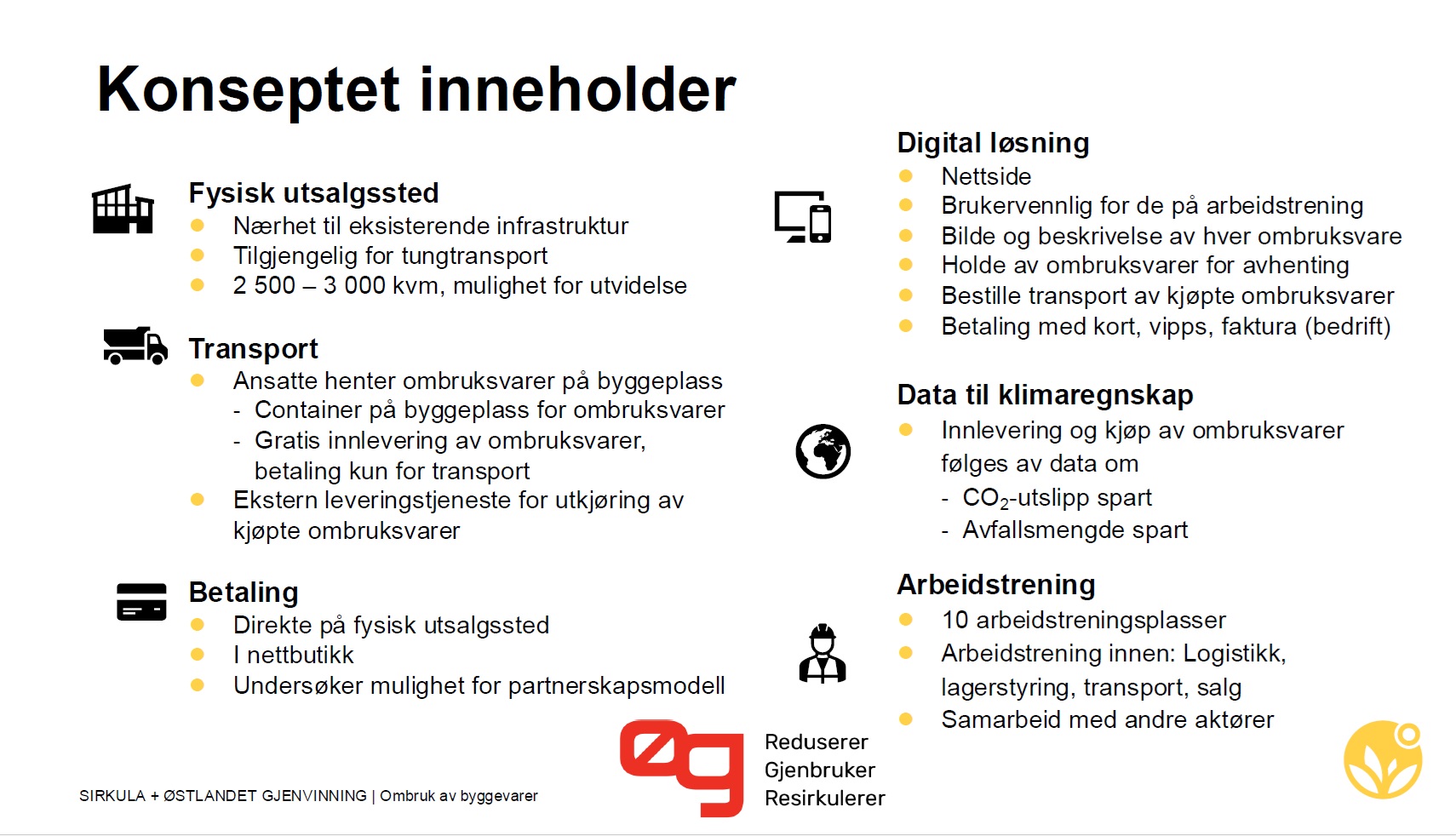
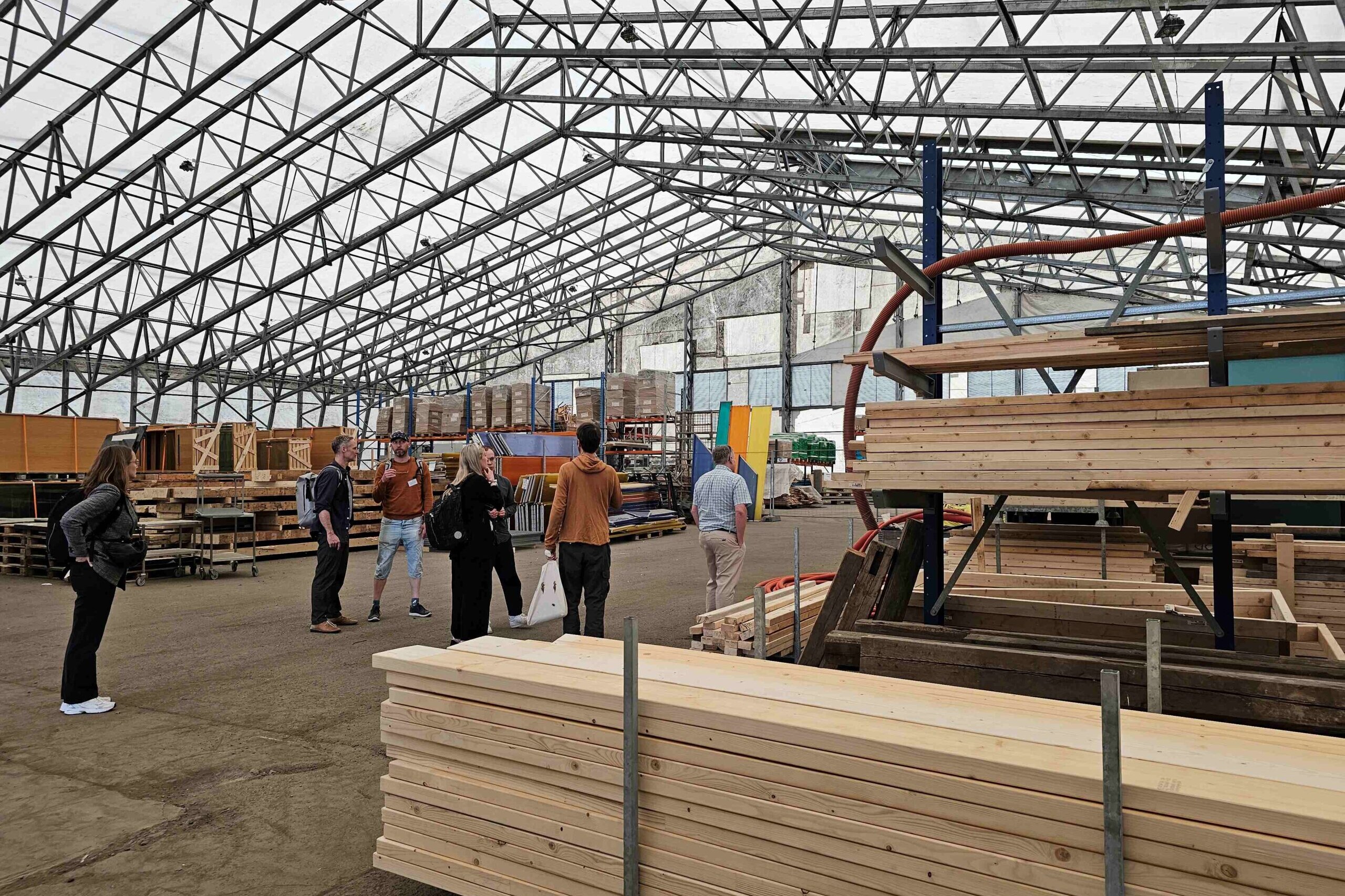
The preparatory work has been going on for two years, with market and product flow surveys, as well as study trips to facilities for the reuse of building materials in the Nordic region. Clear goals have now been set for the project and a business model developed. The goal is to “establish a physical and digital regional platform for the reuse of building materials, with a critical mass of both goods and users”.
Starting in the Mjø area
As the plans stand, the company will start with an area of around 2,500-3,000 m2. The agreement to lease the site will be signed as soon as the financing is in place. “We’re planning to start in the Mjø area to verify that this is viable. But we’re thinking of eventually setting up a network of centers in Inland Norway and perhaps also outside our own region,” says Jon Inge Kjørum, Marketing and Sustainability Manager at Østlandet Gjenvinning.
Every year, Sirkula and ØG receive around 150,000 tons of waste containing construction fractions, such as wood. In addition, the new center will handle construction products from the construction industry, such as surplus and returned goods.
Aimed at business customers
The initiative is aimed at the professional construction market, and project manager Ingrid Staveland Reppe says that they have held meetings with builders and contractors to understand what it takes to succeed.
On the one hand, the construction industry will be suppliers of reusable goods – what we currently refer to as waste from construction sites. There is a motivation here to save time and money, among other things by not having to pay for a waste fraction. In addition, it would be desirable to have figures for the greenhouse gas accounts that show that less has gone to waste and more to reuse.
When buying reusable goods, the business customer is keen not to lose time or money. “This means that we must have the right goods available at the right time and time-efficient administration and transport. In addition, we must provide quality guarantees for the products and data for the greenhouse gas accounts that show savings, both when submitting and purchasing reusable goods,” says Reppe.
What will the solution look like
The product range will initially be materials for non-load-bearing structures. A great deal of testing and documentation is required for load-bearing structures, and furniture and fixtures are sold through the company Reinventar.
Today, the construction industry pays to get rid of waste, while it will be free to deliver to the reuse center, where you only pay for the transport. – We envision a reuse container at the construction site that is set aside for materials for reuse. The transportation will be handled by an external company, and here we also see some future opportunities with return freight from those who supply building materials,” says Kjørum.
The plan is for the reuse center to become an AS with a general manager and 1-2 employees. However, the acquisition of land, a warehouse, hiring and digital solutions are on hold until the financing is ready.
More people need to join to succeed
Now the project needs more partners to succeed. “We need supporters for the first three-year period, after which the goal is for this to take care of itself,” says Kjørum.
The total cost is stipulated at SEK 6 million over three years. The project needs external funding, and there are many people who want to be involved as partners, but so far it is difficult to get them to commit financially.
Both Kjørum and Reppe foresee this becoming an important business area in just a few years’ time. “I think a lot will happen within a five-year period, and that in the near future we can expect most construction projects to demand a proportion of reused materials,” says Kjørum.
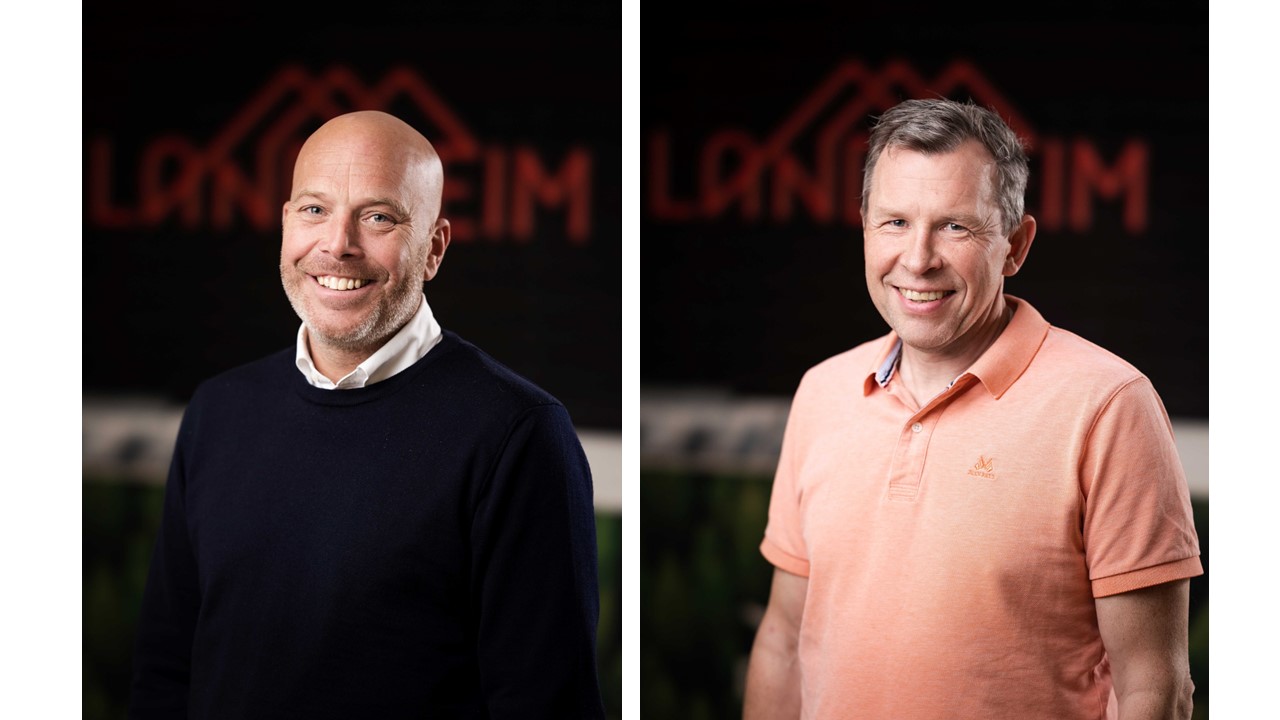
Landheim into the cluster
Landheim AS, which is located in Østre Toten, has been manufacturing and supplying roofing since 1992, and over the years has acquired broad expertise in nail plate-based roof structures, precut and elements. The company currently has around 50 employees.
Landheim AS, which is located in Østre Toten, has been manufacturing and supplying roofing since 1992, and over the years has acquired broad expertise in nail plate-based roof structures, precut and elements. The company currently has around 50 employees.
When it comes to building components, Landheim delivers everything from picking standard lengths to very complex orders with girders and columns, milling for ventilation, notches for hidden supports, customized linings and fittings. The company tailors elements and can deliver completely finished structures with windproofing and pre-primed panels in all colors according to the customer’s wishes.
Company with ambitions
– “We are in a phase where Landheim will be developed further. The way the Norwegian Wood Cluster works and the professional groups that exist in the cluster make it interesting for us to become part of the cluster. We hope to gain useful impulses from the meeting places offered by the cluster, which we can bring back to Landheim, while at the same time contributing to the cluster ourselves,” says CEO Yngve Hansebakken of Landheim. Yngve Hansebakken in Landheim.
– Landheim focuses on high competence, efficiency and implementation capacity. “We are a partner in the ‘SirkTRE’ project, where we hope to test a useful pilot over the next few months. Through our participation in the Norwegian Wood Cluster, we hope for new connections and ideas for innovation with a focus on business benefits,” says Espen Nystuen Pettersen, principal owner and responsible for Landheim’s sales and development work.

Strengthening the cluster
Cluster leader Berit Sanness welcomes Landheim AS as a member of Norwegian Wood Cluster.
– We want more members who use wood in constructions and are therefore very pleased that Landheim is joining the Norwegian Wood Cluster,” says Berit Sanness.
– One of the cluster’s strategic focus areas for the future is to increase the level of expertise, adaptability and innovation in the value chain. Landheim’s focus on competence and efficiency fits like a glove with this initiative,” says the cluster leader.
Formally, it is the board of Norwegian Wood Cluster SA that processes applications for membership of the cluster. Landheim AS was admitted as a member on November 18, 2024.
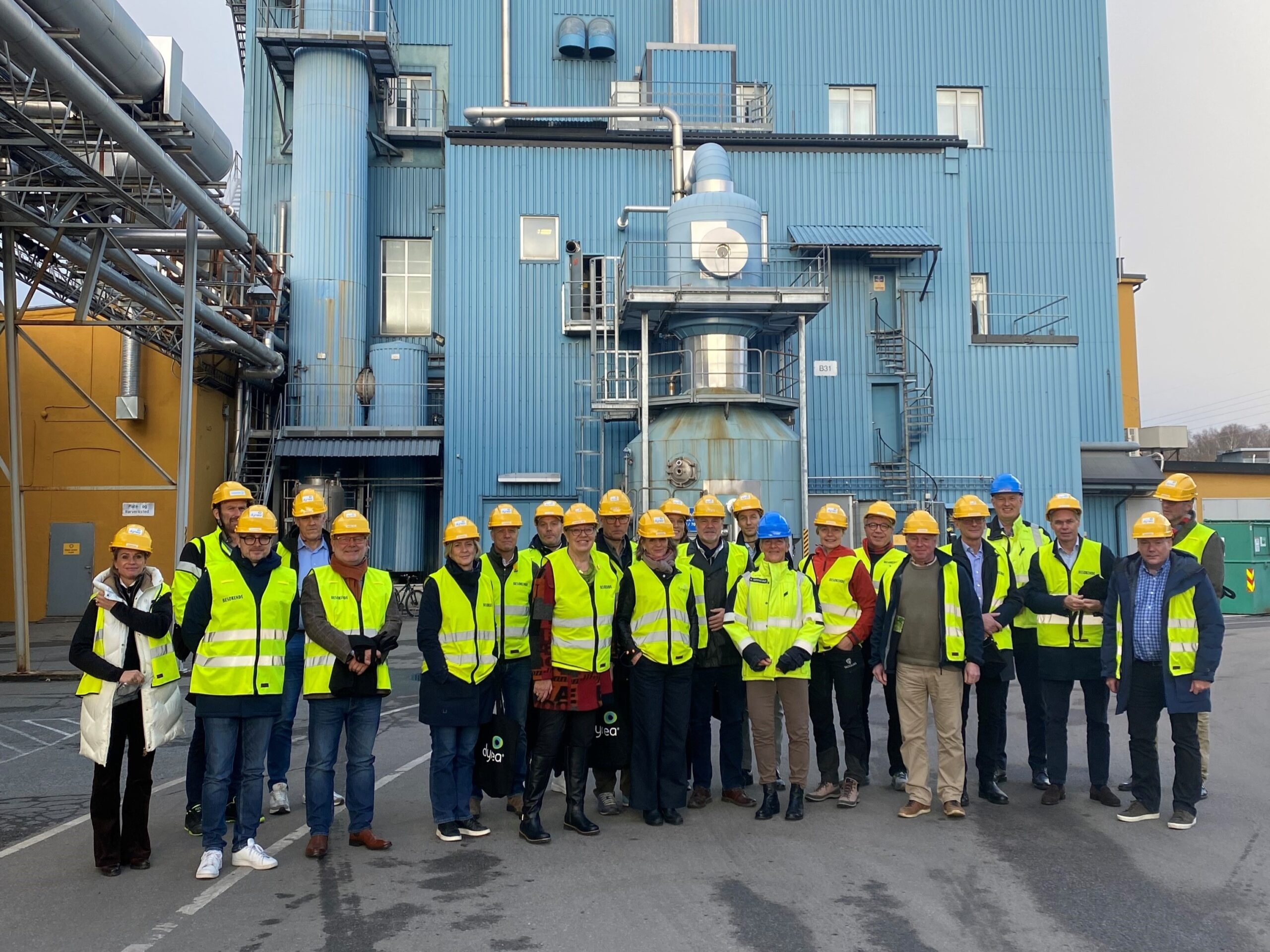
Top management gathering with new insights
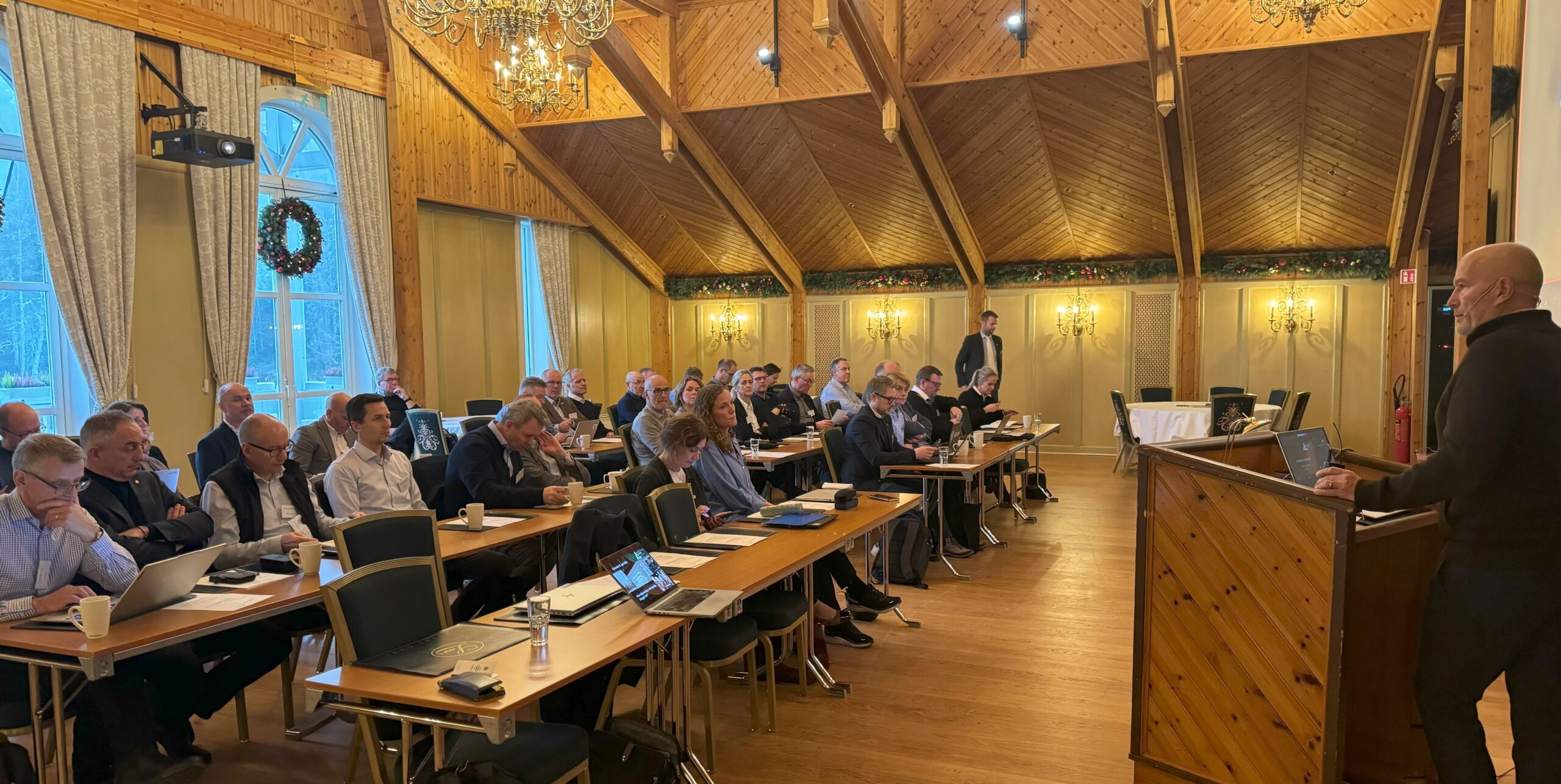
The meeting began with a visit to Dynea AS to learn about the development and production of adhesives for the wood processing industry. We were impressed by an active and innovative lab and test environment that develops and tests adhesives for various types of wood and products for European, Asian and American markets. CEO Tarje Braaten and Innovation and Development Manager Kristin Grostad showcased a company with long traditions, but at the same time a strong, innovative will, which is necessary when supplying adhesive products for different types of wood and applications, and to regions with different climate conditions and regulations for adhesives in wooden buildings.
EU deforestation regulation on the agenda
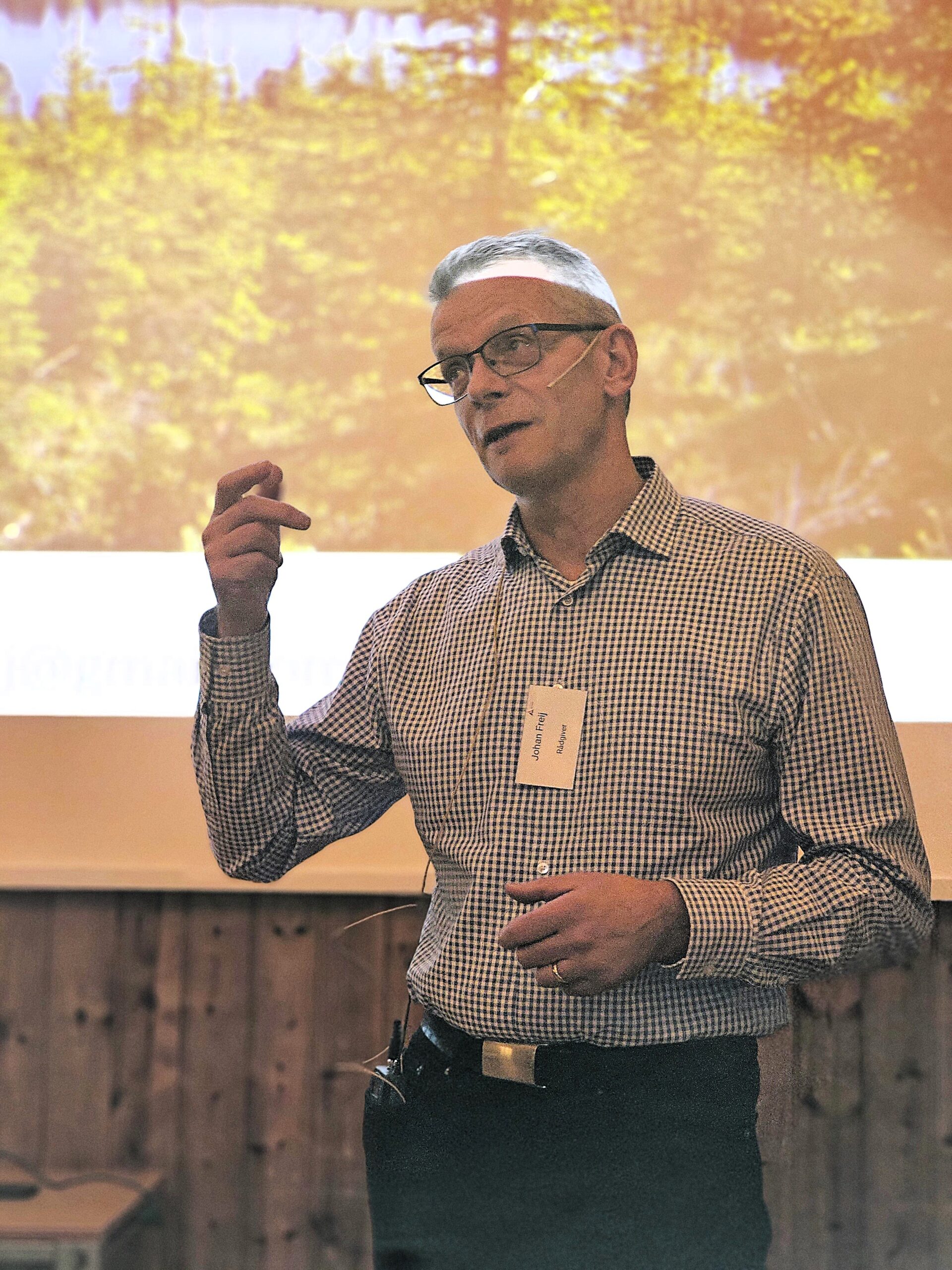
After the visit to Dynea, the meeting continued at Losby Estate where Emma Berglund from Skogsindustrierna and Johan Freij, advisor and former head of forestry at Danske Bank, were invited to share thoughts and knowledge about upcoming regulations and the future timber market.
Emma Berglund is responsible for the Swedish Forest Industries Federation’s forest issues in the EU and internationally, and follows the processes surrounding the EU Deforestation Regulation (EUDR). She was invited to give us an update on the EU’s work on the EUDR and paint a picture of what we need to prepare for.
The Deforestation Regulation aims to prevent goods that have caused deforestation or forest degradation from being traded in the EU. The regulation includes requirements for due diligence, traceability and information. Although the entry into force of the regulation is likely to be postponed until December 30, 2025, there are major challenges associated with its implementation.
Before the regulations can be put into practice in the EU, there are a number of questions that need to be answered. These include definitions of terms such as “forest destruction” and “plantation forest”, as well as questions about product bans and traceability.
The government has still not decided whether the EUDR will be partially or fully incorporated into Norwegian law, so Norway is currently regarded as a third country. This is unfortunate, and the industry wants clarification as soon as possible. In Norway, the Timber Industry is following up the development of the regulations on behalf of the industrial companies, and the administration of the NWC is in dialogue with the Timber Industry on the matter.
The battle for raw materials – the new reality
Access to raw materials for the woodworking industry is affected by political decisions, the nature agreement, beetle attacks, forest fires and the war in Ukraine. How will this affect the situation in Norway, can we build as much with wood as we want in the future? And how will the competition between wood and other materials in construction develop in the future in light of the nature crisis and climate crisis? We asked Johan Freij, now an independent advisor, but formerly head of forestry at Danske Bank for many years, to look into the crystal ball.
At a time when the construction market is at a standstill, things look bleak for the wood industry. But Freij was concerned about the long-term picture and assured that better times will come. Among other things, this is because there has been a major expansion of pulp production capacity worldwide, which means that there will be a shortage of long-fibre spruce and pine timber, which is important for lighter and stronger products. According to Freij, our Nordic softwood will become increasingly sought after as both pulpwood and building material.
We’re currently experiencing a global recession and a severe shortage of timber. What will it be like when the economy turns around, will the lack of wood become a threat or a reality?
– “I believe that those who are ‘wood stingy’ (stingy = greedy) and get the most out of the log will be the winners in the future,” said Freij. He listed utilization of grot*, thinner saw blades, finger jointing, gluing, composite materials and recyclable and demountable products.
– And remember that air is cheaper than wood. It’s not rational to use solid wood if you can fill the core with air or inferior qualities,” he said. Freij’s closing words were that it’s just a matter of “going with the flow” and working on improving logistics and developing new products.