Splitkon new member of Norwegian Wood Cluster

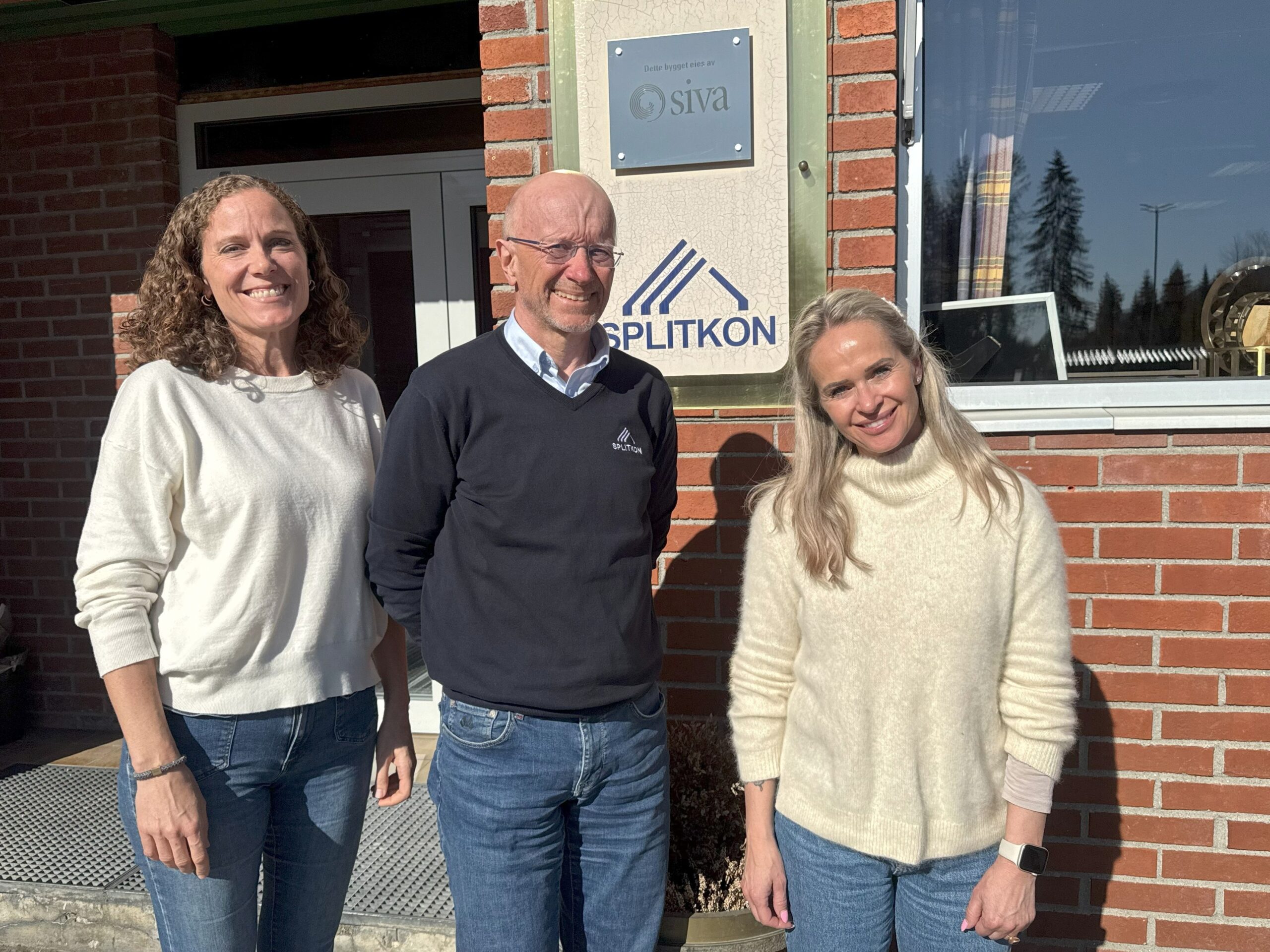
Splitkon AS is the country’s largest manufacturer of load-bearing structures in solid wood and glulam and has production facilities and warehouses in Åmot in Modum municipality. Splitkon has approximately 70 employees.

Common challenges and sharing

– “We have followed the development of the Norwegian Wood Cluster with interest and see that the activities and network are very relevant to Splitkon. Now we want to become part of the cluster and aim to participate actively in most of the cluster’s professional groups,” says CEO. Morten L. Johansen in Splitkon.

– The industry’s need for documentation is an example of an area where we expect to benefit from participating in the Norwegian Wood Cluster. A clearer and unified use of resources within sustainability and the environment is an important area for Splitkon,” says Johansen.

– We also believe that the internationalization of our members’ businesses should be facilitated, and we are pleased that NWC is now establishing its own specialist group in this area,” says Johansen.

He points out that Splitkon has relevant experience that the company wants to share in the cluster.

– The Norwegian Wood Cluster has members from large parts of the value chain, and we look forward to getting to know and building long-term networks with NWC members. Perhaps we will eventually also come up with specific collaborative projects with other members,” says Morten L. Johansen of Splitkon.

Deliveries to many well-known buildings

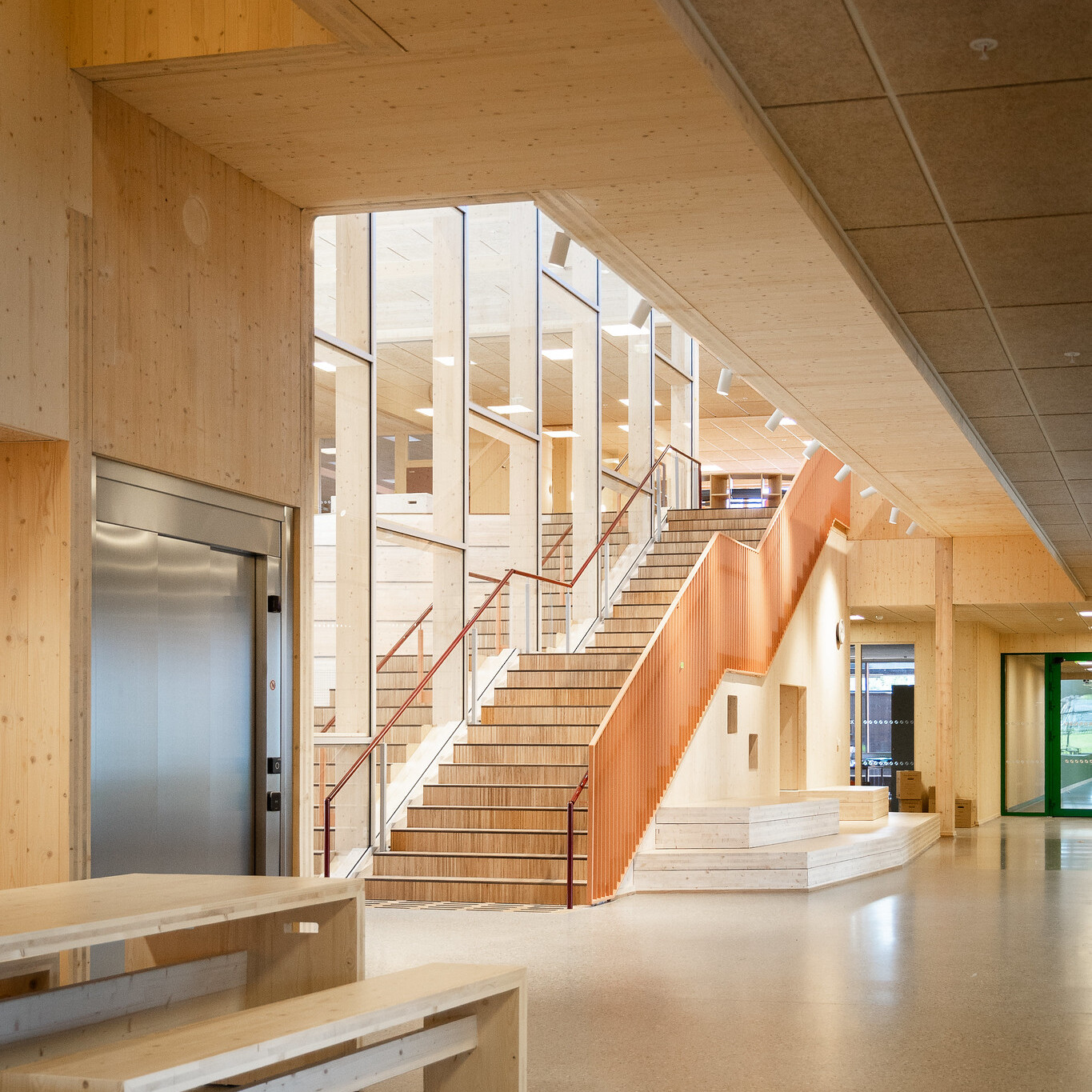
In recent years, Splitkon has made a name for itself with deliveries to many well-known wooden buildings in Norway. These include the commercial buildings SporX in Drammen and Krohnen in Bergen, the Fyrstikkbakken 14 apartment building in Oslo, office buildings such as HasleTre in Oslo and Lumber Teknopark in Kristiansand, as well as several primary schools.

Splitkon
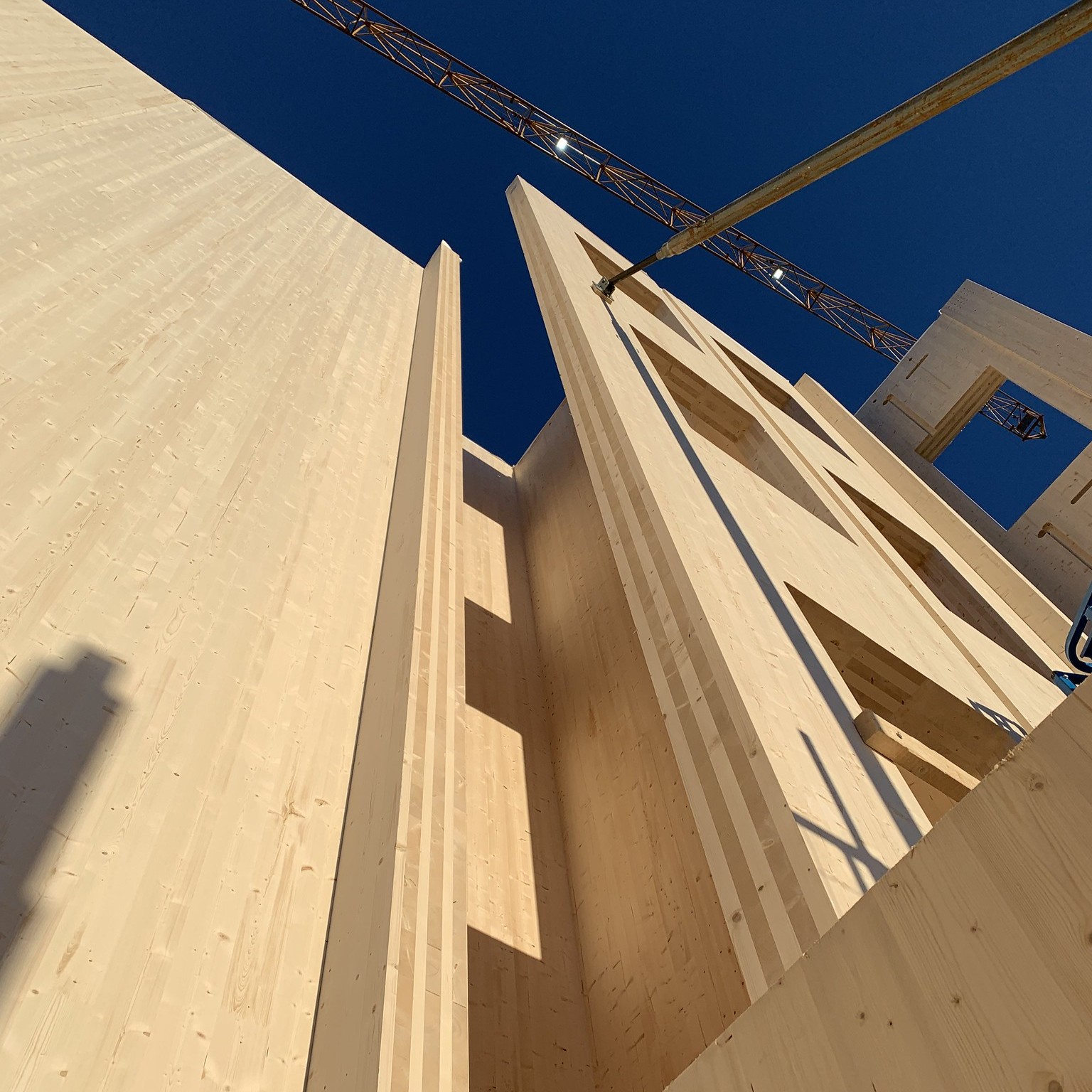
Montering av massivtre på SporX i Drammen - et

Major player becomes a member

Cluster leader Berit Sanness welcomes Splitkon as a new member of the Norwegian Wood Cluster.

– “In recent years, Splitkon has demonstrated its expertise and ability to deliver on a number of beautiful wooden buildings around the country. The company has very interesting experience from these projects, and we look forward to Splitkon’s active participation in the cluster’s work in the future,” says Sanness.

Formally, it is the board of Norwegian Wood Cluster SA that processes applications for membership in the cluster. Splitkon AS was admitted as a member on September 9, 2025.


Gathering forces for reuse in the construction industry

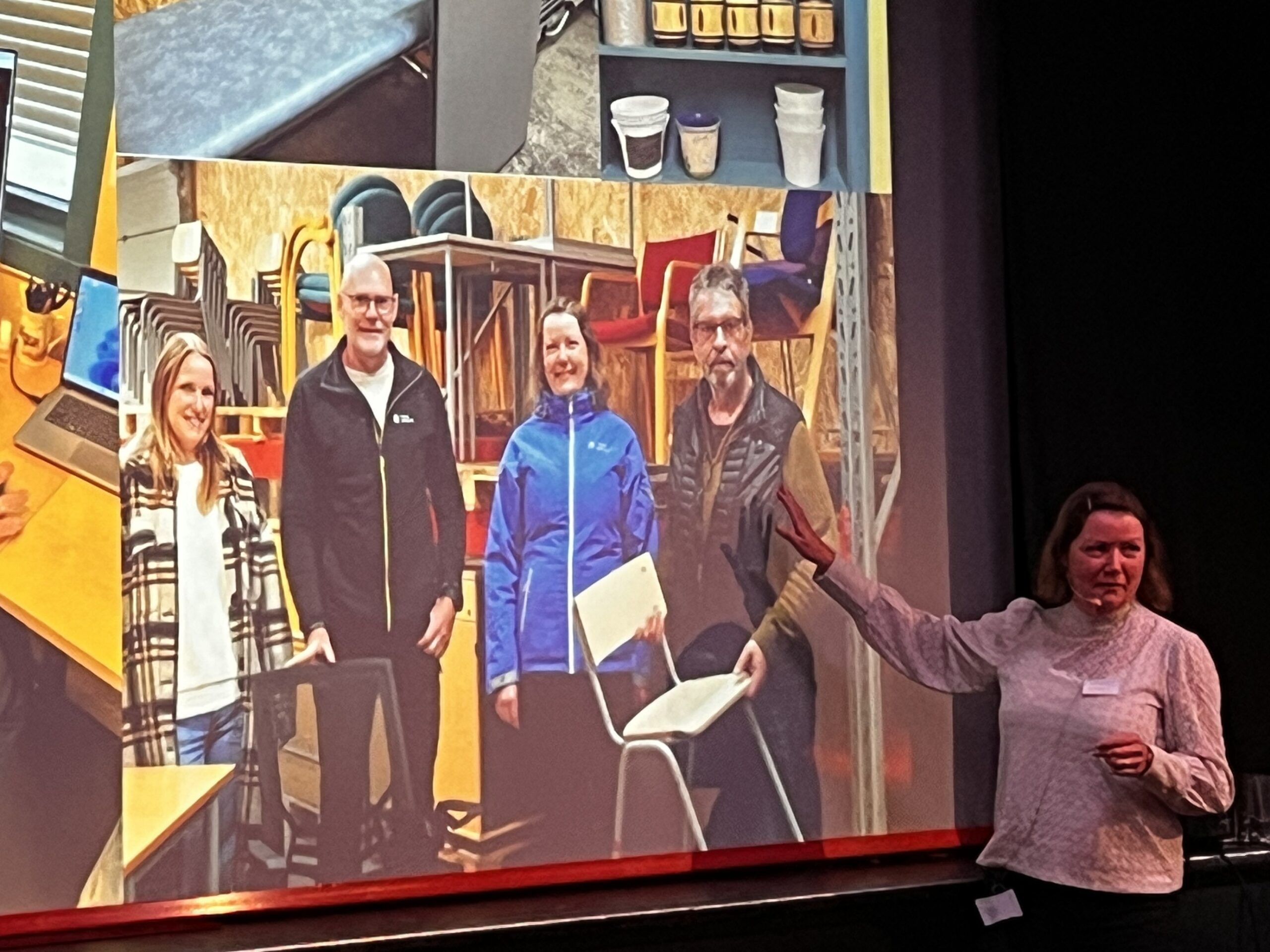
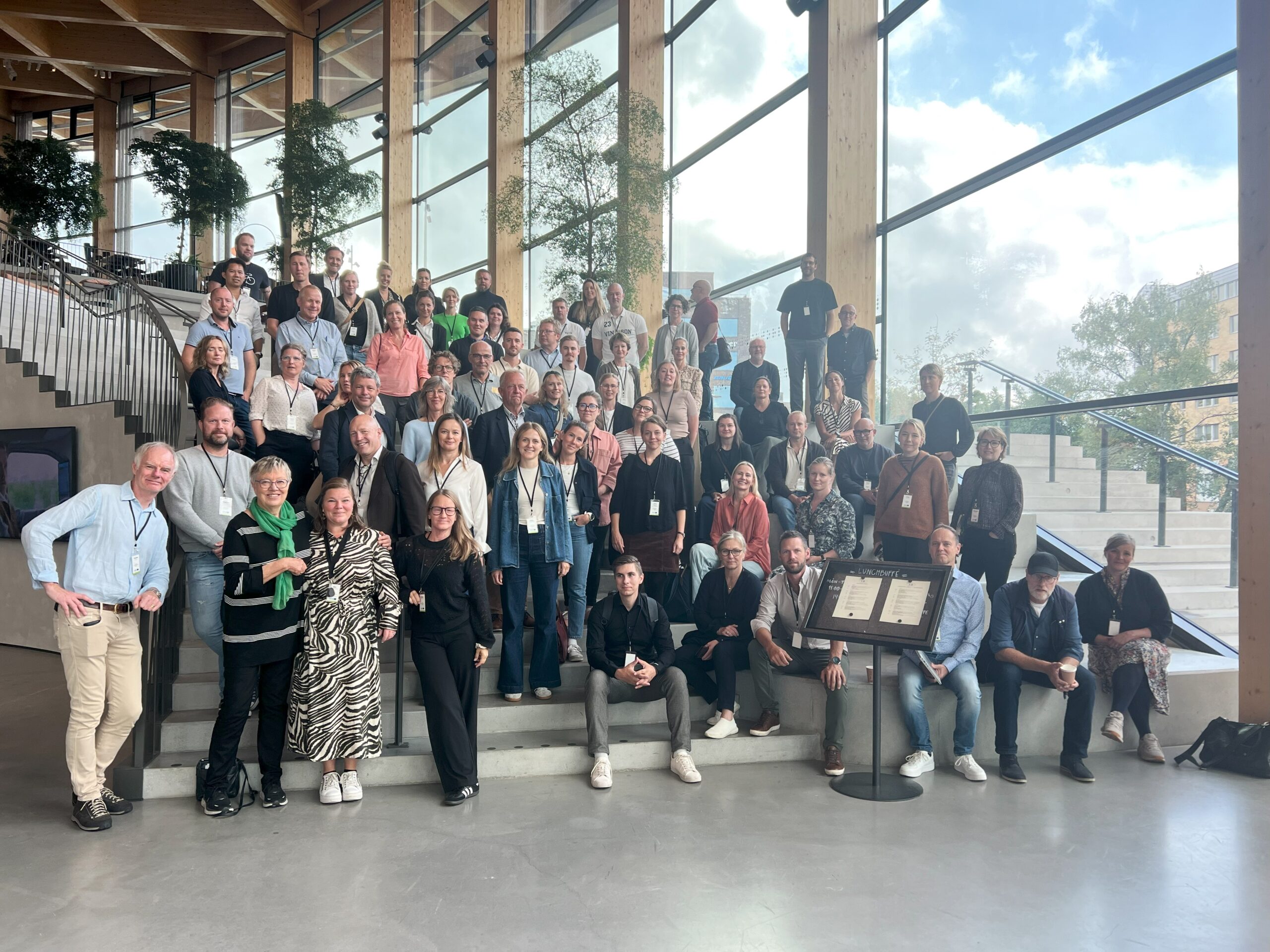
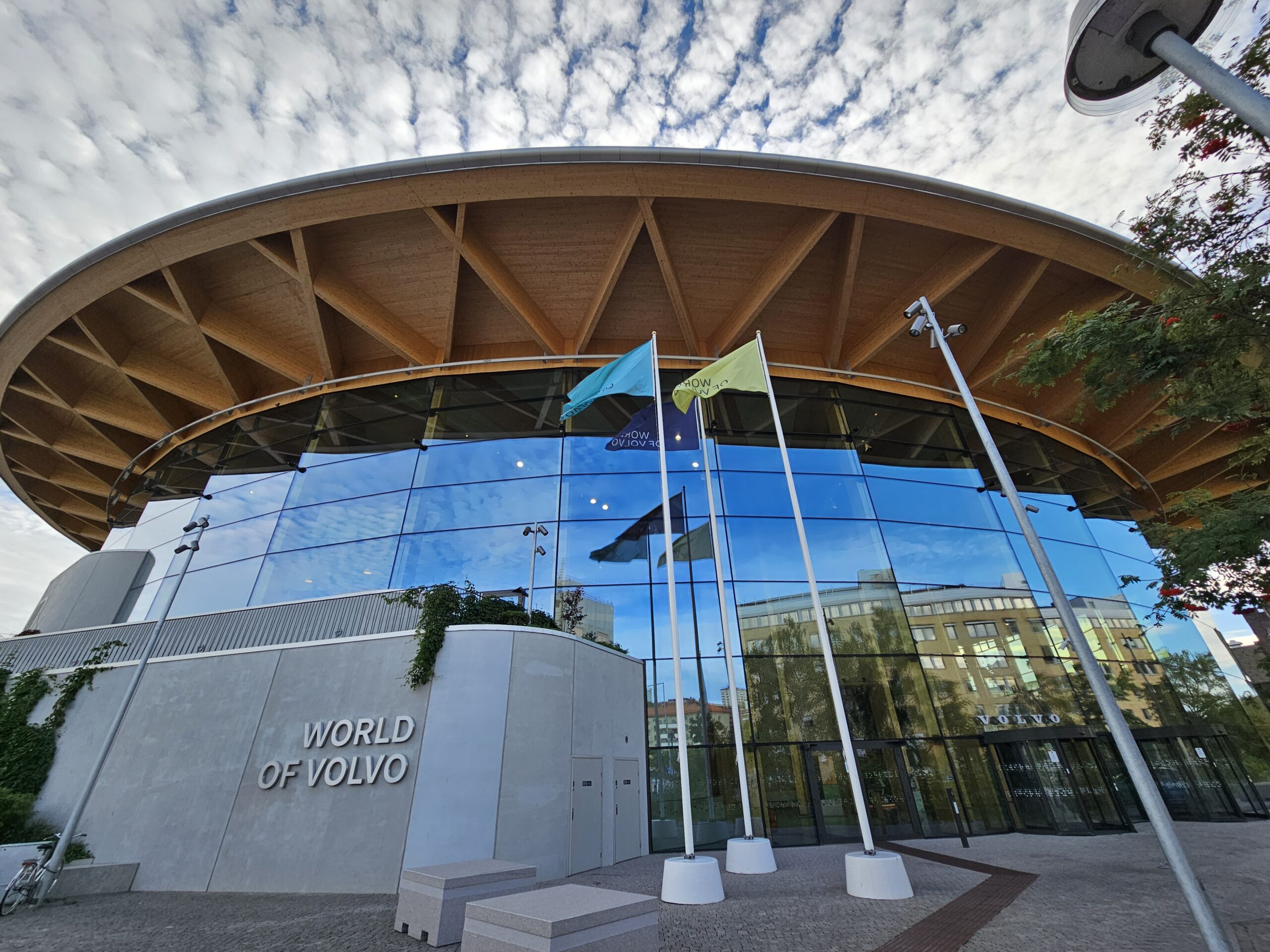
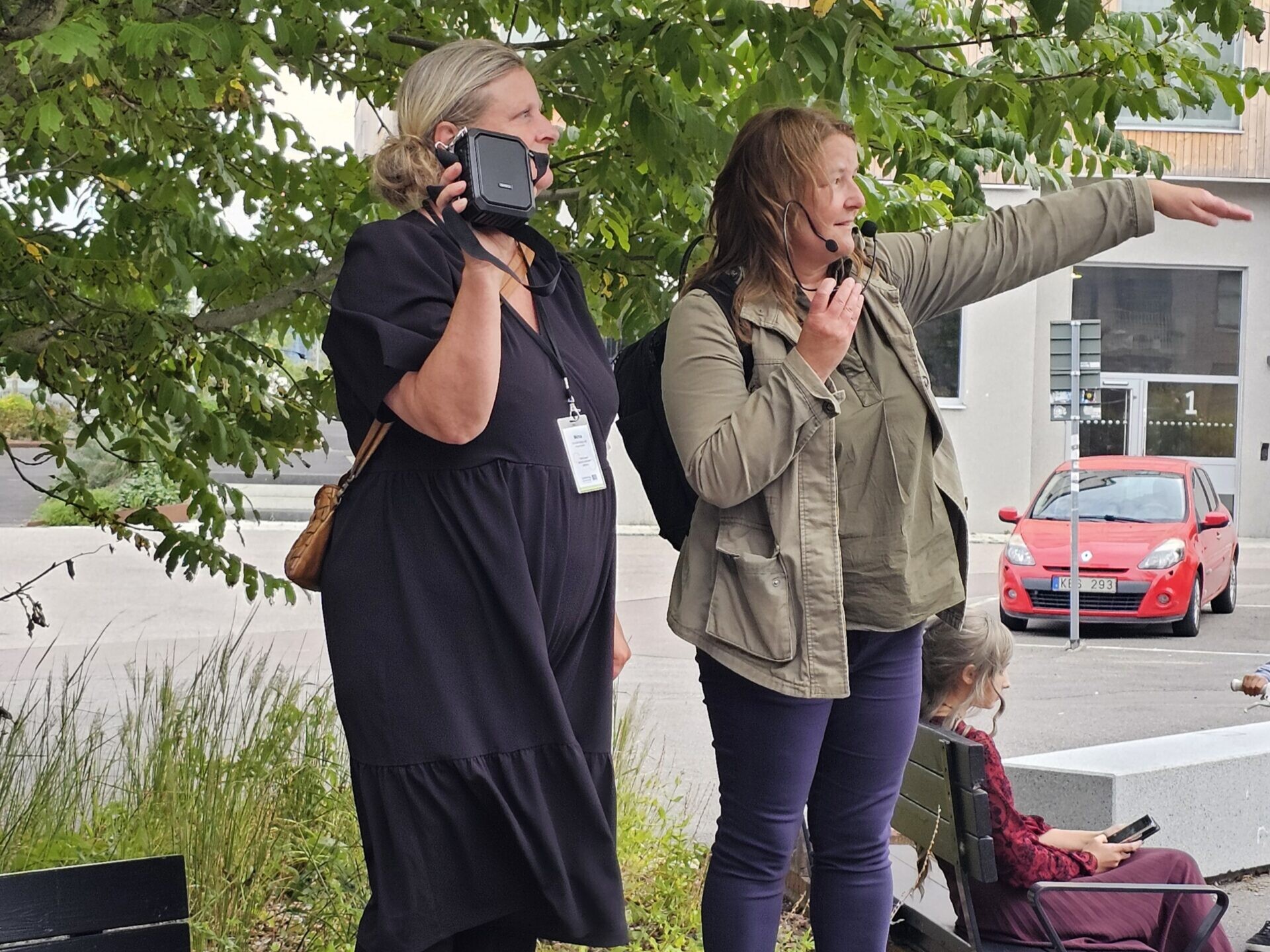
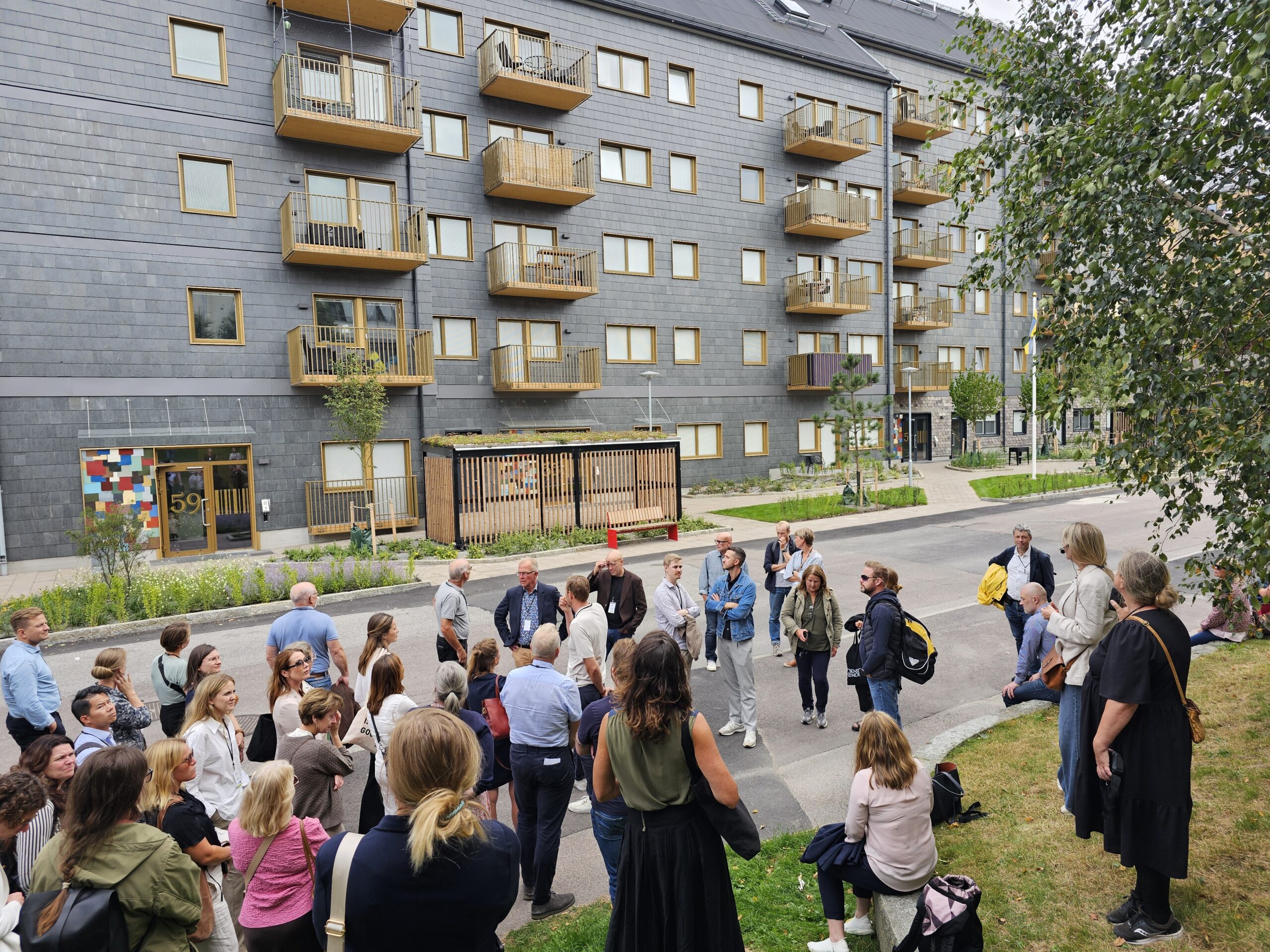
We also visited kvarter Återbruket in Gothenburg, a project with ambitions of 50% reuse, and where, among other things, Moelven-produced glulam beams from a nearby ice rink are used in the construction. We also got to experience the World of Volvo, an impressive building, circular in shape and carefully adapted to its surroundings, with a load-bearing system in glulam and a large proportion of CLT (cross-laminated timber) elements. Now we’re ready to increase reuse in the construction industry, together.

World of Volvo er et imponerende bygg med bæresystem i limtre - en inspirerende arena for fagsamlingen. Foto: Mari Blokhus Nordtun
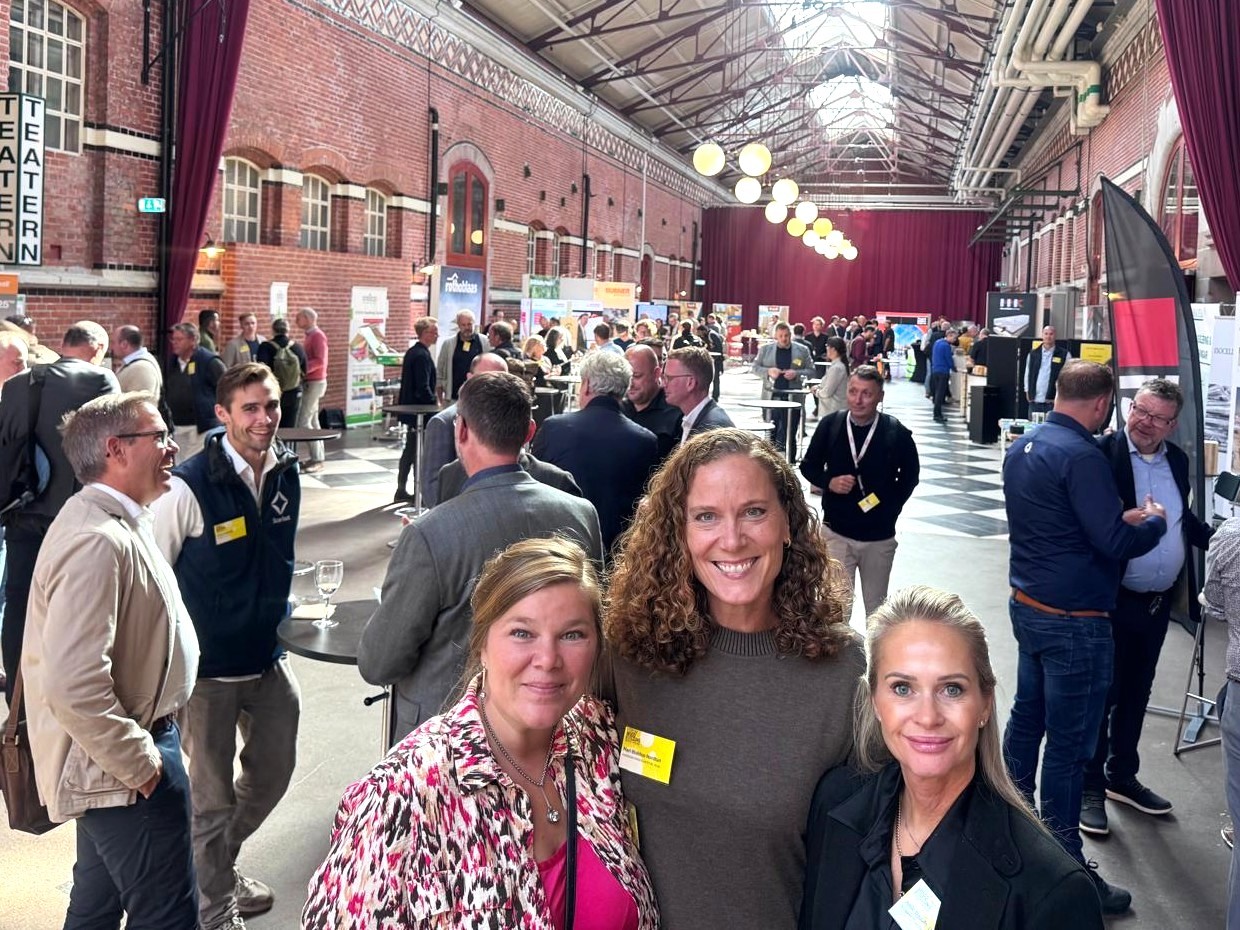
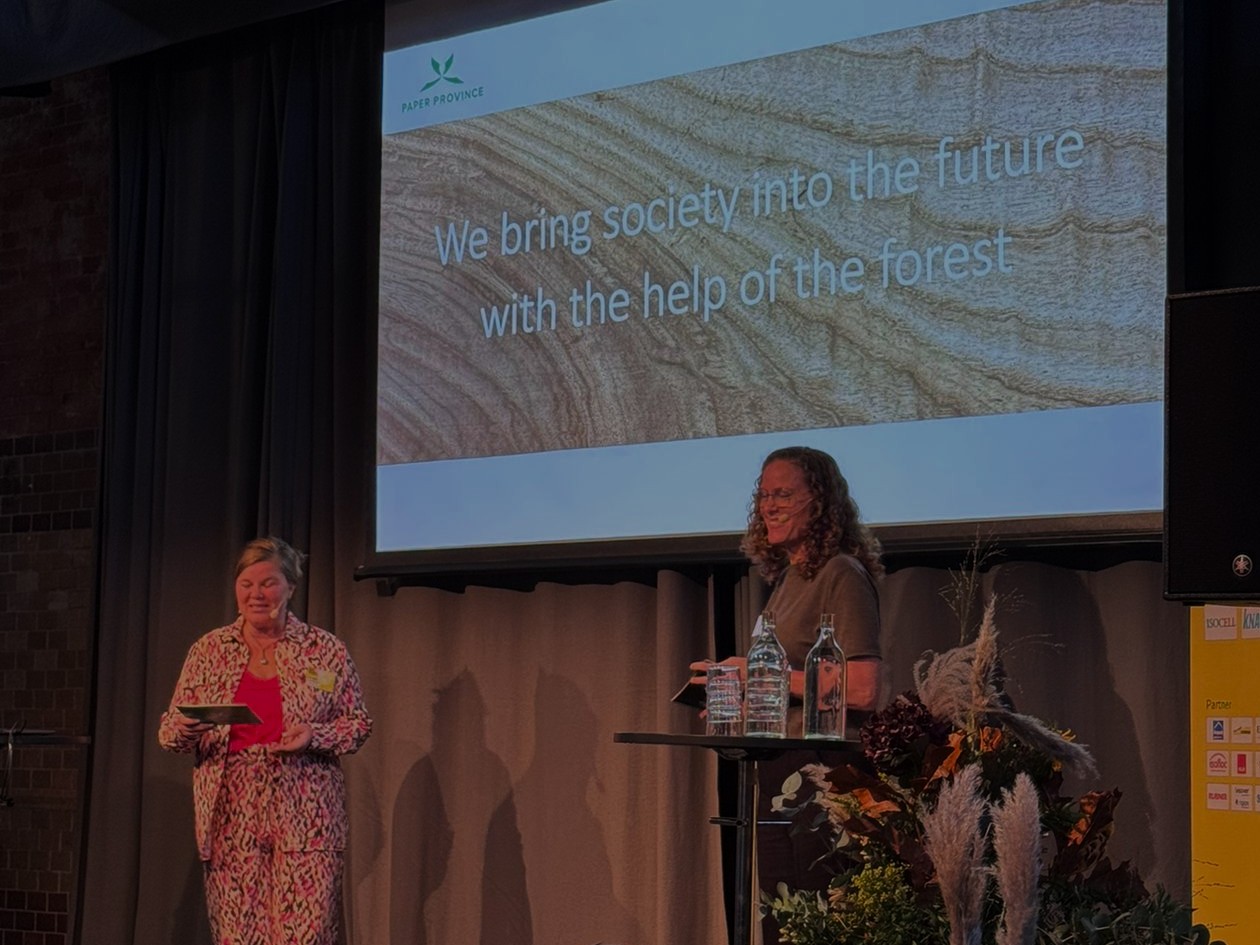
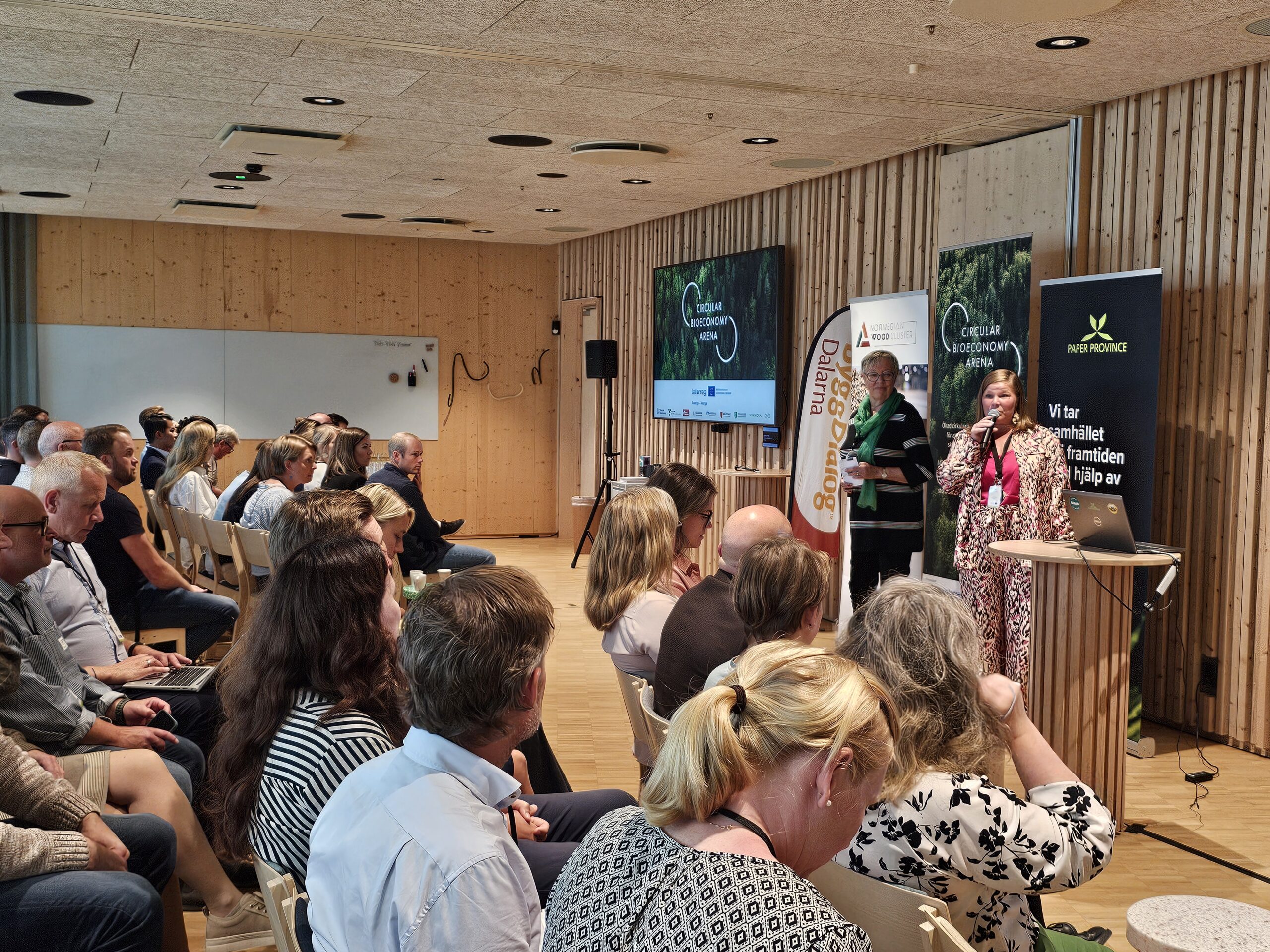
Elin Appel fra Paper Province og Berit Sanness fra Norwegian Wood Cluster sørget for trygg ledelse av samlingen i Gøteborg. Foto: Mari Blokhus Nordtun

Circular Bioeconomy Arena

Norwegian Wood Cluster is the Norwegian owner of the interreg project Circular Bioeconomy Arena. The Swedish owner is Paper Province, and the project manager is Gry Lenschow Andersen at Paper Province. In the project, we work closely with Innovatum Science Park, Dalerna Science Park, Byggdialog Dalerna, Sting Innovation, Klosser Innovation, Kjeller Innovation and Circular Packaging Cluster. Circular wood construction has a strong focus in the project. It also works with start-up companies on the Norwegian and Swedish sides that work within the forest bioeconomy.

The project is funded by Interreg Sweden-Norway and EU funds, as well as with support from Innlandet County, Akershus County, Buskerud County, Østfold County, Region Värmland, Region Västra Götaland, Region Dalerna, Vinnova and DNB.

Useful reuse data from Ragn-Sells

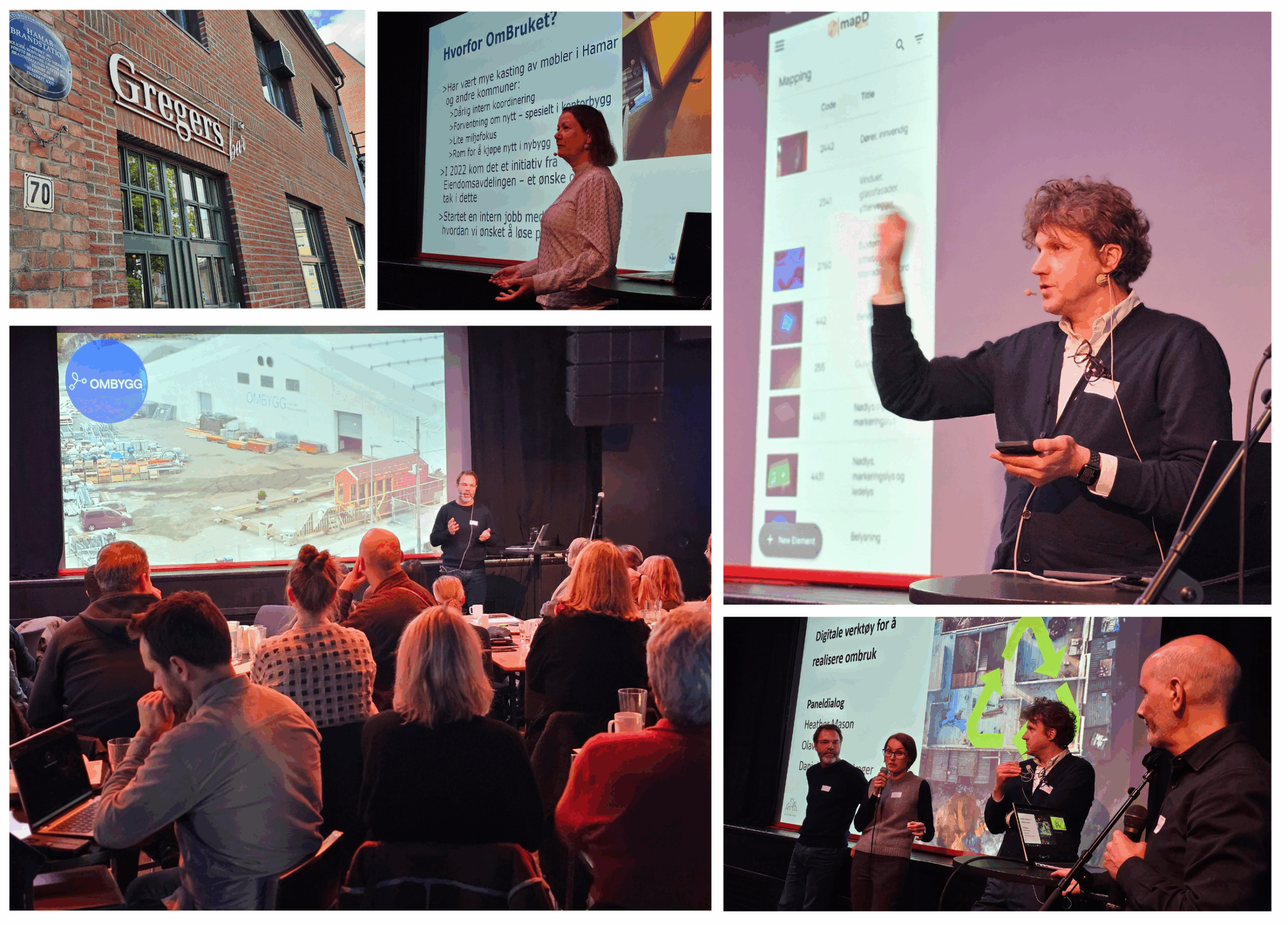
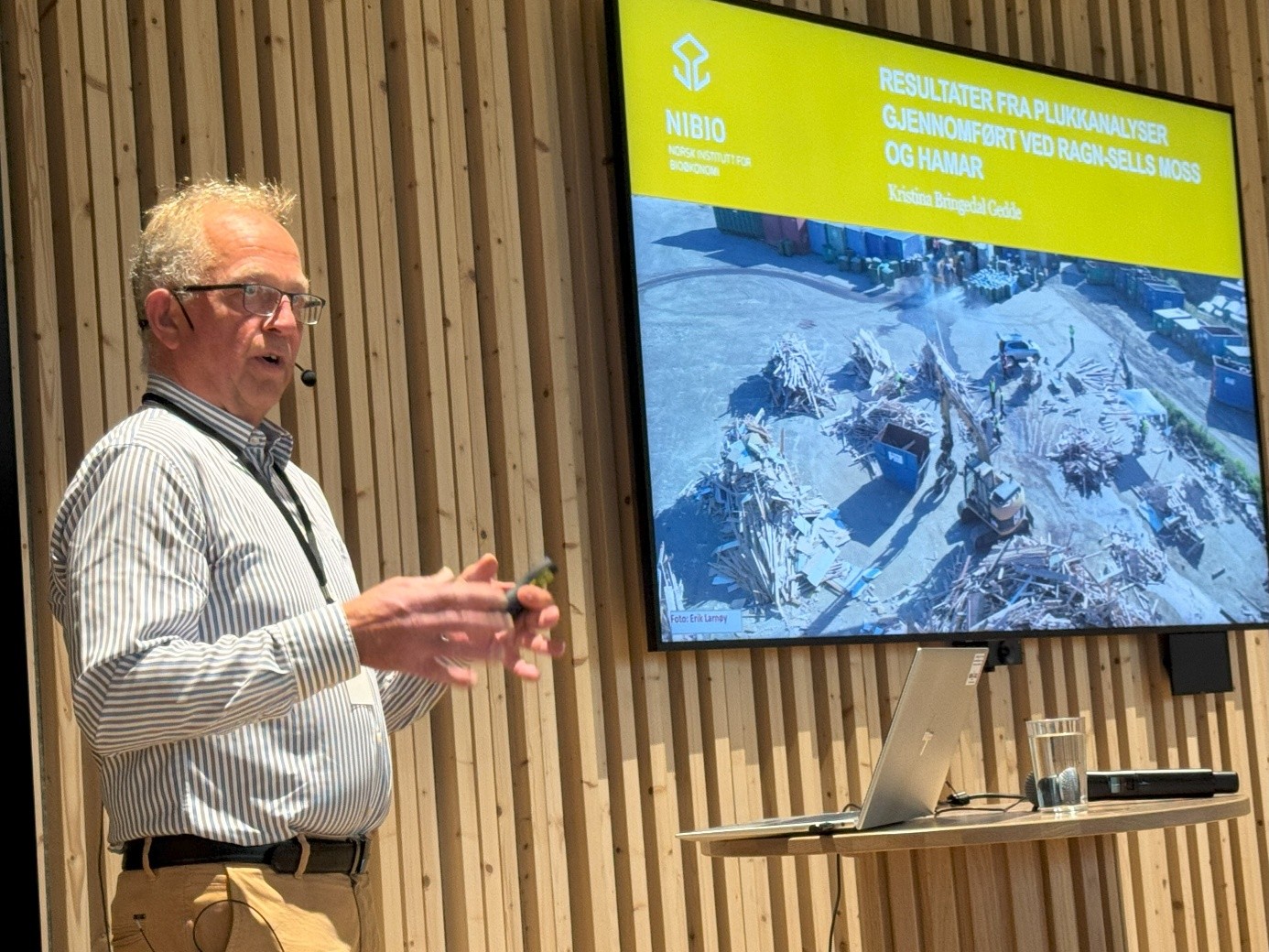
The reuse conference organized by the interreg project Circular Bioeconomy Arena in Gothenburg on 1-2 September had “New roles and logistics” as its own theme, and here the participants had the pleasure of hearing Jon Lille-Schulstad, Director of Business Development at Ragn-Sells AS, talk about the results of the testing carried out in Norway.

Concrete testing and analysis

Like the Norwegian Wood Cluster, Ragn-Sells has been a partner in the extensive Green Platform project SirkTRE, which has now been completed. SirkTRE has aimed to map and establish a circular value chain for recycled wood by facilitating and demonstrating the reuse and material recovery of recycled wood in practice.

– Normally, used materials are processed in such a way that they are impossible to recover for reuse. We have participated in SirkTRE and the research parallel CircWOOD to contribute insight and experience in the hope of finding concrete solutions that can be scaled up. In CircWOOD, we have facilitated analyses, provided data on quantities and qualities of wood waste, as well as information on handling and sorting,” said Jon Lille-Schulstad to an attentive audience in Gothenburg.

Data capture in Moss and Hamar

NIBIO carried out picking analyses at Ragn-Sell’s facilities in Moss and Hamar. A total of 46.4 tons of waste was reviewed. The picking analysis showed that the wood waste from construction had a higher proportion of unpainted wood or wood waste than that from households/recycling stations. The wood waste that came from industry and service industries mainly consisted of wooden packaging in the form of pallets.

– “While disposable pallets and packaging are basically excellent raw materials for board production, it is more demanding to collect and handle used wood materials,” said Jon Lille-Schulstad.

Experiences from the construction site

– “We learned that in order to collect recyclable materials, you need committed construction management and good information and training for your employees. In addition, the sorting solution at the construction site must be easily accessible,” said Jon Lille-Schulstad.

– Ragn-Sells tested several solutions for collecting materials on construction sites. “Our experience was that with the right solution, we increased the degree of filling, we had few deviations and managed to collect wood materials of good enough quality to go straight to reuse,” said Jon Lille-Schulstad. He explained that NIBIO and Treteknisk’s visual quality assessment of the collected recycled wood showed that more than 50% had good or excellent quality.

Cooperation between Ragn-Sells and Norsk Massivtre

– “As part of the SirkTRE project, we tested the use of collected recycled wood at Norsk Massivtre. Our experiences were so interesting that we are now developing this collaboration further after the SirkTRE project has been completed,” said Jon Lille-Schulstad, Director of Business Development at Ragn-Sells AS.

Ragn-Sells testet ulike måter å samle inn og transportere returtre på. Foto Ragn-Sells
Norsk Massivtre har levert massivtrevegger laget av returtre til Nydalen Fabrikker. Returtreet ble levert av blant annet Ragn-Sells. FOTO: Berit Sanness

Circular Bioeconomy Arena

Norwegian Wood Cluster is the Norwegian owner of the interreg project Circular Bioeconomy Arena. The Swedish owner is Paper Province, and the project manager is Gry Lenschow Andersen at Paper Province. In the project, we work closely with Innovatum Science Park, Dalerna Science Park, Byggdialog Dalerna, Sting Innovation, Klosser Innovation, Kjeller Innovation and Circular Packaging Cluster. Circular wood construction has a strong focus in the project. It also works with start-up companies on the Norwegian and Swedish sides that work within the forest bioeconomy.

The project is funded by Interreg Sweden-Norway and EU funds, as well as with support from Innlandet County, Akershus County, Buskerud County, Østfold County, Region Värmland, Region Västra Götaland, Region Dalerna, Vinnova and DNB.


Norwegian Wood Cluster on the right track

Once a year, the Norwegian Wood Cluster invites its members to a senior management meeting. This year, the meeting was held at Losby Gods. The program was interesting, the attendance was high and the breaks were diligently used for mingling – just as the cluster wants.

Tips for cluster development

– “It’s easy to create a cluster, but it’s difficult to become a good cluster,” said Walter Qvam, long-time industry leader and chairman of the board. He himself has worked with one of the world’s most complete clusters, the Norwegian maritime cluster. This cluster has included everything from equipment suppliers, brokers, shipowners and insurance to entrepreneurs.

– It’s easier to come up with new ideas than to discard old ones. Patterns must be broken. Goals must be set. Resources must be used. The cluster should have complementary characteristics and emphasize good knowledge dissemination. There must be a shared understanding of innovation needs and opportunities. You also need to have a professional network across the cluster and a close dialog with research institutes, nationally and in the EU,” said Qvam.

– “It’s important to remember that clusters are perishable, they’re never finished. The cluster is an organism that needs to be evaluated from time to time. I strongly recommend that the cluster builds cross-disciplinary networks. This is very important and rewarding, because the professionals in the companies need to get to know each other. The cluster should have its own initiatives in the areas of sustainability, digitalization, automation and data collaboration. The cluster should also try to measure what has been achieved in terms of innovation and reduced transaction costs,” said Qvam.

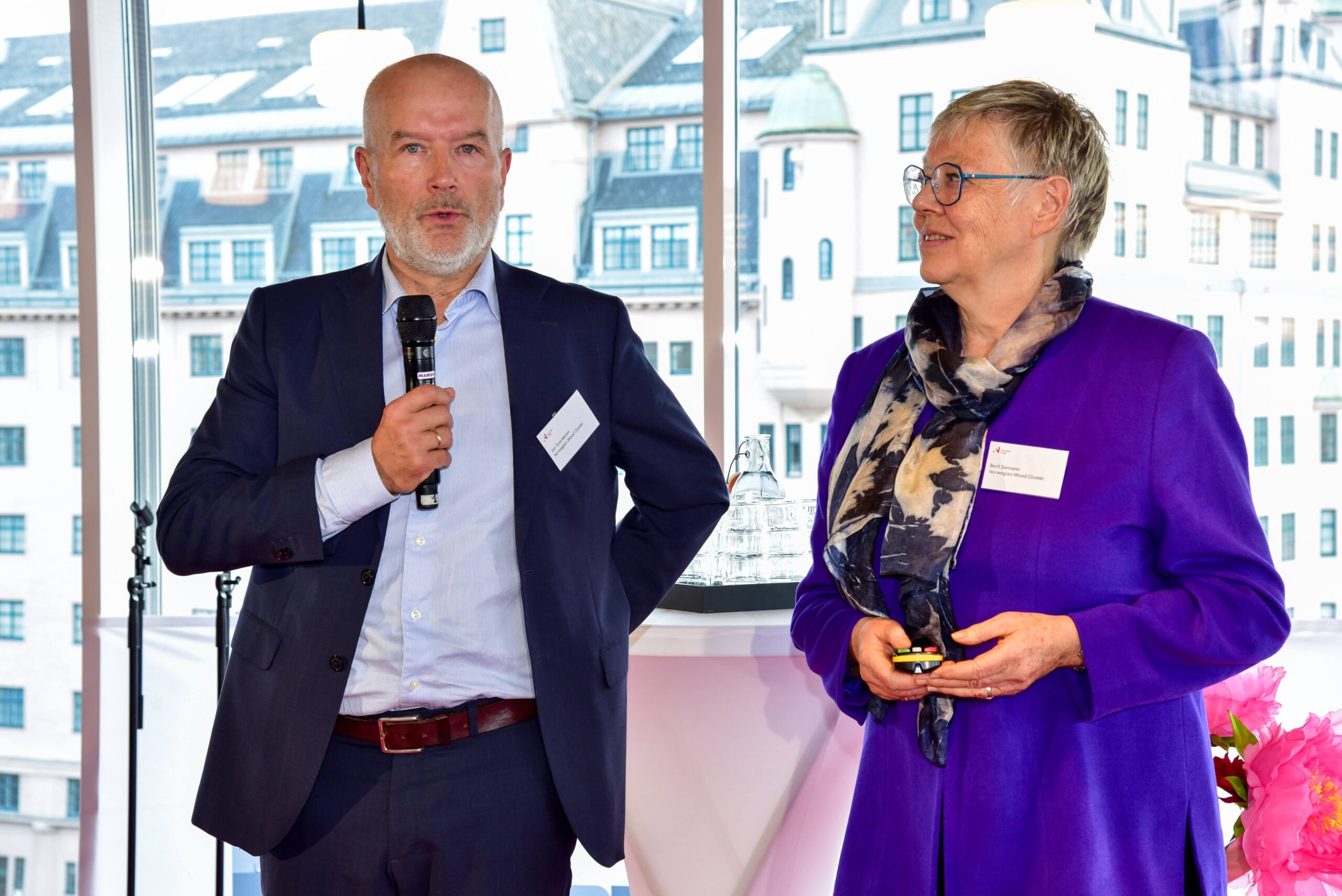
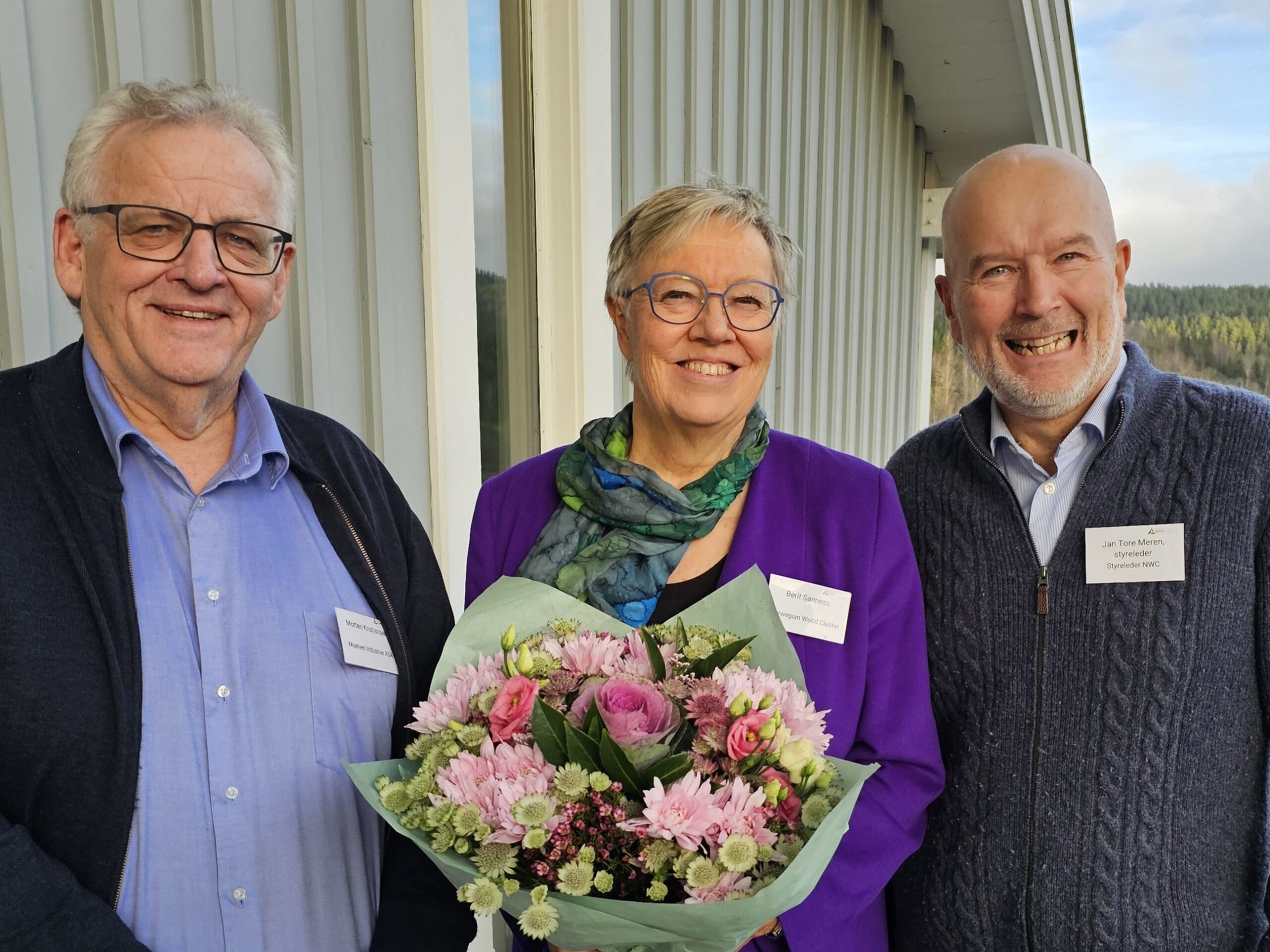
– “It’s good to see that the Norwegian Wood Cluster has made the right decision when we established five specialist groups. They work across the board and consist of representatives from both companies and academia. We have also taken initiatives in several of the areas highlighted by Walter Qvam,” said NWC chairman Jan Tore Meren.

The SFI has lifted SINTEF Manufacturing

Chief scientist and center manager Sverre Gulbrandsen-Dahl talked about the journey of SINTEF Manufacturing over the past ten years.

– At Raufoss, we envisioned becoming a dynamic cluster within five years. However, it took 20 years before we got there. In 2014, SINTEF Manufacturing became host to an SFI (Center for Research-based Innovation). This has given us a boost. The vision is to show that sustainable and advanced production is possible in high-cost countries. None of the owner companies have their own manufacturing research department in Norway, so the companies are contributing funds and their own efforts to the SFI,” said Sverre Gulbrandsen-Dahl.

A tsunami of EU rules

A lot is happening in the EU that affects the forest and wood industry. Magnus Berg, Head of Industrial Policy at Skogsindustrierna, was invited to provide an update on the EU’s climate and environmental regulations and current EU processes that affect the forest-wood value chain.

– During this term of office, forestry issues have really hit home in Brussels. The EU has the ability to pass many laws in the areas of climate, environment and trade, but formally has no right to legislate on forests. In practice, however, this is not the whole picture. Climate decisions still affect the forest and the forest industry, and we experience this from time to time. For example, we see that the European Commission focuses more on biodiversity than on the positive climate effect of building in wood,” said Magnus Berg.

He reminded the audience that once the decision-making process has been completed in the EU, new laws and regulations must be implemented in the individual countries.

– Unfortunately, this means that the interpretations in Sweden go in an even worse direction than Brussels intended, from the perspective of the forestry industry,” said Berg.

Jan Tore Meren er styreleder i Norwegian Wood Cluster. Foto Berit Sanness
Mangeårig industritopp og styreleder Walter Qvam ga råd om hvordan man kan få industrinettverk til å fungere godt. FOTO: Mari Blokhus Nordtun
Forskningssjef og senterleder Sverre Gulbrandsen-Dahl. FOTO: Mari Blokhus Nordtun
Næringspolitisk sjef Magnus Berg, Skogsindustrierna, ga en tankevekkende, men nyttig oppdatering om aktuelle EU-prosesser. FOTO: Mari Blokhus Nordtun
- Trebyggeri har vært sentralt for oss i 20 år. I starten var det en hard kamp mot andre materiale, men nå har vi bygd mange vellykkede trebygg. Ikke minst fordi vi har samarbeidet med en rekke fantastiske samarbeidspartnere nasjonalt og internasjonalt. Moelven Limtres leveranser til Finansparken er et godt eksempel, sa Reinard Kropf, partner og kreativ leder i Helen & Hard Arkitekter. FOTO: Mari Blokhus Nordtun
White arkitekter AB er et internasjonalt arkitektkontor med hovedkontor i Gøteborg, Sverige. Daglig leder og partner Sofie Bentzen (t.h.) ved White arkitekter Oslo og Daniel Asp, arkitekt og ansvarlig for trenettverket i White arkitekter, fortalte om hvordan de jobber med bærekraftig og formsterk arkitektur i form av spennende treprosjekter nasjonalt og internasjonalt. To dager etter samlingen ble ett av trebyggene presentert på samlingen, MagasinX, nominert til en av Sveriges mest prestisjefylte priser; årets LEED bygg (Sweden Green Building Awards). FOTO: Mari Blokhus Nordtun

Developing guidance for sustainability reporting

On November 16, Norwegian Wood Cluster organized a workshop at Mjøstårnet within the project “Finance and Sustainability”. The purpose was to review and provide input to the first working draft of a sustainability reporting guide for the forest and wood industry. The first version of the guide is scheduled to be published in March 2024.

Affects the entire industry

– “The consequences of the EU’s Green Deal and taxonomy are rolling in on us. The largest companies will have to deliver first, but there is little doubt that more companies will be faced with documentation requirements and expectations of solid sustainability information over time, so we just have to get started,” says cluster leader Berit Sanness, who is the project manager for “Finance and sustainability”.

– Sustainability reporting is perceived as complicated by many. Requirements and regulations, standards, dozens of abbreviations, such as CSRD, ESRS, GHG, TCFD, TNFD, etc. You can get tired of less. This is also the reason why the Norwegian Wood Cluster initiated the “Finance and Sustainability” project,” says Sanness.

The aim of the project is to create increased insight into ongoing work within finance and sustainability with relevance for the forest and wood industry, both to meet documentation requirements and to exploit opportunities. This applies in particular to the consequences of the EU taxonomy. Through the project, companies in the forestry and timber industry will, among other things, gain a basis for strengthening their sustainability reporting.

– The advice from companies that already have several years’ experience of creating sustainability reports is unambiguous. It’s important to get started. The message is that it’s better to practice producing a sustainability report before it becomes an obligation than to postpone the start,” says Sanness.

Make the complicated accessible

One of the main deliverables from the “Finance and sustainability” project is a sustainability reporting guide for the forest and wood industry. As a basis for developing it, the project has conducted two workshops and three course days. In addition, the cluster has hired Karoline Kjos-Nordli, sustainability manager at Glommen Mjøsen Skog, to prepare the first version of the guide.

– Karoline has managed to create a structured and accessible overview of the regulations and frameworks that companies must adhere to in order to create a sustainability report. These are complicated issues, but it’s a delight to read Karoline’s work. We are simply impressed that Karoline has been able to make this so accessible to us. The cluster is therefore very pleased with the work she has done for us,” says Berit Sanness.

She emphasizes that the input from the workshop will be incorporated into the final version 1.0 together with supplementary documents.

– “The companies’ involvement in the process has been crucial throughout. We will follow up the input as far as possible before we publish version 1.0 at the end of March 2024,” says Sanness.

Great willingness to share

Under the auspices of the project, the Norwegian Wood Cluster has conducted two workshops and three training days on sustainability reporting.

– “It has been motivating to see the willingness to share among the companies that have participated in the workshops and the sustainability course. Those who have already prepared sustainability reports have willingly shared their experiences,” says Sanness.

– On the industrial side, Moelven Industrier has had the longest experience in this area, and it has been incredibly valuable to draw on the experience and insight that sustainability director Rune F. Andersen has contributed from the Moelven Group at all stages of the process. On the forest owner side, Glommen Mjøsen Skog has come the furthest and contributed by sharing its experiences. That’s where we found the resource person who could carry out an assignment for us, and we’re very pleased with the result,” says Sanness.

Klyngeleder Berit Sanness (f.v.) takker Karoline Kjos-Nordli, Glommen Mjøsen Skog og Rune F. Andersen, Moelven Industrier for viktige bidrag gjennom hele prosessen for å få utviklet den første veileder for bærekraftrapportering for skog- og trenæringen. FOTO: Mari Blokhus Nordtun
Den 16. november 2023 ble det ny workshop for å gi innspill til arbeidsutkastet for veilederen samt for å utveksle erfaringer med bærekraftrapportering. Deltakerne var imponert over arbeidet Karoline Kjos-Nordli har utført for klyngen. FOTO: Berit Sanness
Arbeidet med bærekraftrapportering startet med en workshop på Mjøstårnet 22. juni 2022. Der bidro bedriftene bl.a. med innspill til parametere man mente kunne ha verdi å ta inn i en bærekraftrapport. Dette ga utgangspunkt for et oppdrag som NIBIO fikk for å bistå prosjektet.

Project “Finance and sustainability”

The main objective of the project “Finance and sustainability” is to create increased insight into ongoing work within finance and sustainability with relevance to the forest and wood industry, both to meet documentation requirements and to exploit opportunities. This applies in particular to the consequences of the EU taxonomy. Through the project, companies in the forest and wood industry will gain a basis for strengthening their sustainability reporting. The project will also look at the topic of green loans.

The project “Finance and sustainability” runs 2022-2024. The project manager is Berit Sanness, NWC.

Norwegian Wood Cluster’s partners in the project are Moelven Industrier, Forestia, Glommen Mjøsen Skog, Viken Skog, Norges Skogeierforbund, SpareBank1 Østlandet and TreFokus. These are represented in the project group, and the companies are contributing with both their own efforts and cash contributions.

NIBIO v/senior advisor Knut Øistad carries out an assignment for the project to create an overview of the EU’s work on the taxonomy, the EU Forest Strategy, as well as the EU’s new regulations for climate and energy, monitor the development and analyze the consequences for the Norwegian forest and wood industry.

NIBIO, head of department and head of research Aksel Granhus, has carried out an assignment for the project to compile a number of relevant parameters.

In 2024, the project will take a closer look at relevant issues related to green loans and bonds. It is also relevant to link bachelor students to the project in the spring of 2024.

SirkTRE – a comprehensive Green Platform project

The “Finance and Sustainability” project is part of the comprehensive Green Platform project SirkTRE, which started in 2022 to establish the fully circular value chain for wood. The Norwegian Wood Cluster was the driving force behind the SirkTRE project and is currently one of around 25 partners in the project. Kristine Nore, Omtre AS, is the project manager for SirkTRE. NIBIO, NMBU, Treteknisk, NTNU and HINN participate in the CircWOOD research parallel, with Lone Ross, NIBIO as project manager.

Innovation Norway, the Research Council of Norway and SIVA provide financial support to SirkTRE/CirciWOOD. In addition, the companies contribute cash and their own efforts. In total, SirkTRE/CirckWOOD therefore has a budget of around NOK 220 million and runs until 2024.

Read more about SirkTRE here: www.sirktre.no


Norwegian-Swedish at the embassy in Stockholm

Ambassadør Aud Kolberg var vertskap og tok imot en større delegasjon fra begge land i ambassadens flotte lokaler i Stockholm den 15. november 2023. Bakgrunnen for arrangementet var fjorårets store arrangement «Sterkere sammen enn hver for seg» i Sverige. På plass i ambassadens lokaler var to statsråder representanter for skog- trenæringen, departement og virkemiddelapparat. Møteleder under seminaret var Gunnar Olofsson, styreleder i Statskog SF.

Både den norske og den svenske landbruksminister holdt hilsningstaler, og i løpet av dagen ble det bl.a. gitt interessante presentasjoner fra Moelven Töreboda AB, Billerud Viken AS, Treteknisk, Svensk Trä, TreFokus og prosjektet SirkTRE. I tillegg ble de norske og svenske treklyngene viet oppmerksomhet i flere omganger.

«Sterkere sammen enn hver for seg»

I 2022 var det et klart behov for å styrke dialogen mellom Norge og Sverige etter lengre tids stengte grenser pga pandemien. I mai 2022 dro derfor kronprinsparet, næringsministeren og en stor næringslivsdelegasjon fra Norge på offisielt besøk til Sverige. Første stopp var Stockholm 2.-3. mai, og der var også Norwegian Wood Cluster blant deltakerne.

Vår klynge hadde deltatt i planleggingen av flere seminar som ble arrangert i tilknytning til besøket i Stockholm. Ett av seminarene var om trebyggeri. Et annet om standardisering. Den 3. mai 2022 undertegnet Paper Province dessuten en samarbeidsavtale med hhv Norwegian Wood Cluster og WoodWorks! Cluster under en høytidelig sekvens med kronprinsparene, statsråder og bedrifter fra Norge og Sverige til stede.

Hva har skjedd siden sist?

På seminaret i den norske ambassaden året etter var de tre klyngene samt Skogtekniska Klusteret, den midt-svenske samarbeidspartneren til WoodWorks! cluster invitert for å fortelle hvordan det norsk-svenske samarbeidet har blitt styrket i løpet av det siste halvannet året.

– Klyngene har mange bedrifter som medlemmer. Inkluderer vi også den norske klyngen Circular Packaging Cluster i regnestykket, er hele 340 bedrifter medlemmer i de fem klyngene. Det gir gode koplingsmuligheter, sa klyngeleder Kjersti Kinderås i WoodWorks! Cluster.

– Den viktigste oppgaven til en klynge er nettopp å fungere som koplingsboks mellom bedrifter og mellom bedrifter og akademia. Takket være det samarbeidet vi nå har etablert gjennom klyngene innenfor skoglig bioøkonomi i Norge og Sverige, øker muligheten for interessante koplinger. Det er viktig for bedriftene, sa VD Sandra Sundbäck i Paper Province.

Signeringen er utført. F.v. Norges næringsminister Jan Christian Vestre, klyngeleder Berit Sanness, Norwegian Wood Cluster, VD Sandra Sundbäck, Paper Province, klyngeleder Kjersti Kinderås, WoodWorks! Cluster og Sveriges daværende handelsminister Anna Hallberg. FOTO: Guro Angell Gimse
Klyngene fortalte om samarbeidsaktiviteter etter mai 2022. FOTO: Elin Appel

A very concrete collaboration project is already in place. Together with Paper Province, the Norwegian Wood Cluster announced that the two clusters have received funding and will carry out a joint Interreg project in the area of circularity, wood construction and packaging.

– The new interreg project “Circular Bioeconomy Arena” is a spin-off of an interreg project under the auspices of the authorities, where Paper Province and Norwegian Wood Cluster got to know and trust each other. This time, however, we wanted a new project to be more closely linked to the companies, so now the clusters are the owners of the project,” said cluster leader Berit Sanness of Norwegian Wood Cluster.

She explained that the new interreg project will connect start-ups and established companies on both sides of the border.

– We have a number of skilled partners from both sides of the border, so we have high expectations for the benefits of the project and are pleased with the financial support we have received,” said Sanness.

Read more about the new interreg project here

Focus on standardization

In Stockholm on May 3, 2022, the Swedish Timber Industry, Svensk Trä, Norwegian Wood Cluster, WoodWorks! Cluster and Paper Province organized a separate seminar on standardization in the construction sector – with an emphasis on standards for climate and environment.

Standardization received renewed attention during the seminar at the embassy, and the need for cross-border cooperation in this field was once again noted.

– When standards for climate and the environment are to be developed independently of materials, it is crucial that the timber industry is heavily involved and can commit resources to this area over time. Nordic cooperation to strengthen documentation and resources in European standards work is essential. The first step is to strengthen Norwegian-Swedish cooperation in this field,” said cluster leader Berit Sanness.

She pointed out that the Norwegian Timber Industry will be the natural home for this initiative, with Treteknisk as a key player and with Norwegian Wood Cluster and WoodWorks! as supporters.

Berit Sanness, Norwegian Wood Cluster, frontet behovet for mobilisering på standardiseringsområdet på vegne av klyngene. FOTO: Elin Appel

– But this is not a Norwegian issue. Even a Norwegian-Swedish mobilization is not enough, but let’s start there and continue to work towards long-term Nordic cooperation in the field,” said Sanness.

Norwegian Wood Cluster is currently contributing to the Norwegian mobilization to follow up on the standardization issue, at the request of our Professional Group Future Building Solutions. See https://www.nwcluster.no/nyheter/mobiliseringforstandard


Making the forest-based industry more circular

The aim of the project is to increase circularity in forest-based packaging and wood construction. We will do this by highlighting good circular business ideas and contributing to commercialization and upscaling. We see the benefits of collaborating across the Norway-Sweden border because we have a number of forest-based businesses based on the same raw materials and geography. So we believe that the chances of succeeding in both scaling up circular solutions and developing innovation systems are greater when we expand the geography and learn from each other.

This week, we gathered all project partners for a kickoff in Sunne. The project is run by the business clusters Paper Province and Norwegian Wood Cluster. We have five strong innovation environments in the region on board: Klosser Innovation, Kjeller Innovation, Circular Packaging Cluster, Dalarna Science Park and Innovatum Science Park. We’re proud to have a good group of people with a lot of varied experience in innovation and business development.

The CBA project runs for three years (August 23-July 26) and is funded through Interreg Sweden-Norway with support from Innlandet County Council, Viken County Council, Region Dalarna, Region Värmland, Region Västra Götaland and Vinnova.

Gry Lenschow Andersen fra Paper Province er leder for CBA-prosjektet, i samarbeid med Mari Blokhus Nordtun fra Norwegian Wood Cluster. Foto Jessica Edlom.
Første møte i prosjektteamet ble benyttet til å konkretisere mål og roller i de ulike arbeidspakkene. En engasjert gjeng som er opptatt av å skape gode resultater. Foto Mari Blokhus Nordtun.

OsloTre wins the construction industry's climate prize 2023

The award ceremony took place at Høyres Hus in Oslo on November 31, and OsloTre won the award ahead of two other nominees, Hydro and SINTEF. Jury chair Hanne Rønneberg and chairman Audun Lågøyr Entreprenørforeningen Bygg og Anlegg Oslo, Akershus og Østfold, hosted the ceremony.

The jury’s reasoning states that “OsloTre AS is an architectural consultancy specializing in wooden structures. The company has several years of experience in architecture, timber engineering, CLT production and assembly, and offers complete architect-designed buildings as well as customized, modular and prefabricated architectural solutions in wood. In addition to its architectural and engineering expertise, OsloTre has a background as founders of solid wood production and as a contractor on major construction projects.”

Here you can read the jury’s entire statement.

An important resource in the cluster

– “We congratulate our member OsloTre on a well-deserved award. Our cluster is concerned with innovation and sustainability in the construction industry, and OsloTre is a strong driving force for development. It is a great strength that the architectural firms participate in the cluster together with other players, so that the entire value chain is represented. In this way, we can strengthen each other and develop more and better wood-based building solutions,” says Berit Sanness, cluster manager of the Norwegian Wood Cluster.

– The construction industry has the potential to make a major contribution to reducing the climate footprint, and OsloTre’s initiatives are good examples of how to make this possible,” says Sanness.

Won on climate change, innovation and sharing

There are three criteria that are considered when the winner of the Construction Industry Climate Prize is chosen:

– Measurability – can measurable climate reductions be shown

– Degree of innovation – how innovative is the solution

– Spreading and sharing – is this a role model for others

In the areas of measurability and sharing, Hasletre was highlighted as an example. The project has received a lot of attention for its innovative and climate-friendly solutions, and OsloTre has willingly shared its experience and knowledge of the process. OsloTre and Hasletre won the “Wood Building of the Year” award in 2022.

Proud winner

Jørgen Tycho is a partner and one of the founders of OsloTre, and accepted the award on behalf of the firm. “I never thought we would win, there were two other very good nominees and very heavy players. We are a small office with 16 employees and are honored that our work is noticed in this way,” said Tycho.

He said that the prize money of NOK 250,000 will be put to good use – “It will be used for a study trip to Japan, where we can learn from the masters,” he said.


From steel to wood at Gardermoen

On December 5, NSW Architecture and the National Conference for Wood Architecture hosted an afternoon seminar at the premises of NSW Architecture in Oslo. The theme for the evening was the Terminal Building at Gardermoen, which was opened in 1998.

The terminal building is described as one of the most iconic buildings in modern Norwegian architectural history. After 25 years, it is possible to lift the veil a little. The questions at the seminar were: Why was the terminal’s roof structure built in wood and not steel? What impact has this building had on Norwegian architecture and Norwegian industry?

From Hurum to Gardermoen

NSW Arkitektur was involved in designing the new airport terminal, which shows innovative use of Norwegian materials. At the seminar, the partner and founder of NSW Arkitektur talked about the process of developing one of Norway’s largest land-based development projects. The terminal building was to be characterized by Norwegian and Nordic calm, and by “silent monumentality”.

The architectural team that won the competition consisted of Niels Torp Arkitekter, Skaarup og Jespersen Arkitekter and Narud Stokke Wiig Arkitektur (NSW). They won with a clear concept:

– Norwegian natural stone on the floor of the arrivals hall, reminiscent of the Norwegian bedrock.

– Wood in departure areas, inspired by the surrounding forests.

– Steel in the roof structure, to give a light and striving expression, with light canvas above that lifted towards the sky.

The three architectural offices behind the winning design were organized through Aviaplan AS to continue work on the new terminal building.

From steel to wood

Ole Wiig, the founder of Narud Stokke Wiig Arkitektur (NSW), was president of the Norwegian Association of Architects in the early 1990s. He was a key supplier of premises for the first stage of construction of the terminal building at Gardermoen.

– When the terminal was moved from Hurum to Gardermoen, the architectural team Aviaplan AS continued with the concept we had developed. However, the Storting decided that the roof structures should be built in wood, so there was a change,” Wiig explained. He pointed out that it was a unanimous transport committee in the Storting that decided that the roof structures should be built in wood, with Sissel Rønbeck as rapporteur.

– We experienced a political commitment to strengthen the use of Norwegian materials and to increase the use of wood in the terminal building. The then Minister of Culture, Åse Kleveland, our first and only “Minister of Architecture”, was strongly committed to this. Minister of Transport Kjell Opseth was also a driving force. The rest of the government got behind it, and the final result was both Fauskemarmor and Otta slate in the floors, and wood in the roof structures, on the floors and in a number of other places,” says Wiig.

Innovation boost with the Viking Ship

Moelven Limtre was chosen to supply the wooden structures at Gardermoen. At the seminar, Åge Holmestad gave a historical review of the innovation work that had taken place at Moelven Limtre and which enabled the company to supply solutions for the terminal building at Gardermoen.

Åge Holmestad is a former technical manager and general manager at Moelven Limtre, and played a key role in Moelven Limtre’s innovation work to build the Viking Ship in Hamar for the 1994 Olympics. Glulam arches with spans of as much as 96 m were made there.

– It was the Viking Ship that was the real breakthrough for Moelven’s advanced glulam solutions. A lot of innovation took place during that process, and we improved as a company. After the Viking Ship, we went from innovation to development in many ways,” said Holmestad.

– In this sense, Moelven’s assignment at Gardermoen was technically relatively straightforward, because we could build on our expertise from the Olympic facilities. The major new challenges were related to design, layout and surfaces. The terminal building is an example of how architects are our best friends. After all, architects are much quicker to take on new things than engineers. Together with the architects, we also found solutions for design, layout and surfaces, so it was an exciting building to work on,” says Holmestad.

He explained that after the terminal building at Gardermoen, Moelven Limtre saw increased demand for long-span wooden bridges. As the company could also supply sports halls with long spans, demand also increased.

– This opened up completely new markets for us, thanks to the expertise we gained from building the Viking Ship and then delivering the wooden structures with a new design for the terminal building at Gardermoen,” said Holmestad.

The expertise gained from the Viking Ship and wooden bridges meant that Moelven Limtre was able to deliver solutions to Treet in Bergen and then Mjøstårnet, the world’s tallest wooden building…

Emphasis on quality

When the terminal building at Gardemoen opened in the fall of 1998, it was clear that it had become a beautiful building with great use of wood and Norwegian natural stone in large parts of the terminal building.

– We were keen to create a simple visual expression. Passengers should be put at ease when they enter the building. The emphasis throughout was on quality and robustness. This meant that we had to use good materials that could withstand high wear and tear. We also needed a concept that meant people in the building would have as few changes of direction as possible,” says Lise Rystad of NSW Arkitektur, who worked on the wooden beams and the use of wood in the terminal building at Gardermoen.

– In 1998, the terminal building was built as an airport, so this was well taken care of. “The new phase of construction is more in keeping with the fact that it is both an airport and a shopping center,” said Rystad.

The national conference for wood architecture

The Norwegian Wood Cluster is one of the partners of the National Conference on Wood Architecture, which held its first conference ten years ago. The next full-day conference will be held in Oslo on April 4, 2024.

Read more about Trearkitektur here: https://www.trearkitektur.no/

Watch the video: VIDEO: Iconic Norwegian wooden architecture: Oslo Airport (youtube.com)


Bergene Holm joins the NWC

Bergene Holm AS is a Norwegian timber group with 450 employees in seven production departments. The head office and two production departments are located in Larvik municipality, while operations otherwise take place at departments in Åmli, Holmestrand, Grue, Kongsvinger and Sør-Odal. In 2022, the Group had a turnover of NOK 2.3 billion.

Interesting collaboration opportunities

– “The Norwegian Wood Cluster has many interesting members from different parts of the value chain, so we expect the cluster to be an exciting arena for sharing knowledge and looking at collaboration opportunities,” says CEO Erland Løkken. He believes that Bergene Holm can contribute to the cluster with, among other things, expertise in sustainability, innovation, communication and digital solutions.

– “We see ourselves as a forward-looking company that is proactive and a driving force in several fields. We bring this into the Norwegian Wood Cluster. The value chain also has common documentation needs in various areas, which is an obvious area for collaboration,” says Løkken.

Standardization as an example

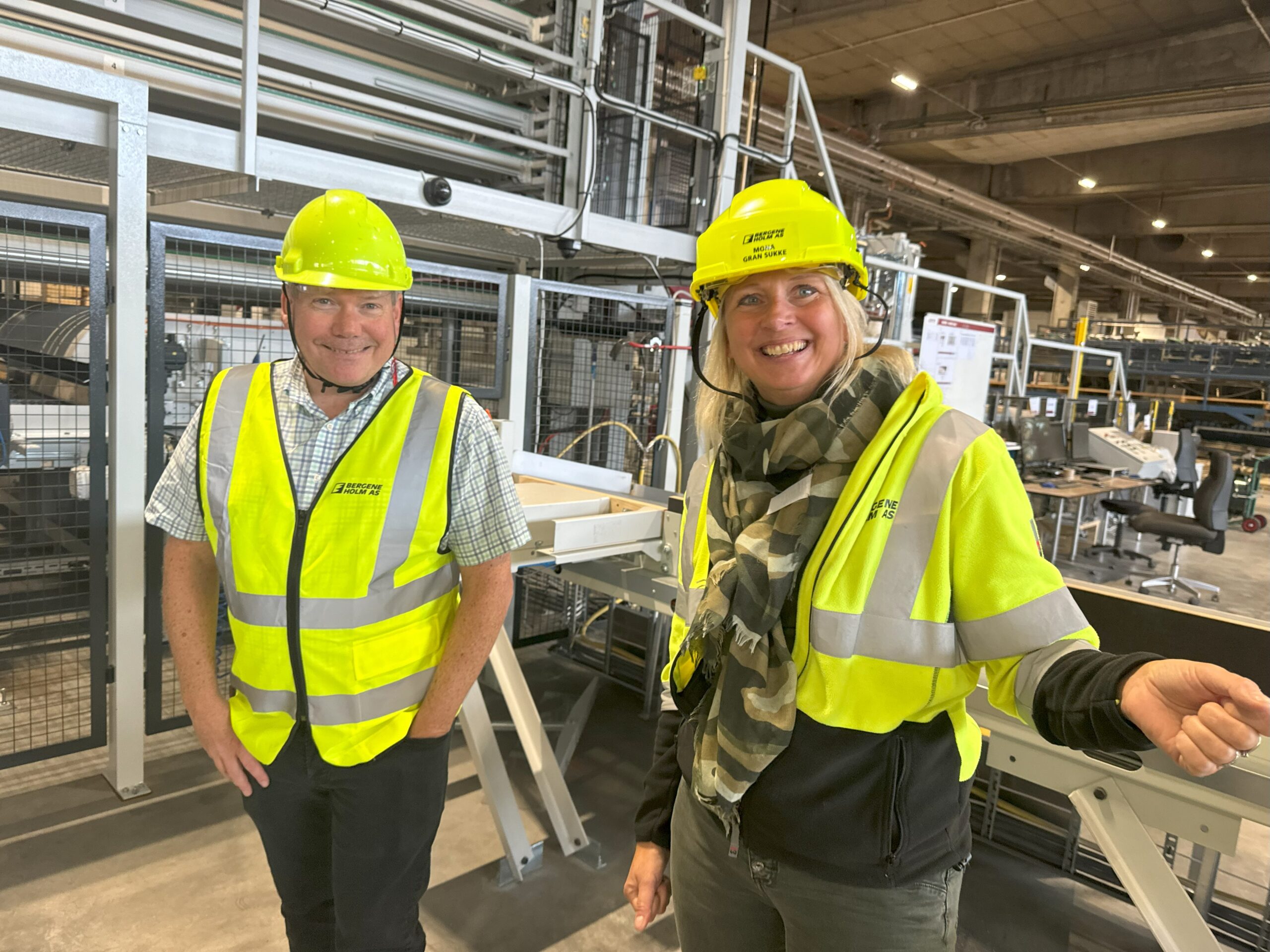
Bergene Holm has its own innovation department with a strong focus on innovation, business and product development. The Group works actively with documentation and digital data and was Nobber of the Year in 2023. Innovation Manager Mona Gran Sukke points to the mobilization work that the Norwegian Wood Cluster has done in the area of standardization as an example of the benefits of the cluster.

– Bergene Holm has its own sustainability manager who participates in the standardization work for climate and environment for building materials. In this field, the Norwegian Wood Cluster has taken an important initiative to mobilize woodworking companies to become more involved. “We had the pleasure of participating in a workshop on standardization at Mjøstårnet in September. Then we saw the benefit of the cluster’s work,” says Innovation Manager Mona Gran Sukke at Bergene Holm.

She also points out how the Norwegian Wood Cluster is concerned with the right division of labor to avoid duplication.

– “We have noted that the Norwegian Wood Cluster has taken responsibility for mobilization, while at the same time building on the Wood Industry’s role as ‘home’ for the industry’s standardization work in close collaboration with Treteknisk. This is a wise approach and completely in line with our view,” says Gran Sukke.

Read more about the standardization workshop here: https://www.nwcluster.no/nyheter/mobiliseringforstandard

Innovasjonssjef Mona Gran Sukke i Bergene Holm roser Norwegian Wood Cluster for å bidra til å mobilisere på standardiseringsområdet. FOTO: Bergene Holm