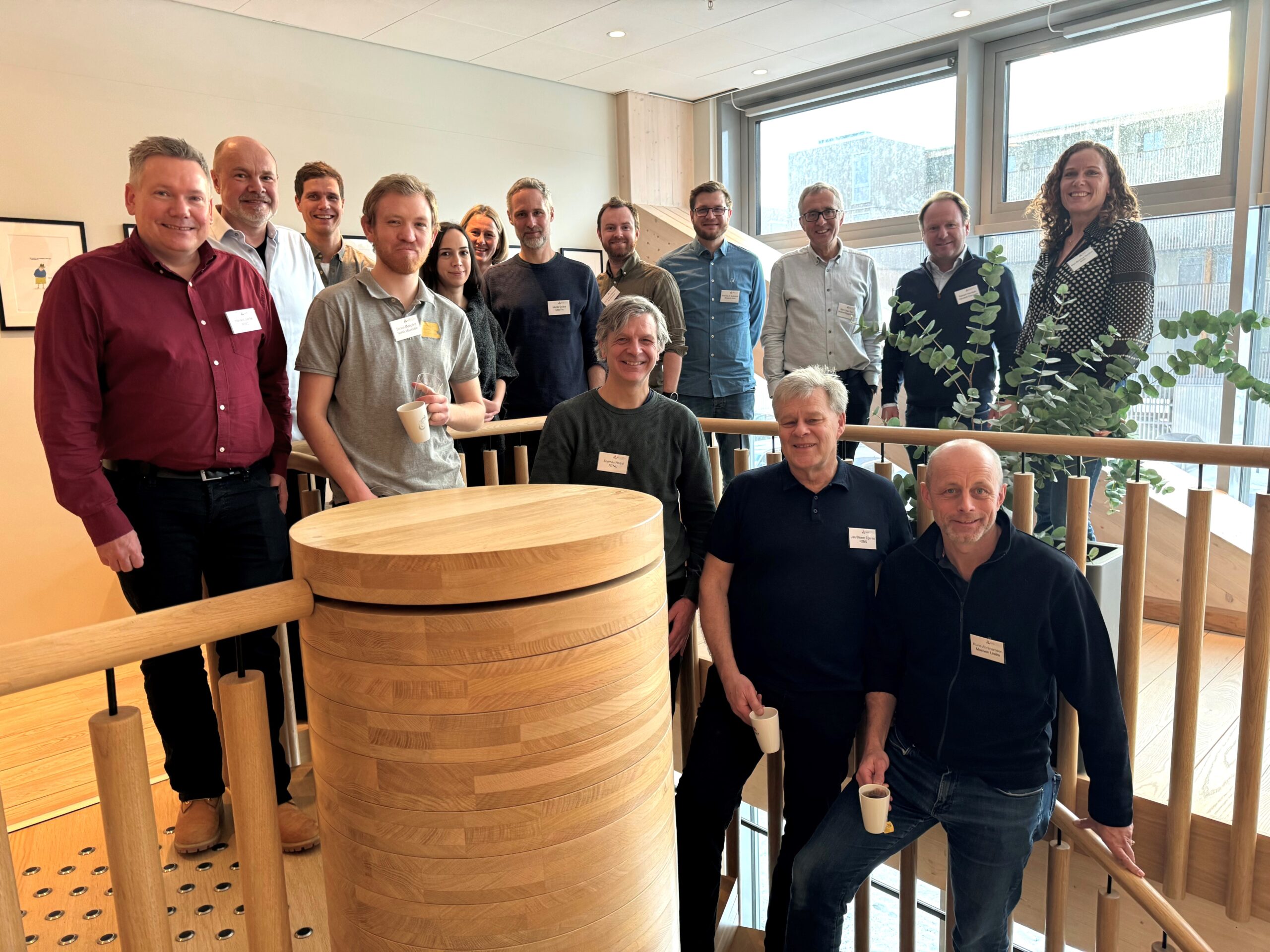
Listening audience at Mjøstårnet
Cluster leader Berit Sanness manages the NWC Professional Group Future Building Solutions and is very pleased with the meeting.
– The members of the specialist group have previously defined acoustics/vibration and fire resistance as the most important areas to address for the cluster in the area of wooden structures. The aim is to develop projects that can provide more preaccepted solutions for wooden buildings. “We have now turned the spotlight on sound and had a useful meeting on the subject, where members provided important input for a project outline in this field,” says Berit Sanness.
As a backdrop for discussion of the project outline, NWC had invited two interesting speakers; CEO Reinert Hersleth from Hersleth Entrepren. Reinert Hersleth from Hersleth Entreprenør AS and partner Erik Brett Jacobsen, Kontur Arkitekter AS. Both shared their experiences, and the presentations created great interest among the participants in the meeting.
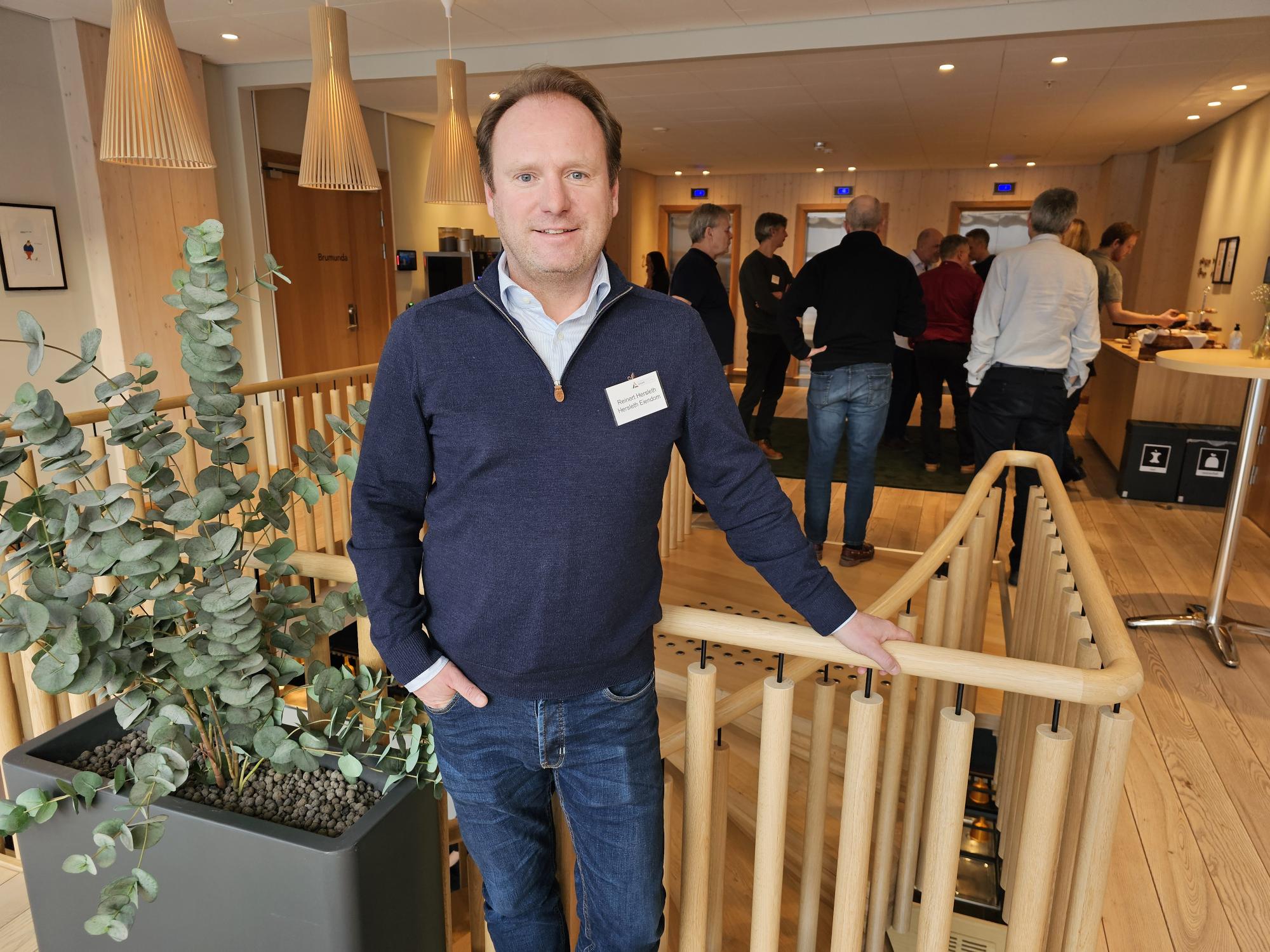
Hersleth Entreprenør shared experiences
Hersleth Entreprenør AS is a family-run contracting company with main activities within traditional building and construction activities. The market area is Østfold, Follo and southern Oslo. At the meeting, CEO Reinert Hersleth talked about the company’s experiences. Reinert Hersleth talked about the company and his experience with floor dividers in wooden buildings.
– “We carry out all types of assignments in new builds, conversions and refurbishments in both the private and public sectors, including multi-purpose halls, schools and apartment buildings. Our company builds in different materials and chooses the most industrialized solution,” said CEO Reinert Hersleth, Hersleth Entreprenør. Reinert Hersleth, Hersleth Entreprenør.
In Vestby, Hersleth Entreprenør is currently building Vestbyhagen III, a new development of 64 apartments in five buildings on three and four floors. The assignment is being carried out as a turnkey contract for Husjordet AS. The apartment buildings are three and four storeys high.
– The buildings will have floor partitions in solid wood and exterior wall elements (studs) in wood from our own element production at Årvoll. We have developed the solution with floor partitions ourselves, and the construction method has been developed to achieve a more industrialized construction process. We want the same craftsmen to be able to build both the walls and the floor partitions. That’s why we’re combining stud walls with solid wood floor partitions,” said Hersleth.
– “In the area of sound, we have had innovation projects in collaboration with Brekke & Strand. It’s a key area, so it’s good that the NWC is taking a closer look at the topic of sound,” said Hersleth.
KONTUR Architects presented an interesting building
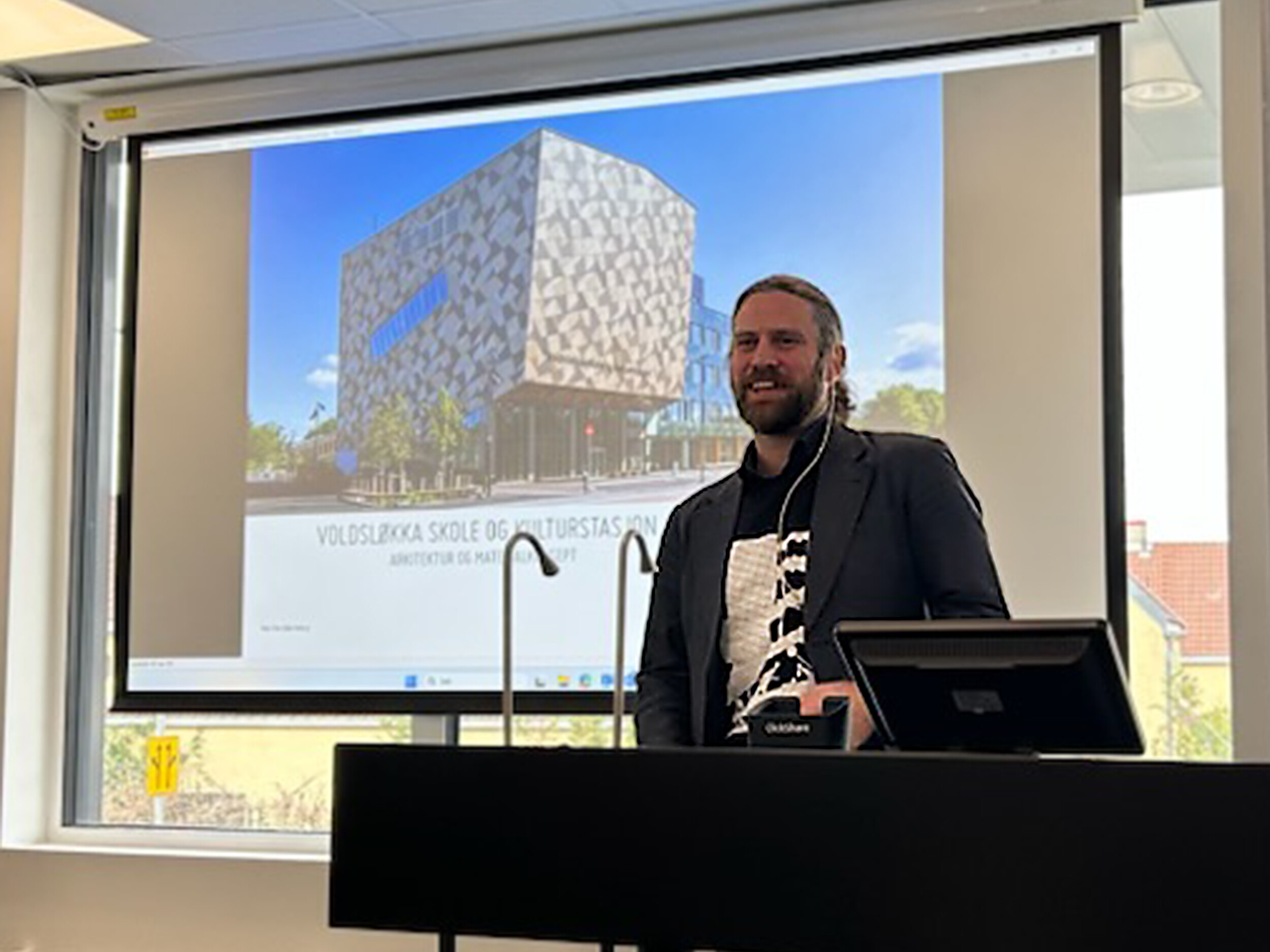
KONTUR Arkitekter AS, which has been a member of the cluster since 2019, is an interdisciplinary architectural firm that works on a wide range of construction projects, with an emphasis on residential facilities, commercial buildings, schools and care buildings. The company is headquartered in Gjøvik. At the meeting, partner Erik Brett Jacobsen talked about the company and gave a briefing on the Voldsløkka school and cultural center project in Oslo, where sound was one of the important issues.
Voldsløkka School and Cultural Center in Oslo was opened in August 2023, with Oslobygg as the developer. It is Norway’s first school with a plus house standard and combines solar and earth energy, environmentally friendly building materials, an energy-efficient building and a unique outdoor area into a European model project.
– “The project used a lot of solid wood. “We chose to deliberately highlight wooden support structures where possible for sound reasons,” says partner Erik Brett Jacobsen, who was KONTUR Arkitekter’s architect in charge of Voldsløkka School and Cultural Center, where all architectural design from preliminary project to finished building was carried out in close collaboration between KONTUR and SPINN architects.
– One of the challenges in the project was sound in rehearsal rooms and classrooms. “As a passive measure to prevent construction noise from propagating between rooms, we chose, for example, to place columns in the middle of classrooms instead of in the walls between classrooms where possible,” said Jacobsen. He explained that the cultural hall had higher sound requirements than the school building and was therefore constructed as a steel and concrete structure.
– The solution in the floor divider between the cultural hall and the areas below was a 500 mm perforated ceiling with floating screed on vibration blocks. In addition, mineral wool of varying thickness was installed above and below the main structure, air insulation layers as well as space for technical guides, a minimum of three layers of plaster and sound-absorbing ceilings. This made the floor partitions approximately 2 meters thick,” said Jacobsen.
– Voldsløkka School and Cultural Center was an exciting project to be involved in, and it required very close follow-up. Among other things, we built a solid wood structure inside the listed building that was connected to the new school building and the new cultural center. Here, we also retained the original wooden structures as environment-creating elements inside parts of the building. They did not contribute to the load-bearing capacity, but were not demolished to preserve the historical and visual aspects. It was a good solution,” says Erik Brett Jacobsen.
Lillehammer: Interest in climate planning of buildings
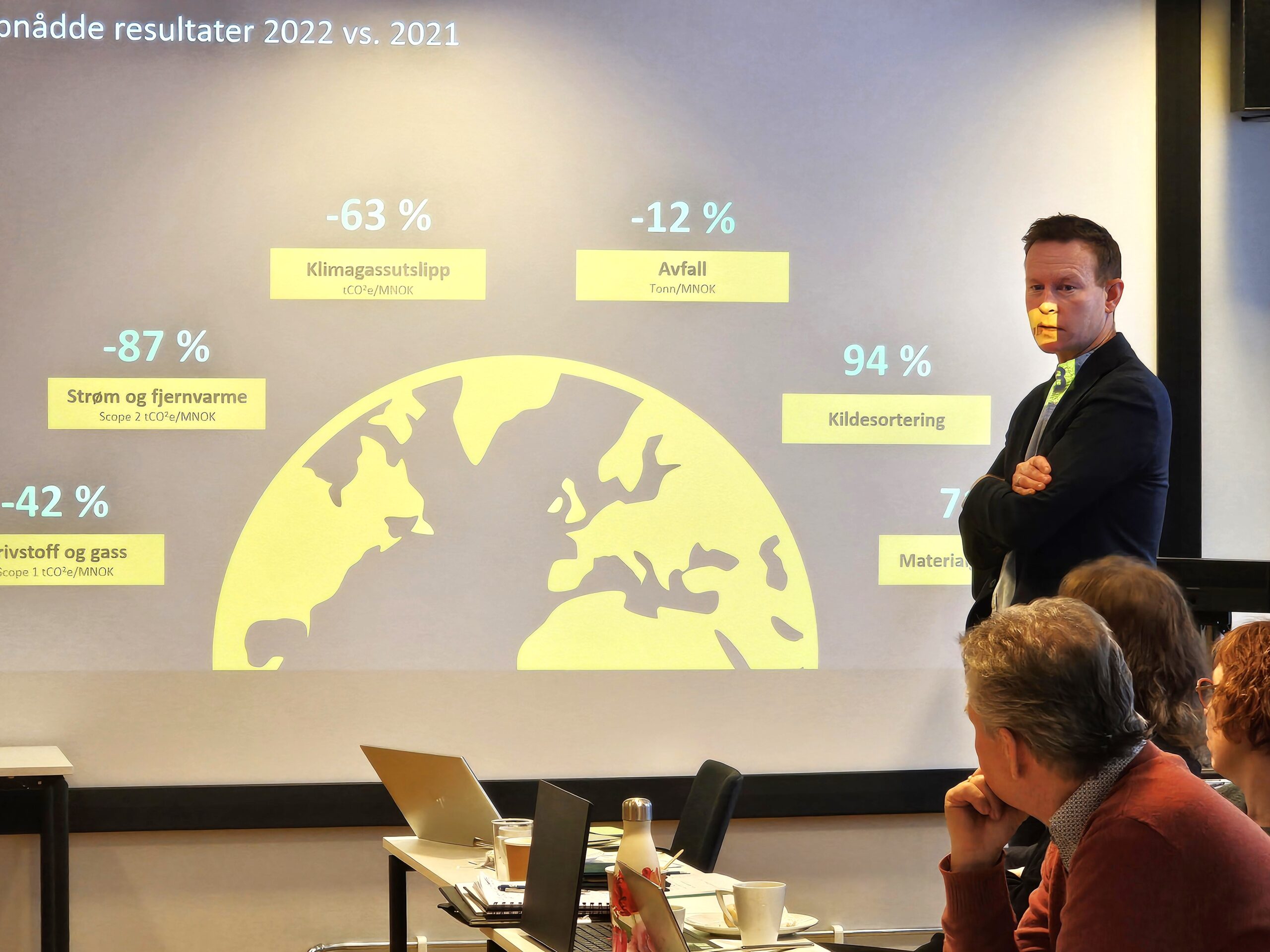
“It would be nice to have a simple answer to that question,” says Marit Smidsrød from the project management team, “but there are a lot of factors that come into play, including the choice of materials, which we have chosen to focus on in this project, but also energy solutions, emissions at the construction site, location in terms of transport, land use, etc.
Reference values will come
In July 2022, TEK 17 introduced a requirement to prepare greenhouse gas accounts for materials in apartment blocks and commercial buildings. So far, however, there are no requirements for how much greenhouse gas emissions the materials can have. “Both Denmark and Sweden have already adopted reference values for greenhouse gas emissions in buildings. In Norway, similar work is underway, but we don’t know anything about the time perspective,” said Smidsrød. “One thing is certain, however: requirements and criteria will be introduced. Among other things, this will mean that the public sector, which currently accounts for 10.3 million tons of CO2 emissions per year, will need more knowledge about the climate footprint of its procurements.
– We are committed to taking responsibility
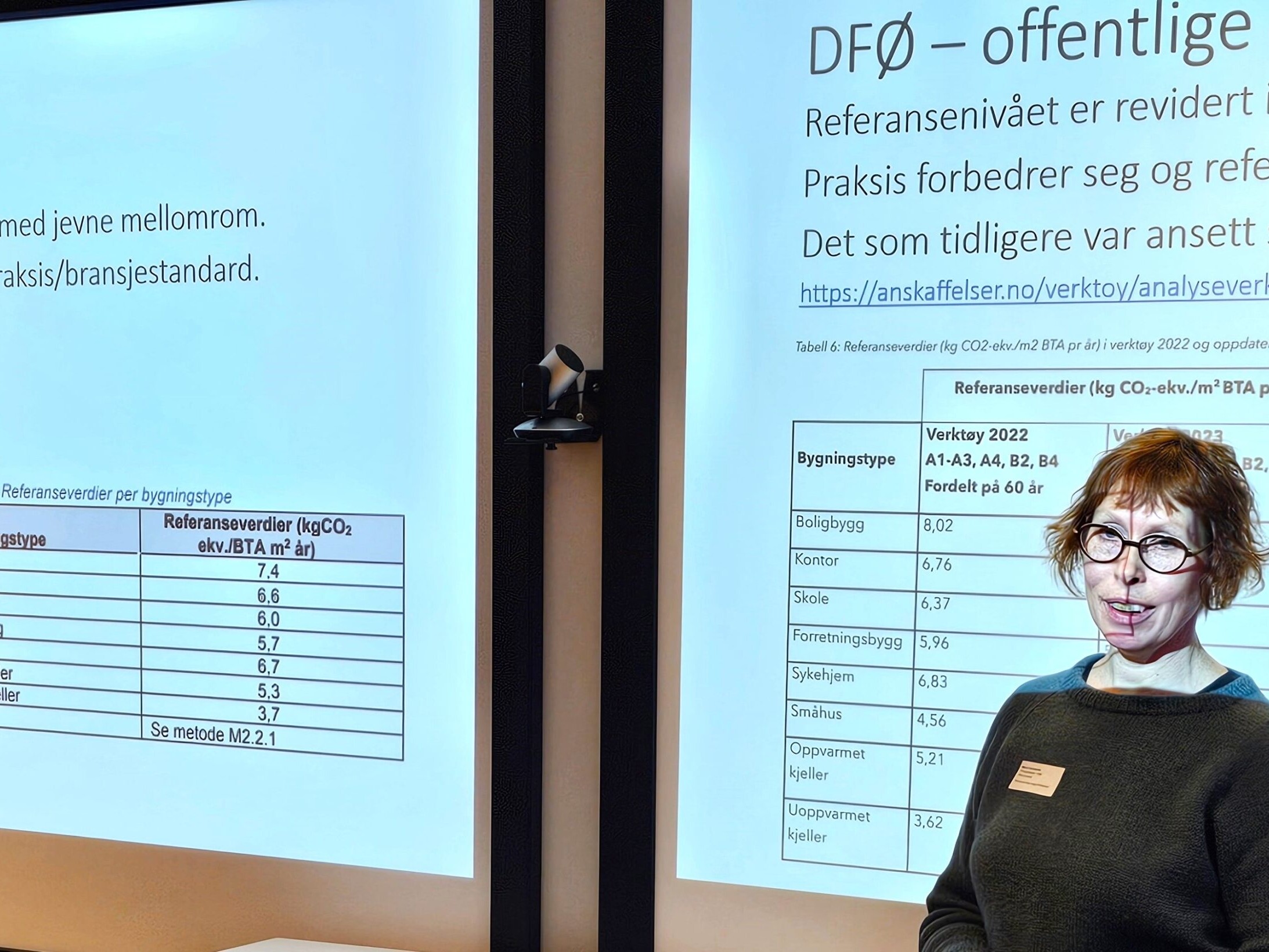
Kjetil Ulset is employed by Gjøvik Municipality, and has participated in the project group and steering committee for Biri kindergarten and Biri primary school.
– As a municipality, we do not have unlimited money. But we do have guidelines for the climate, and we cannot ignore these. We have national and regional commitments that form the basis for our local guidelines, set out in Gjøvik municipality’s climate plan. One of the goals in the climate plan is to “reduce the climate footprint in the building and construction industry”, and then we must set requirements so that this is met, Ulset explained.
Want clients who set clear requirements
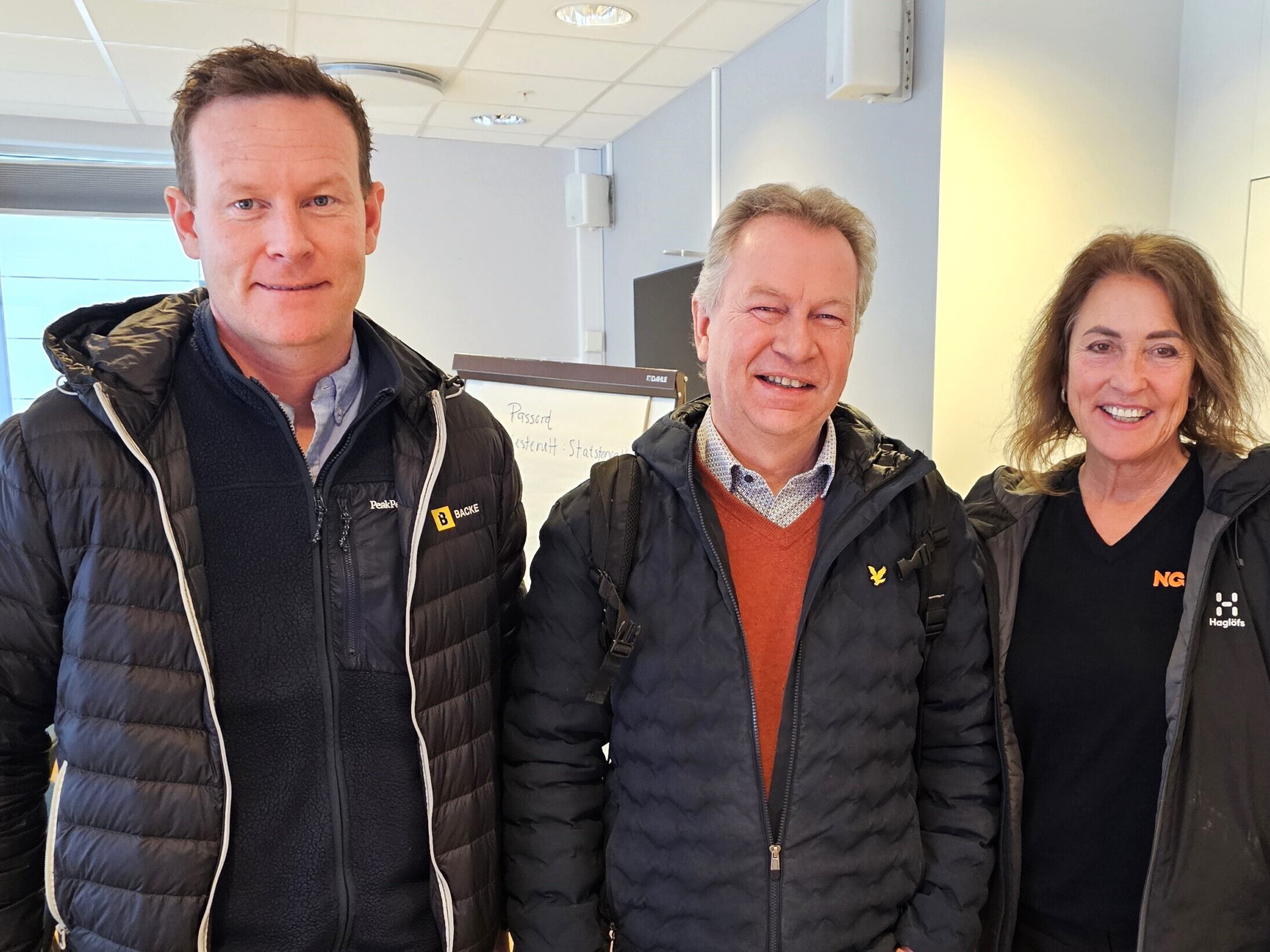
Hans-Jørgen Bjøralt is general manager of Backe Oppland, which was commissioned to build the school and kindergarten. The Backe Group is Norway’s largest family-owned construction company, and is the largest construction company in Innlandet (Backe Oppland and Martin M. Bakken).
– “In this project, the municipality set a number of requirements. It’s important to emphasize that these were requirements and not guidelines, which I think is absolutely essential,” said Bjøralt.
Examples of specific environmental requirements in the project:
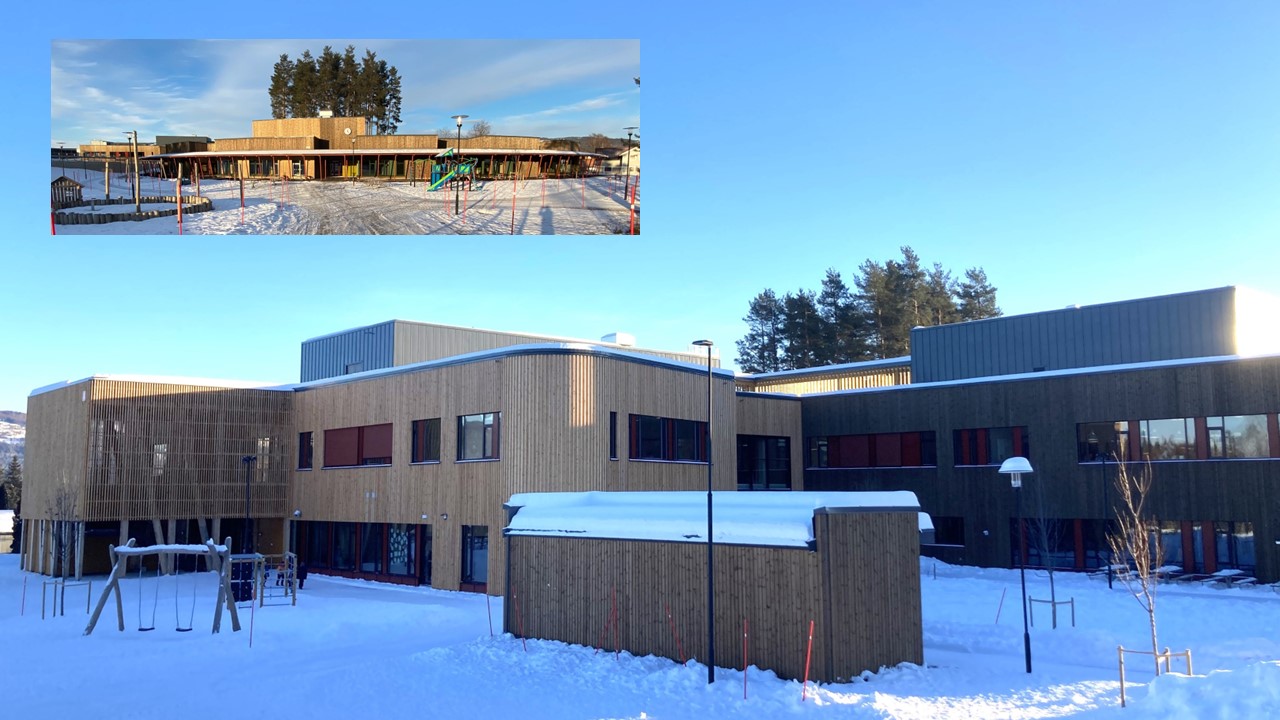
The building must satisfy requirements for greenhouse gas emissions for materials including A1-A4, cutting and waste in A5, B4-B5 and C1-C4. The emission limit to be satisfied is 199 kg CO2/m2 GFA. Greenhouse gas emissions must be documented with calculations in accordance with. NS3720. Documentation must be available before the start of construction work.
Materials used must be low emitting. Emission requirements according to tab. 14 BREEAM Nor 2016 hea 02. The requirement applies to all interior materials and surface treatments.
– The municipality has used a number of requirements from the Breeam manual and selected requirements that are important to them. I think this is the right way to work. For this type of building, project-specific targets are more appropriate than Breeam certification. It looks different for a private developer selling a commercial building in an attractive area, where it may be worthwhile to deliver a high level of Breeam certification. But for public service buildings, a full Breeam certification can entail a lot that you have to pay for but don’t need,” said Bjøralt.
Examples of environmental adaptations in the project:
– Solid wood in all load-bearing structures, ceilings, auditorium, parts of the roof
– Wood in all interior and exterior walls
– High degree of precut materials
– Low carbon concrete class A
– Flooring with a low greenhouse gas footprint
– Waste: 99% sorting rate, 79% material recycling
– Energy: Solar cells on the roof and local, waterborne heating (also used during the construction period)
Involve the recycler from the start
Anita Storli represents Norsk Gjenvinning, which was responsible for commercial waste from the project. She said that the project has achieved a very high degree of both sorting and material recycling, thanks to early involvement.
– “It’s absolutely essential to get good results that we are involved right from the start-up meeting and follow the process. In this project, Backe Oppland has involved us right from the start, which is why we managed to achieve a 99% sorting rate and 79% material recycling rate,” she explained. Storli also highlighted other success criteria, such as ensuring resource-efficient packaging for the products, working with precap and returning as much as possible of what can be returned, such as pallets. “Waste should always be part of the construction meetings, so that you can follow the statistics and intervene when things don’t go as planned,” Storli said.
Upcoming breakfast seminars from project Climate-friendly buildings Innlandet:
About Climate-friendly buildings Innlandet
Project (2023-2026) that will contribute to more climate-friendly construction in inland Norway
Funded by Innlandet County Council and Innovation Norway
Focus areas: Climate-friendly materials and building systems
Target group: The entire value chain, from client to developer, architect, contractor and building product supplier.
The project will raise competence in areas such as
– Greenhouse gas calculations
– Climate footprint for different materials and systems
– Certification schemes for climate-friendly buildings
– Reuse and repurpose
– Financing schemes
Duration: 2023-2024-2025
The project is run by Norwegian Wood Cluster, Civitas and Norconsult
More info at www.klimavennligebygg.no
Would you like to receive newsletters from Klimavennlige bygg Innlandet? Click here
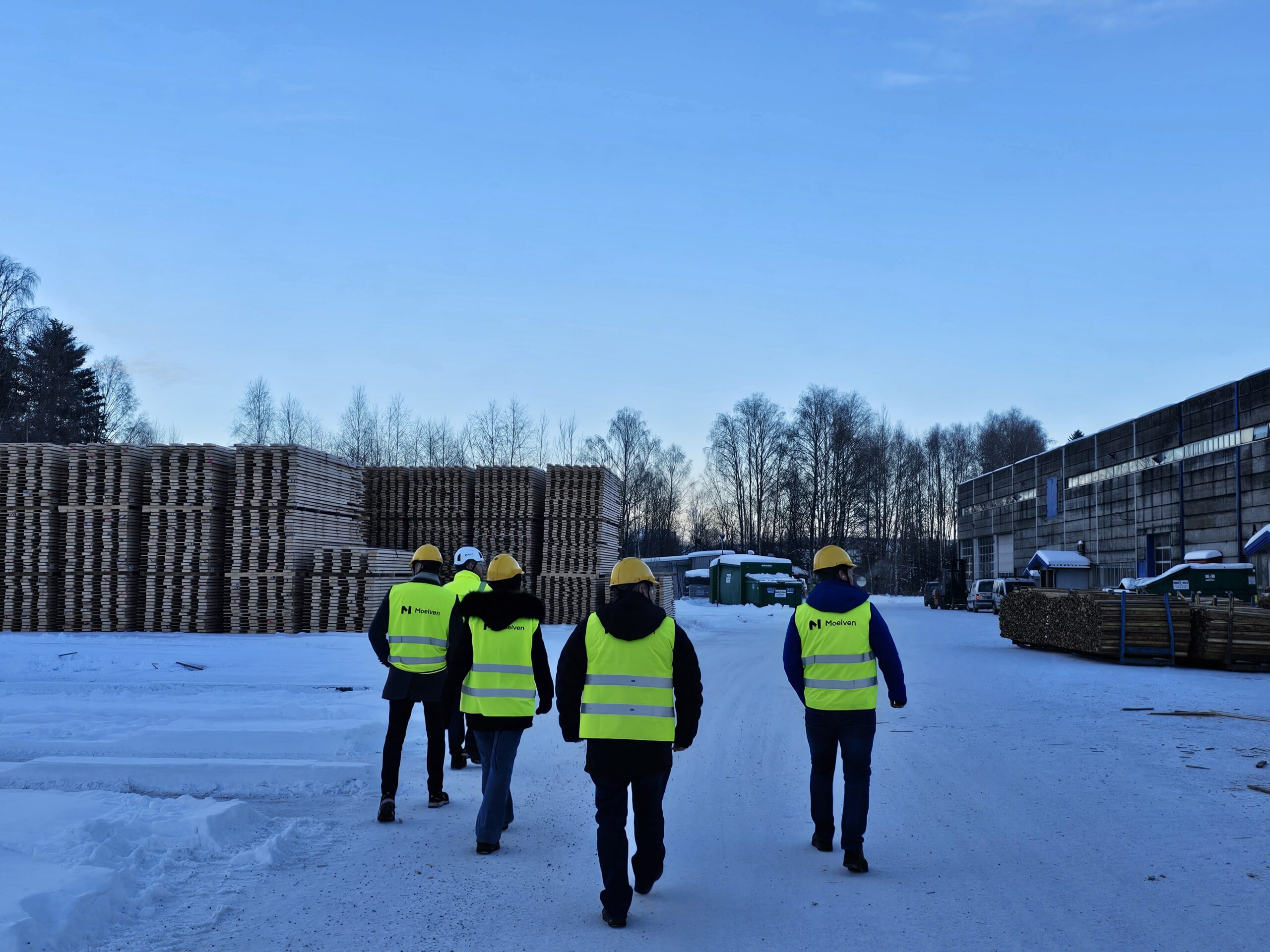
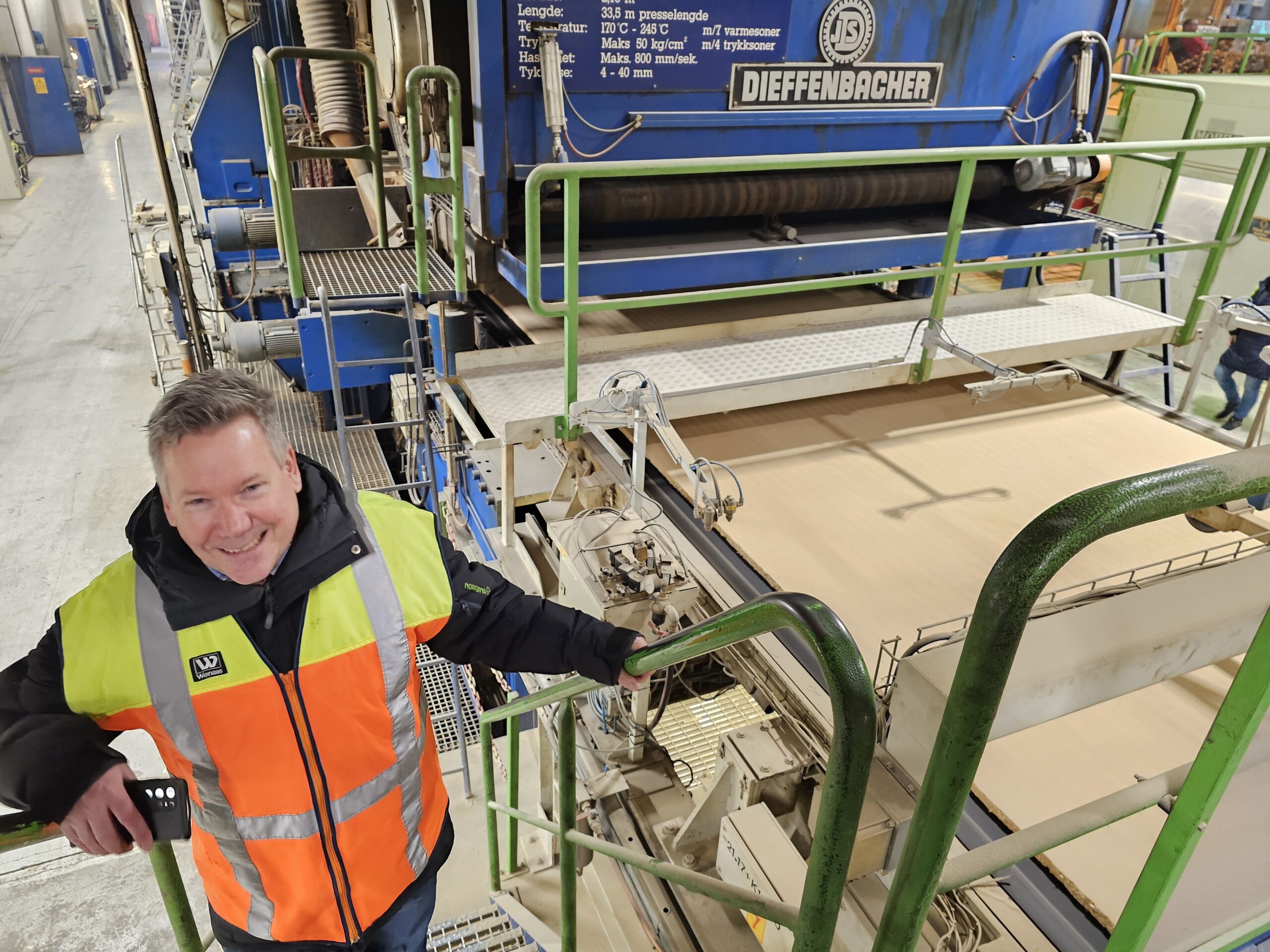
Fresh start for new project manager in NWC
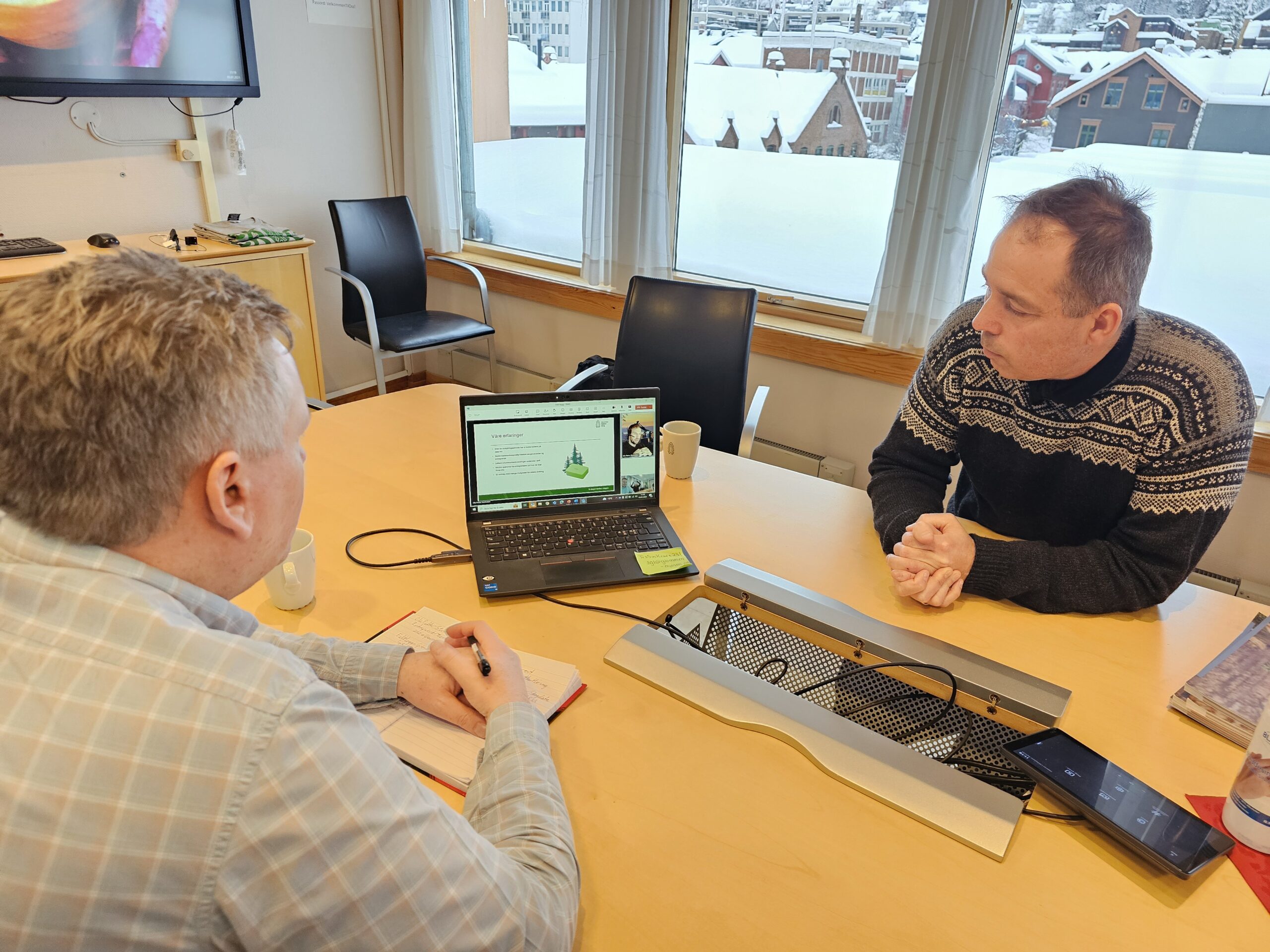
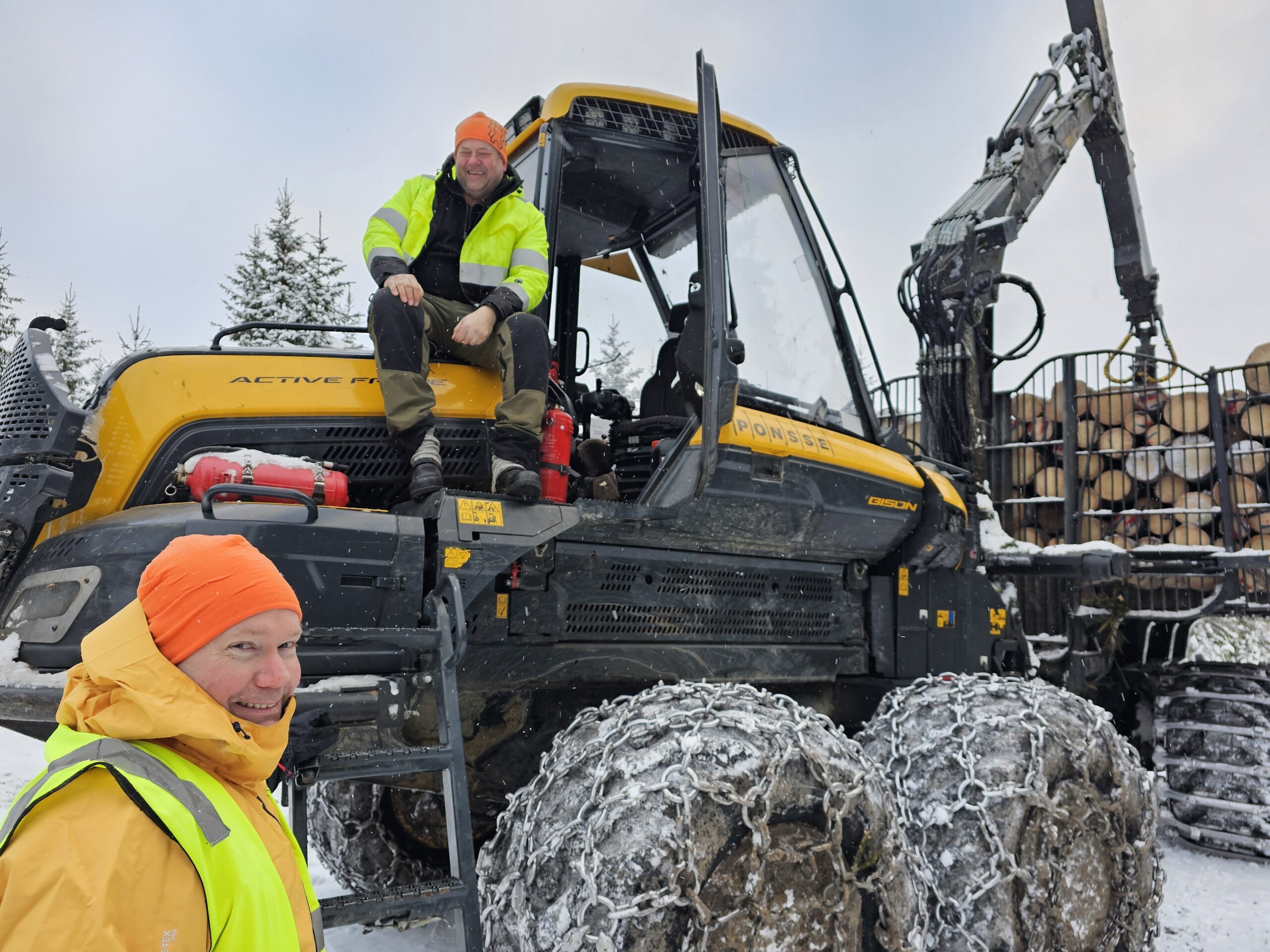
At Glommen Mjøsen Skog, Håvard and his NWC colleague Mari Blokhus Nordtun were given an introduction to the digital data flow in forestry. Jan Gaute Lie, regional manager in the Mjøsa region, gave a good, professional review of how the forest owner cooperative works.
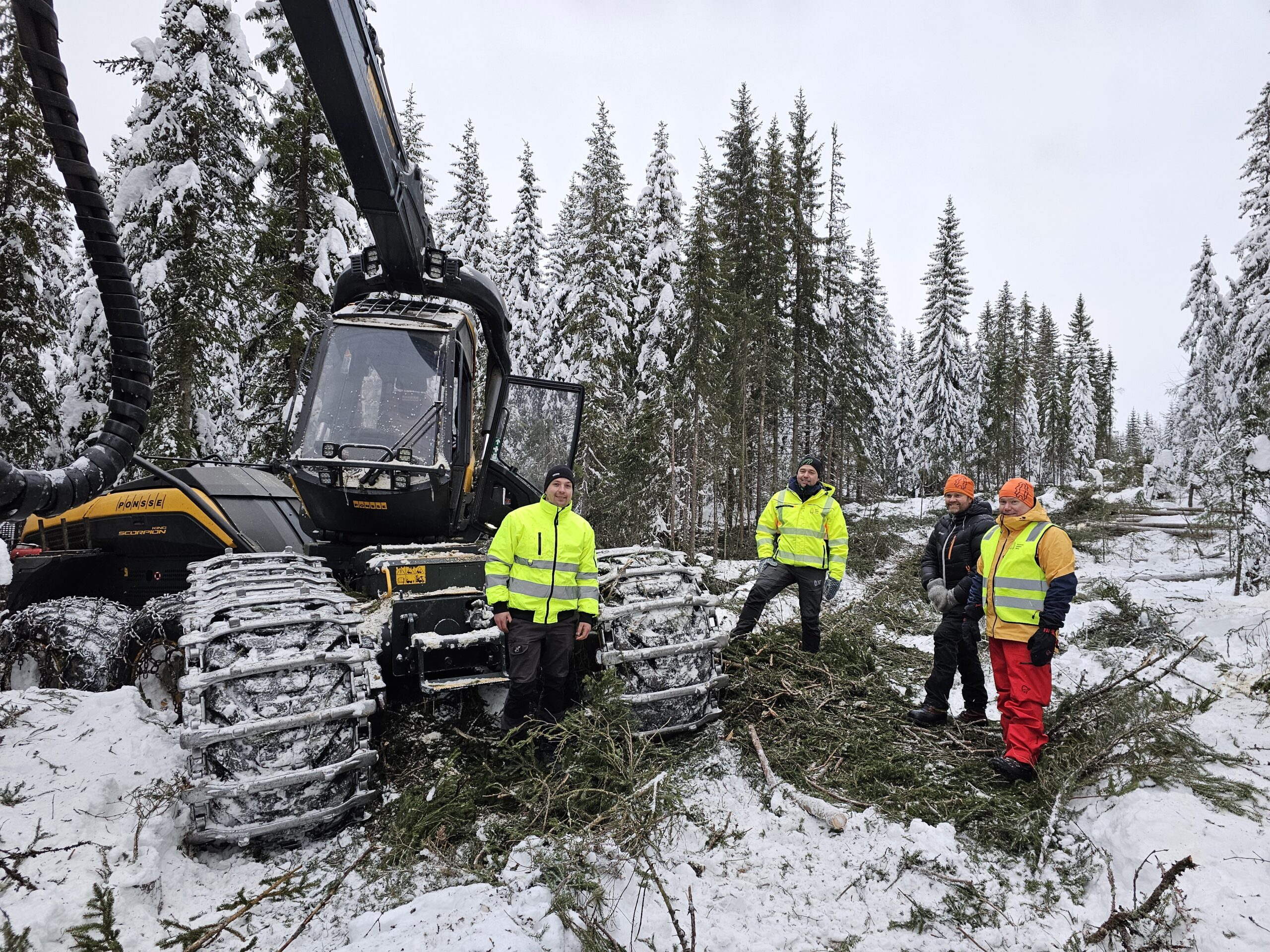
With the help of Odd Arne Brenn and Ole Petter Storbråten, the NWC project managers learned about Allma and forestry plans, how these are linked to national map databases and, not least, about the link to FeltLogg, which is used by forestry managers and forest machine contractors. Then it was off to the forest, where forestry manager Jon Grande Dahl took us to a forestry operation in Roterudbygda in Ringsaker. There we met Embret Kristiansen and Anders Adolfsson from Kristiansen Skog to learn about forestry and the use of FeltLogg in the field.