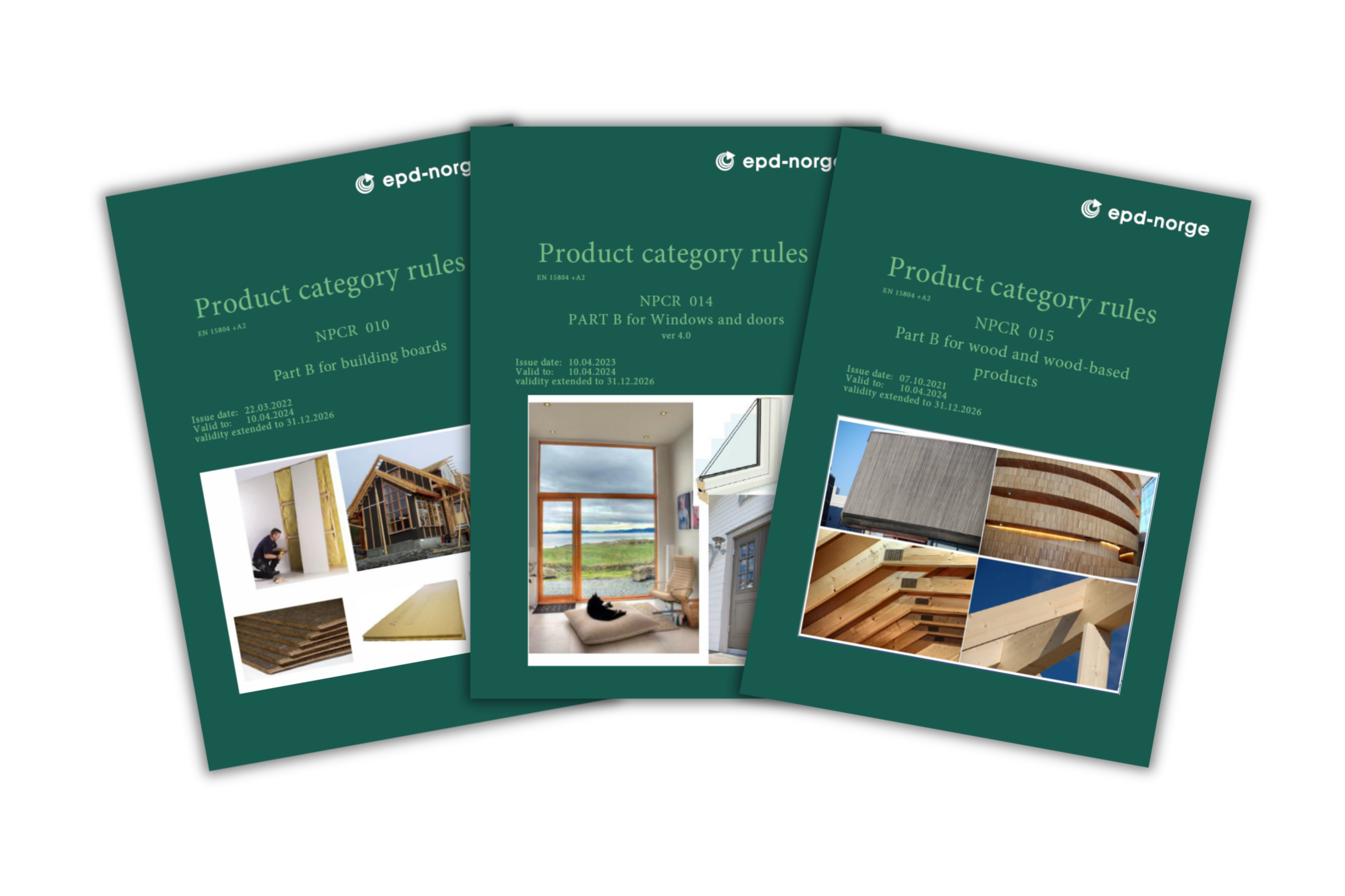
At present, there is no legal requirement for manufacturers to produce environmental product declarations (EPDs), but more and more developers are requesting EPDs in order to document the total environmental impact of the materials in a building.
The life cycle assessment is the foundation
Before an EPD can be created, a life cycle analysis (LCA) is needed that explains the environmental impact of the product throughout its entire life cycle, from the raw materials entering the factory, to production and transportation to the customer, use and disposal at the end of the life cycle. The aim is for the product’s “life cycle” to have the lowest possible environmental impact, and to be able to see where in the life cycle it pays to make changes. For most manufacturers of wood products, the raw material and production phases (A1-A3) of a product’s life cycle offer the greatest opportunity to influence its environmental impact.
The life cycle assessment forms the basis for the figures to be included in the environmental declarations/EPDs.
The environmental declaration follows the product
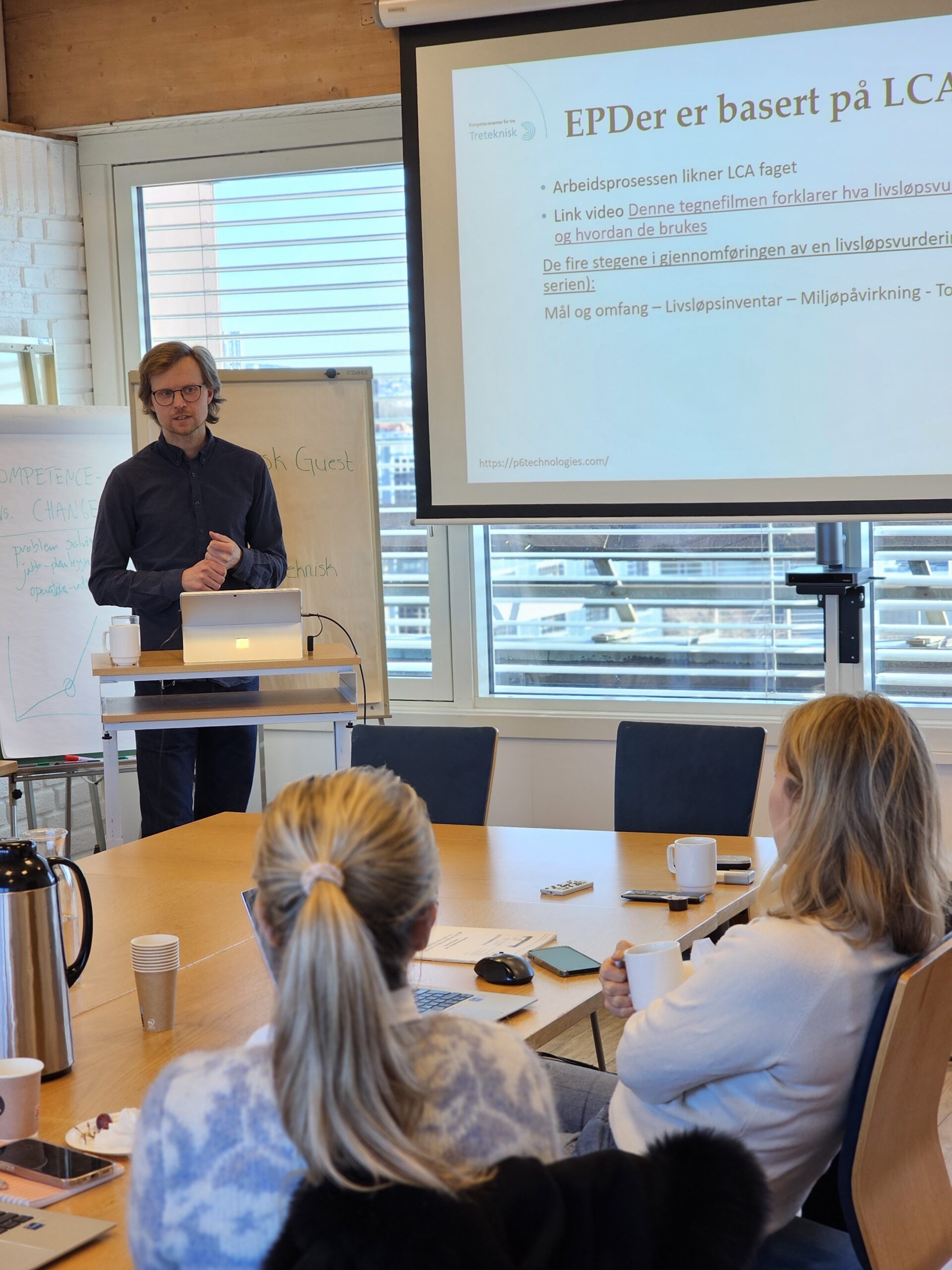
The process of creating environmental declarations/EPDs for products is often carried out in collaboration with a third party that has the necessary data tools. In a typical process in collaboration with Treteknisk, you will start with a start-up meeting to plan the data collection. Then both the company and Treteknisk will go through a process of collecting data and feeding it into a demo version. After a few rounds of quality assurance of the data, the environmental declaration/EPD can finally be finalized. Treteknisk assists with the verification at EPD Norway, and then the EPD is ready for use.
The data collection
So what product and factory data is being requested? It could be, for example, shed yield, energy use and transportation distances for purchased materials and raw materials. This is data that the manufacturer has control over. It’s important to ask yourself whether you can use data that has been collected in other contexts, so that you can reuse figures from the financial system or logistics system, for example, instead of performing calculations from scratch.
You also need generic data, i.e. industry data that does not come from your own production. For a sawmill, this could, for example, apply to data on emissions from forestry or timber truck transport (but transport distance is entered specifically, including return loads).
Environmental documentation and the market of the future
It has been announced that there will be digital product passports through the EU system, so that this data can be found digitally. Work is underway to simplify the EU’s Construction Products Regulation, so we can also expect the processes for developing EPDs to become simpler in the future.